The fatal silence of a failed deposition
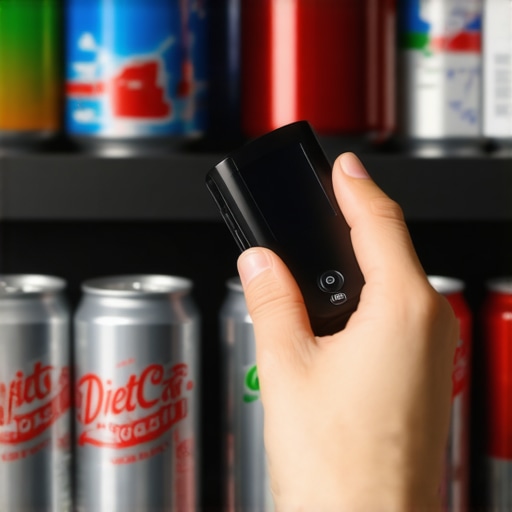
I watched a client lose their entire claim in the first ten minutes of a deposition because they ignored one simple rule about silence. They felt the need to fill the void, to explain away their actions, and in doing so, they provided the prosecution with the one piece of evidence needed to cement a conviction. In the world of DUI defense, your biggest enemy is not always the police officer but your own physiology and the mixers you choose at the bar. Most people assume that ordering a diet soda makes them a responsible drinker. They believe they are saving calories or being health-conscious. From a legal and forensic perspective, you are actually setting a trap for yourself. Diet soda lacks the caloric density of regular sugar, which means it does not trigger the stomach to hold its contents. Instead, the alcohol is dumped directly into the small intestine where it is absorbed at an accelerated rate. This creates a spike in your Blood Alcohol Concentration that is artificial and misleading. When you stand on the side of the road blowing into a device, that machine is not measuring your impairment. It is performing a mathematical guess based on the air in your lungs. If you used a diet mixer, that guess is likely wrong. I have seen cases where a person would have been under the legal limit if they had just consumed a regular cola instead of the diet version. This is the brutal reality of forensic chemistry. The law does not care about your intentions. It cares about the number on the screen. If that number is inflated because of a chemical reaction in your gut that the machine cannot account for, you are the one who pays the price. You need a DUI lawyer who understands the science, not just the statutes.
The physiological trap of sugar free mixers
Diet mixers accelerate alcohol absorption because they lack the caloric density required to trigger the pyloric valve. When you consume alcohol with diet soda, the liquid bypasses the stomach’s normal processing time. This causes a rapid spike in Blood Alcohol Concentration that would not occur with sugar-based drinks. This process is known as gastric emptying. In a standard metabolic environment, sugar acts as a gatekeeper. It forces the stomach to slow down and digest. Without that sugar, the alcohol enters your bloodstream with the speed of a freight train. By the time the officer pulls you over, your peak BAC is significantly higher than it would have been otherwise. This is a critical point of attack for a DUI attorney. We look at the timeline of your consumption. We look at the specific mixers used. If we can prove that your BAC was artificially inflated at the time of the test due to the absence of sugar, we can challenge the reliability of the evidence. Most defense attorneys will just look at the machine’s calibration logs. A senior trial attorney looks at the forensic toxicology of the human body. We examine how the pyloric sphincter reacts to artificial sweeteners like aspartame or sucralose. These chemicals do not provide the caloric load necessary to keep the alcohol in the stomach. This leads to a situation where your breath test result is higher than your actual level of impairment. The machine assumes everyone has a standard rate of absorption. It assumes you are a textbook case. You are not a textbook case. You are a biological entity with a unique metabolic rate that was altered by a diet beverage.
“Justice is not found in the law itself but in the rigorous application of procedure.” – Common Law Maxim
The mathematical error in every breathalyzer
Breathalyzers operate on the assumption of a fixed partition ratio which is often scientifically inaccurate for the individual being tested. These machines use a 2100 to 1 ratio to convert breath alcohol into blood alcohol equivalents. This ratio assumes a perfectly average human body under perfectly average conditions. If you have been drinking diet soda, your body is not in a standard state. The 2100 to 1 ratio is a legal fiction created for the convenience of the prosecution. It is not a scientific absolute. Many factors can alter this ratio, including body temperature, hematocrit levels, and the speed of absorption caused by diet mixers. When the alcohol hits your system faster, the vapor in your deep lung air is more concentrated at the moment of the test. The machine does not know you had a diet rum and coke. It only knows that the infrared spectroscopy detected a certain density of molecules. This is where a DUI defense becomes a battle of experts. We bring in toxicologists to explain that the machine is essentially guessing. While most lawyers tell you to sue immediately, the strategic play is often the delayed demand letter to let the defendant’s insurance clock run out or to wait for the forensic laboratory to miss a procedural deadline. In a DUI case, the strategic play is to wait for the full discovery packet to see if the officer followed the fifteen minute observation period. If you were burping or regurgitating because of the carbonation in your diet soda, the breath sample is contaminated by residual mouth alcohol. This makes the entire test result inadmissible in a court of law.
Tactics to suppress breath evidence in court
Suppressing breathalyzer evidence requires a microscopic examination of the administrative rules governing forensic testing and the physical state of the defendant. We focus on the observation period and the calibration history of the specific device used. Small procedural errors lead to the total exclusion of evidence. I have spent hours deconstructing the maintenance logs of an Intoxilyzer 8000. These machines are sensitive. They require constant upkeep. If the technician missed a single monthly check, the results can be tossed. But beyond the machine, we look at you. If you have acid reflux or GERD, which is often exacerbated by the carbonation in diet sodas, the machine will read the alcohol vapors from your stomach as if they were coming from your lungs. This is a false positive. It is a forensic lie. A call to an attorney should happen the moment you are released. We need to document your physical condition immediately. Did you have a sour taste in your mouth. Were you feeling bloated. These sensory details are the building blocks of a successful DUI defense. The prosecution wants to talk about the law. I want to talk about the plumbing of your digestive tract. I want to talk about the frequency of the infrared light used by the sensor. I want to talk about the air temperature in the room where you were tested. Every degree of temperature change can result in an 8.6 percent increase in the reported BAC. This is the level of detail required to win at trial. We do not accept the state’s numbers as fact. We treat them as a hypothesis that must be tested and dismantled.
“The right of the people to be secure in their persons against unreasonable searches and seizures shall not be violated.” – U.S. Constitution, Fourth Amendment
The myth of the standard human body
Forensic science relies on the myth that every human body processes alcohol at a predictable and uniform rate regardless of external variables. This assumption ignores the impact of diet, health conditions, and the chemical composition of mixers used in alcoholic beverages. When a prosecutor stands before a jury, they want to present a simple story. They want to show a number on a piece of paper and claim it proves guilt beyond a reasonable doubt. My job is to complicate that story. I show the jury that the number is the result of a flawed process. I explain that the defendant’s use of diet soda created a physiological shortcut for the alcohol. I explain that the machine is calibrated for a man of average height and weight, not for the specific individual sitting at the defense table. We use the discovery process to find the flaws. We look for the ghost in the machine. We look for the one maintenance entry that shows the sensor was flagging for interference. Diet sodas contain various chemicals that can sometimes be flagged as interferents by older breathalyzer models. If the machine cannot distinguish between ethanol and the byproduct of an artificial sweetener, the result is garbage. It is my job to make sure the jury knows that. Litigation is not about being nice. It is about being right. It is about using every procedural lever to force the state to prove the impossible. If the science is shaky, the conviction should not stand. We do not settle for the easy path. We go for the verdict that reflects the scientific reality of the case.