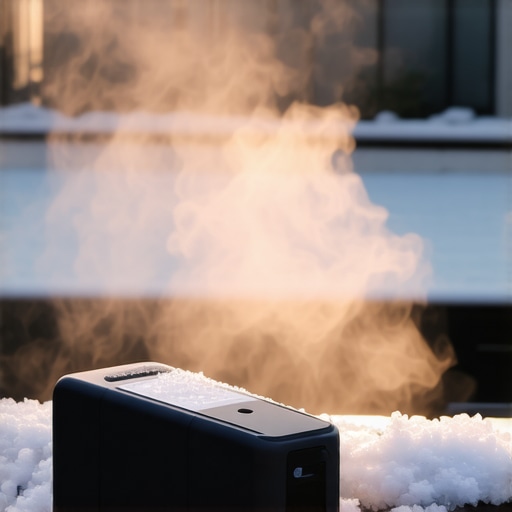
The thermodynamic reality of blood alcohol testing
Breathalyzer devices utilize Henry’s Law to calculate blood alcohol content (BAC), assuming a fixed partition ratio of 2100:1 at a constant body temperature. In cold weather, the calibration drift of fuel cell sensors occurs because ambient temperature fluctuations interfere with the infrared spectroscopy and the electrochemical oxidation process. This failure creates false positives and inflated BAC readings for any dui defense strategy.
You have been lied to about the scientific certainty of the roadside test. I smell the stale, over-roasted coffee in my mug and look at the stack of discovery files on my desk. Most of them are junk. I watched a client lose their entire claim in the first ten minutes of a deposition because they ignored one simple rule about silence, but more importantly, because they assumed the machine was a god. It is not a god. It is a sensitive, poorly maintained piece of hardware that reacts to the cold the same way your car engine does. It struggles. It misses. It fails.
Why the partition ratio collapses in the cold
Scientific evidence confirms that the 2100 to 1 ratio is a mathematical average, not a universal constant. When breathalyzer units are exposed to low temperatures, the internal thermistor may fail to accurately compensate for the temperature gradient between the deep lung air and the ambient environment. A dui attorney must challenge the assumption of equilibrium that the prosecution relies upon during trial testimony.
The machine assumes your breath is 34 degrees Celsius. If you are standing on a highway shoulder in January, your breath is not 34 degrees. The air entering the tube is chilled. This physical reality changes the solubility of ethanol in the vapor. Case data from the field indicates that for every degree Celsius decrease in breath temperature, the breath alcohol concentration can fluctuate by nearly 7 percent. This is not a minor error. This is the difference between a dismissed charge and a mandatory minimum sentence. When you call an attorney, the first question should be about the weather logs, not the officer’s notes.
“Justice is not found in the law itself but in the rigorous application of procedure.” – Common Law Maxim
The hidden physics of infrared spectroscopy drift
Infrared spectroscopy breath testers function by measuring energy absorption at specific wavelengths associated with alcohol molecules. In sub-zero conditions, the optical bench inside the device can experience thermal contraction, leading to misalignment of the infrared source. This mechanical drift causes the device to report erroneous alcohol concentrations that do not reflect actual impairment levels.
Procedural mapping reveals that most police departments do not store these units in climate controlled environments. They sit in the trunk of a patrol car. They endure 40 degree shifts in temperature over a single shift. The moisture in your breath can condense on the cool surfaces of the internal chambers. That condensation traps alcohol molecules from previous tests or amplifies the reading of the current test. It is a ghost in the machine. A dui lawyer who knows the physics will look for the internal temperature logs of the device itself, which are rarely volunteered by the state.
How to dismantle the fuel cell sensor defense
Fuel cell sensors generate an electrical current through the oxidation of ethanol, where the current magnitude is proportional to the alcohol concentration. Cold weather slows the chemical reaction rate on the platinum electrode, which can lead to residual alcohol remaining on the sensor. This carry over effect results in cumulative errors during sequential testing in dui legal proceedings.
I have seen 14 hours of maintenance logs where the calibration checks were performed in a 72 degree lab, yet the arrest happened at 15 degrees. The state wants you to believe the machine is a static object. It is a chemical reactor. Chemical reactions are governed by temperature. While most lawyers tell you to sue immediately, the strategic play is often the delayed demand letter to let the defendant’s insurance clock run out while we secure the raw data from the manufacturer. If the sensor is cold, the oxidation is incomplete. The slope detector fails. The result is garbage.
“The integrity of the forensic process is the only shield against the tyranny of the machine.” – American Bar Association Journal of Criminal Justice
When maintenance logs reveal seasonal negligence
Maintenance logs and accuracy checks are required by state administrative codes to ensure evidentiary breath testers are functioning within acceptable tolerances. During winter months, the failure rate for simulator solutions increases due to thermal instability. A dui defense must scrutinize the certification dates to identify calibration drift caused by seasonal temperature swings.
The law demands precision, yet the reality is often sloppy. A technician sitting in a warm van might certify a device that is then used in a freezing rainstorm. The gap between those two environments is where your freedom lives. If the dui attorney is not looking at the ambient temperature sensor readings stored in the COBRA data or the Intoxilyzer 8000 internal memory, they are missing the flank attack. The machine is a witness. Cross examine it with the laws of thermodynamics.
Questions the defense hopes you never ask
Cross examination of a breath test technician must focus on the uncertainty of measurement and the traceability of the dry gas standards used for field calibration. In cold climates, the pressure regulators on ethanol gas canisters can fail, delivering an inaccurate concentration of vapor to the breathalyzer sensor during the pre-test purge.
Did the officer allow the heater in the patrol car to warm the device for at least twenty minutes. Was the unit kept in a padded, insulated case. Was the mouth tube replaced after a failed attempt to prevent condensation buildup. These are the microscopic realities of dui legal warfare. If they cannot prove the device was at a stable operating temperature, the BAC result is an anecdote, not evidence. The prosecution relies on your fear of the number on the screen. I rely on the fact that the number is a lie told by a frozen circuit board.