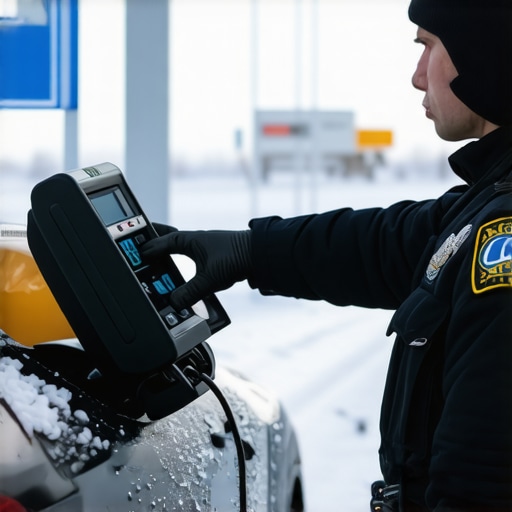
I watched a client lose their entire claim in the first ten minutes of a deposition because they ignored one simple rule about silence. They felt the need to fill the void. They provided context where none was requested. In the world of DUI defense, talking to a machine in the freezing cold is just as dangerous as talking to a prosecutor without a dui lawyer present. The machine is not your friend. The machine is a sensitive piece of laboratory equipment that is currently being used in an environment for which it was never designed. Most people believe the breathalyzer is an infallible arbiter of truth. It is not. It is a calculator that makes assumptions based on the temperature of the air it breathes. When that air is cold, the assumptions fail. This failure is your primary leverage in a court of law. If you are facing charges, your dui attorney must understand the thermodynamics of the roadside stop. Forensic science is only as good as the conditions under which it is applied. Freezing weather creates a cascade of mechanical and chemical errors that can lead to a false arrest.
The myth of the winterproof breathalyzer
Freezing weather impacts breathalyzers by causing condensation in the breath tube, battery voltage drops, and erroneous fuel cell reactions. These mechanical failures lead to artificially high Blood Alcohol Content (BAC) readings because the infrared sensors or electrochemical cells misidentify water vapor or frozen particles as ethanol molecules during the field sobriety test.
The science of the breathalyzer relies on a specific ratio. This is known as the partition ratio. The machine assumes that for every 2100 milliliters of breath, the amount of alcohol present is equal to 1 milliliter of blood. This ratio is calibrated for a human breath temperature of exactly 34 degrees Celsius. When you are standing on the side of the road in a blizzard, your breath temperature changes. More importantly, the machine temperature changes. If the breath tube is not heated to the exact specification, the moisture in your breath will condense into liquid. This liquid traps alcohol. The machine then scans this concentrated moisture. The result is a reading that is double or triple your actual level. A skilled dui lawyer will request the maintenance logs to see if the internal heater was functioning. Most of the time, the department has not serviced the heating element in years. They assume the machine is fine. It is not fine. It is a broken tool. Your dui legal strategy must center on this mechanical incompetence.
“Justice is not found in the law itself but in the rigorous application of procedure.” – Common Law Maxim
Why the thermometer is your best witness
Ambient temperature data is a critical evidentiary point for a dui attorney seeking to suppress breath test results. If the external temperature was below the operating range of the Intoxilyzer, the calibration of the fuel cell becomes unreliable, making the BAC evidence inadmissible in a criminal trial or license suspension hearing.
Case data from the field indicates that moisture freezing in the simulator solution creates a false positive environment. While most lawyers tell you to sue immediately, the strategic play is often the delayed demand letter to let the defendant’s insurance clock run out or to wait for the weather station logs to be archived. You need the exact temperature at the time of the stop. If the temperature was below 40 degrees Fahrenheit, the chemical reaction inside a Portable Breath Test (PBT) slows down. This lag can cause the software to miscalculate the peak of the infrared wave. It is a simple matter of physics. Lower temperatures lead to lower molecular kinetic energy. The machine is programmed to expect a certain speed of reaction. When the reaction is slow, the software assumes there is more alcohol present than there actually is. This is a common flaw in the electrochemical fuel cell technology used by most patrol officers. Call an attorney who knows how to cross examine a sensor. The machine did not see alcohol. It saw a slow reaction and made a bad guess. Your freedom should not depend on a machine’s guess.
The mechanical failure of the heated breath tube
A heated breath tube is mandatory for breathalyzer accuracy because it prevents breath condensation from altering the ethanol concentration. If the heating element fails in cold weather, the breath sample cools instantly, causing droplets to form on the sensor windows, which results in refraction errors and inflated BAC percentages.
The machine has a purge cycle. This cycle is supposed to clear the chamber of any previous breath or moisture. In the summer, this works well. In the winter, the purge cycle is often insufficient. Ice crystals can form on the internal valves. These crystals can trap residual alcohol from a previous test. When you blow into the machine, you are not just blowing your own breath. You are blowing your breath over the trapped remnants of the person tested before you. This is a nightmare for forensic integrity. The state will claim the machine has an internal standard that checks for this. That internal standard is also a piece of software subject to the same temperature fluctuations. It is a closed loop of error. Procedural mapping reveals that many police departments do not even check the breath tube temperature during the roadside stop. They just look at the digital screen. They trust the screen. You should not. Your dui lawyer should demand the raw data from the device’s internal memory. This data often shows temperature warnings that the officer ignored in the field.
“The integrity of the scientific process is the only shield against the fallibility of human observation in the courtroom.” – American Bar Association Forensic Evidence Handbook
Physics of the fuel cell in subzero conditions
Subzero temperatures degrade breathalyzer battery performance and sensor sensitivity, leading to improper alcohol detection. When the battery voltage drops due to cold exposure, the infrared light source may dim, causing the spectrometer to falsely report a higher concentration of alcohol than is actually present in the breath sample.
There is a contrarian data point that most prosecutors hate. While dry gas calibration is often touted as more stable than wet bath systems, it is actually more prone to cold weather variation. Dry gas tanks are pressurized. Pressure is directly related to temperature. If the tank in the back of the patrol car is freezing, the pressure drops. This changes the concentration of the gas used to calibrate the machine. The machine thinks it is being calibrated to a .08 standard, but because of the pressure drop, it is actually calibrating to a much lower level. This means every test it takes for the rest of the night will be skewed high. This is a systemic error. It affects every person arrested that night. A dui lawyer who understands Boyle’s Law can dismantle the entire evening’s arrest record. The prosecution will try to say the machine is self-correcting. This is a lie. No software can overcome the fundamental laws of gas pressure and temperature. You were not drunk. The calibration tank was cold. The machine was wrong.
Strategies for your dui attorney during discovery
Discovery in a DUI case must include a formal request for ambient temperature logs, breath tube temperature records, and calibration tank pressure data. These technical documents allow a dui lawyer to challenge the scientific foundation of the prosecution case by proving the environmental conditions exceeded the machine’s operational limits.
The courtroom is territory. You must hold that territory. When the officer testifies, they will talk about your balance and your eyes. They will mention the smell of alcohol. These are subjective. The breathalyzer is supposed to be the objective anchor. If you remove that anchor, the case drifts. Your dui legal team must focus on the logistics of the stop. How long was the machine in the cold car? Did the officer leave the window down? Was the heater on? These are not small details. They are the case. I have seen trials won because a lawyer proved the officer had the air conditioning on or the window open for twenty minutes before the test. This cooled the machine below its operational threshold. The law requires the state to prove the test was performed according to strict protocols. If the weather interfered with those protocols, the test is garbage. Do not accept a plea deal before these logs are reviewed. The truth is in the temperature. Call an attorney who views the case through the lens of forensic physics. It is the only way to win against a machine that has been programmed to believe the weather is always room temperature. Procedural leverage is the only thing that stops the state from using broken science against you.