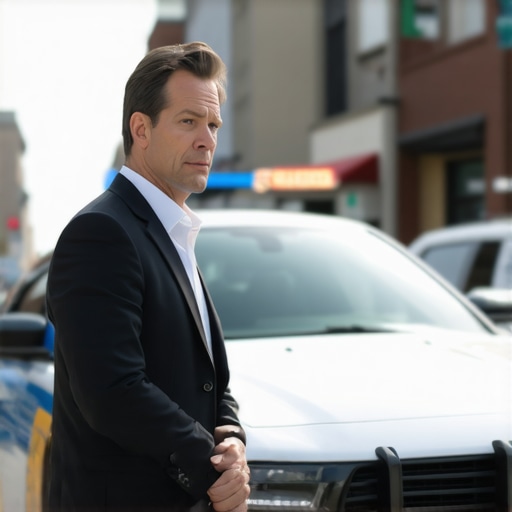
Tactical Defense Against Illegal Roadside Searches and DUI Enforcement
The blue lights in your rearview mirror are not an invitation to a conversation. They are the start of a forensic investigation where every word you utter is a potential nail in your coffin. Most drivers believe that if they have nothing to hide, they should be transparent. This is a fatal error in judgment. I watched a client lose their entire claim in the first ten minutes of a deposition because they ignored one simple rule about silence during the initial stop. They thought they could talk their way out of a search. Instead, they provided the officer with the exact reasonable suspicion required to prolong the detention and dismantle their constitutional protections.
The roadside theater of intimidation
A roadside search challenge depends on the Fourth Amendment which protects individuals against unreasonable searches and seizures. An attorney scrutinizes the officer’s justification for the initial stop and the specific facts used to justify a search. Without probable cause or valid consent, any evidence found is usually inadmissible in court. The officer is trained to use your adrenaline against you. They use a technique called the graduated pressure tactic. It begins with simple questions about your destination and ends with a request to look in your trunk. If you are facing a dui defense, you must understand that the officer is looking for physiological indicators from the second your eyes meet theirs. They look for fumbled licenses. They look for the scent of masking agents like heavy perfume or tobacco. They are building a case before they even ask you to step out of the vehicle.
Why your silence is the only defense
Silence is a constitutional right that prevents you from providing the state with self-incriminating evidence during a traffic stop. By remaining silent and clearly stating you do not consent to a search, you preserve the ability for a dui attorney to challenge the officer’s actions. The law does not require you to be polite to the point of self-destruction. When the officer asks, Do you have anything in the car I should know about, they are fishing. They do not have the right to search your car just because you were speeding. They need more. If you give them a rambling explanation of where you are going, you are giving them time to observe your speech patterns and eye contact. This is why you must call an attorney the moment you are legally permitted to do so. The objective is to limit the evidence available for the prosecution to use against you.
“Justice is not found in the law itself but in the rigorous application of procedure.” – Common Law Maxim
The fourteen minute rule that kills police cases
The duration of a traffic stop must be limited to the time necessary to address the initial reason for the stop, such as a broken taillight. If an officer extends the stop to wait for a K9 unit without independent reasonable suspicion, the search is illegal. This comes from the landmark Supreme Court case Rodriguez v. United States. The clock starts the moment you pull over. If the officer finishes writing the ticket but keeps you there to ask about your personal life or to wait for a drug dog, they have violated your rights. A dui lawyer will look at the timestamp on the dispatch logs. They will compare it to the body camera footage. If there is a gap of even three minutes where the officer was just stalling, the entire search could be tossed out. Procedure is the only thing that stands between you and a conviction. The law is not about what happened. It is about what the state can prove through legally obtained evidence.
The chemistry of probable cause
Probable cause is a specific legal standard that requires more than a mere hunch or a gut feeling by the officer. It must be based on objective facts that would lead a reasonable person to believe a crime is being committed. In dui legal circles, we see officers claim they smelled marijuana or alcohol to bypass the warrant requirement. This is often a lie. We challenge this by looking at the wind direction, the traffic conditions, and the officer’s prior record of search accuracy. If an officer claims they saw a glass pipe in plain view, we check the tint of your windows and the angle of the sun at that exact minute. We use forensic light experts to prove the officer could not have seen what they claimed to see. We do not accept the officer’s word as truth. We treat the officer as a hostile witness whose memory is subject to bias and error.
The failure of roadside sobriety tests
Standardized Field Sobriety Tests are designed for failure and are often administered incorrectly by officers in the field. These tests are subjective and do not account for physical injuries, weather conditions, or the natural nervousness of the driver. The Horizontal Gaze Nystagmus test, the Walk and Turn, and the One Leg Stand are not scientific proofs of impairment. They are tools of observation. An experienced dui attorney knows how to dismantle these tests. We look for whether the officer checked for resting nystagmus. We look for whether the ground was level. We look for whether the instructions were given exactly as the NHTSA manual dictates. If the officer missed a single step, the results of that test are junk science. Many people think they failed the test because they stumbled. In reality, the officer may have failed the test by failing to follow protocol.
“The right of the people to be secure in their persons, houses, papers, and effects, against unreasonable searches and seizures, shall not be violated.” – U.S. Constitution, Fourth Amendment
How to call an attorney after the handcuffs click
Invoking your right to counsel immediately after an arrest stops all police interrogation and protects you from making damaging statements. Once you ask for a lawyer, the police must cease questioning until your legal representative is present. This is the point where most people break. They are in the back of a squad car. It is cold. They are scared. They start trying to explain themselves to the officer. Stop. Every word is being recorded. The officer is not your friend. They are not trying to help you out. They are looking for a confession to make their paperwork easier. You need to be the most boring person that officer has ever arrested. Give them your name. Give them your address. Then tell them you want your lawyer. Nothing else matters. The battle is no longer on the side of the road. The battle has moved to the courtroom, and you need a strategist to lead the charge.
The strategic play of the delayed demand letter
Strategic litigation often involves timing the delivery of demands and motions to maximize pressure on the prosecution and the insurance companies. Delaying certain actions can force the state to reveal its hand before they are ready for trial. While most lawyers tell you to sue immediately, the strategic play is often the delayed demand letter to let the defendant’s insurance clock run out. This is about leverage. We want the prosecutor to realize that their evidence is weak and that a trial will be a long, expensive losing battle for them. We use the discovery process to bury them in requests for maintenance records of the breathalyzer and the training files of the arresting officer. We look for the weak link in the chain of custody. We look for the one mistake that turns a guaranteed conviction into a dismissed case. This is not about being nice. This is about winning.