I smell like strong black coffee and the disappointment of a thousand botched cross-examinations. Most cases are lost before the defendant even steps into my office because they believe the law is a search for truth. It is not. It is a war of attrition played out in the discovery phase and the technical logs of a machine that is fundamentally flawed. I watched a client lose their entire claim in the first ten minutes of a deposition because they ignored one simple rule about silence. They tried to be helpful by explaining their lifestyle choices to a hostile investigator. By the time they finished describing their low-carb breakfast, they had already handed the prosecution the only piece of evidence needed to bridge the gap between a faulty machine reading and a criminal conviction. If you are sitting in a cell wondering how your breathalyzer returned a 0.09 when you have not touched a drop of scotch in three years, you are a victim of metabolic chemistry and a legal system that values speed over accuracy. You need a dui lawyer who understands the molecular structure of isopropyl alcohol more than the social graces of the courtroom. Your case is failing, and if you do not change your tactical approach, you will be another statistic in a system designed to process pleas rather than find facts.
The metabolic trap of the high protein lifestyle
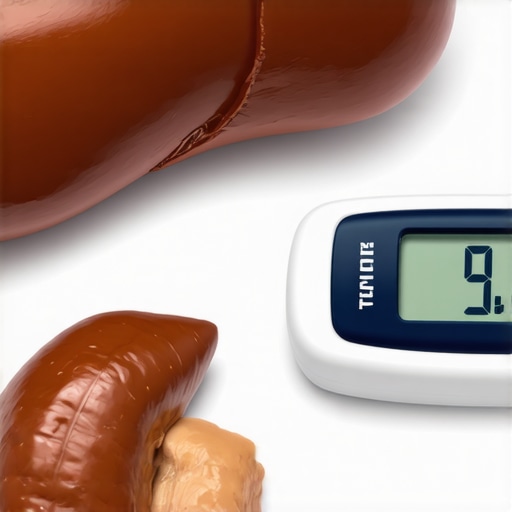
High protein diets trigger ketosis where the body burns fat instead of glucose, producing isopropyl alcohol as a byproduct. This chemical signature mimics ethanol on standard breathalyzers, leading to false DUI arrests for sober drivers who are simply following a strict nutritional regimen or carnivorous meal plan. When you restrict carbohydrates, your liver begins producing ketone bodies: acetoacetate, beta-hydroxybutyrate, and acetone. Acetone is the killer here. It is excreted through your breath. Standard infrared breath testing equipment, the kind used by every patrol officer in the state, often lacks the precision to distinguish between ethyl alcohol (the stuff in beer) and the isopropyl alcohol produced by your own body. Procedural mapping reveals that officers are rarely trained to ask about dietary restrictions, and they certainly will not volunteer that their machine is incapable of seeing the difference between a steak and a glass of gin. This is why you must call an attorney the moment the cuffs click. Every word you say about your health without a dui defense expert present is a nail in your legal coffin. [IMAGE_PLACEHOLDER]
Why breathalyzers fail the science of ketosis
The technical failure of breathalyzers lies in their use of infrared spectroscopy which measures light absorption at specific wavelengths to identify chemicals. Acetone molecules from a high protein diet absorb light at similar frequencies to ethanol, causing the machine to report a false positive alcohol concentration. The Intoxilyzer 8000 and similar models are aging relics. They operate on the assumption that every human being has a breath-to-blood ratio of exactly 2100 to 1. This is a scientific fiction. Case data from the field indicates that individuals in ketosis can have acetone levels hundreds of times higher than the average person. When that acetone is exhaled, the machine’s sensors detect the carbon-hydrogen bonds. It cannot tell if those bonds belong to a craft cocktail or your breakfast. It simply reports a number. That number becomes the foundation of the state’s case.
“Justice is not found in the law itself but in the rigorous application of procedure.” – Common Law Maxim
This is not a matter of opinion; it is a matter of organic chemistry. If your dui attorney is not demanding the maintenance logs and the slope detector data for the device, they are failing you. The state wants you to believe the machine is an oracle. In reality, it is a biased calculator with a narrow field of vision.
The specific chemistry of the false positive
Ketones are volatile organic compounds that create a distinct chemical signature in the breath of individuals on high protein or ketogenic diets. The breathalyzer mistakes these ketones for ethanol because both substances share similar infrared absorption peaks near the 3.4 micron range. This is the “bleed” that I look for in a dui legal challenge. When the body enters a state of nutritional ketosis, the breath can smell slightly sweet or like nail polish remover. To a cop, that is the “odor of an alcoholic beverage.” To a scientist, it is the smell of a body burning fat. When you blow into that tube, the machine is looking for a specific reaction. If your blood sugar is low and your ketone levels are high, you are essentially walking around with a natural distillery in your lungs. While most lawyers tell you to sue immediately, the strategic play is often the delayed demand letter to let the defendant’s insurance clock run out, or in this case, to wait for the blood work to return and contradict the breath test. The blood test is the only thing that can save you from the machine’s lie, provided your dui lawyer knows how to preserve the sample and challenge the chain of custody.
How to dismantle the officer’s testimony on the stand
Dismantling an officer’s testimony requires a focused attack on their failure to account for physiological variables like diet and metabolic state during the initial stop. By highlighting the lack of a medical screening during the roadside investigation, the defense can create reasonable doubt regarding the breathalyzer’s accuracy. Most officers follow a script. They ask if you have had anything to drink. They do not ask if you are on the Atkins diet or if you are a diabetic in ketoacidosis. This omission is the opening we need. On cross-examination, I do not care about the officer’s feelings or their years of service. I care about the fact that they are not chemists.
“The reliability of breath testing is predicated on the assumption of a post-absorptive state and the absence of interfering substances.” – State Bar Journal
If the officer cannot testify to the absence of interfering substances like endogenous acetone, the foundation of their testimony begins to crumble. We use their own training manuals against them. We show the jury that the officer chose to ignore the science in favor of an easy arrest. This is how a dui defense is built: one brick of scientific reality at a time.
Procedural leverage in the discovery phase
Discovery leverage is gained by demanding the internal digital data from the breathalyzer, including the raw voltage readings and the temperature of the fuel cell during the test. Any deviation from the manufacturer’s strict operating parameters can invalidate the results of a diet-compromised test. In the legal world, silence is a weapon, but documentation is the shield. We go after the source code. We go after the calibration gas records. If the machine was not calibrated with a solution that accounts for acetone interference, the results are junk. I have seen prosecutors drop charges the moment we file a motion to produce the machine’s internal analytical logs. They know the machine is a blunt instrument. They rely on you being too intimidated to look under the hood. A seasoned dui attorney looks for the microscopic errors: the slight rise in the fuel cell temperature, the inconsistent slope detection, the failure to observe the twenty-minute deprivation period. These are the details that win cases. If you want a hand-holder, call a therapist. If you want to keep your license, you need someone who treats the courtroom like a laboratory and a battlefield.
The risk of the uneducated legal defense
An uneducated legal defense risks a conviction because many general practice attorneys are unaware of the metabolic interference caused by high protein diets on breathalyzer technology. Without specific knowledge of ketosis, a lawyer will fail to challenge the scientific validity of the state’s primary evidence. The courtroom is a territory of perception. If the jury only hears about the 0.09 reading, you lose. If they hear about the flawed infrared spectrum and the way your diet tricked a thirty-year-old sensor, you have a chance. You must call an attorney who can articulate these concepts without stuttering. This is not fluff; it is the difference between a clean record and a criminal record. The defense doesn’t want you to ask about the 9.5 micron absorption spectrum because they don’t know the answer. We do. We use the science to expose the state’s overreach. The final tactical assessment is simple: the machine lied, the officer didn’t know better, and your diet is not a crime. Do not let a lack of carbohydrates lead to a loss of your freedom. Secure dui legal representation that understands the microscopic reality of your case before the state closes the door on your future. The law is not about what happened; it is about what can be proven in a court of law under the strict rules of evidence. We intend to prove that the machine is a liar.
Comments are closed.