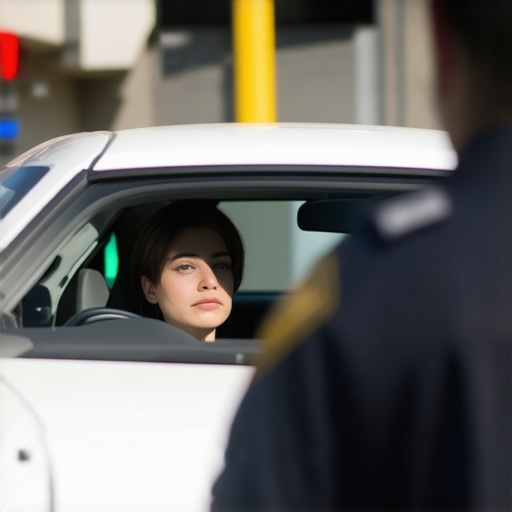
Why Staying Silent Is Your Most Effective Tool During a Traffic Stop
I smell the bitter dregs of a fourth cup of cold black coffee as I review another police report. You think you are smart. You think you can talk a patrol officer out of a ticket or a DUI arrest. You are wrong. I have seen twenty-five years of people digging their own legal graves with nothing but their own tongues. I watched a client lose their entire claim in the first ten minutes of a deposition because they ignored one simple rule about silence. They thought they were clarifying the facts. Instead, they gave the defense counsel exactly the contradiction they needed to move for summary judgment. It is the same on the side of the road at two in the morning. The moment you open your mouth, you have started the prosecution’s clock. The legal system is not a conversation. It is a series of procedural gates. If you do not have the key, stay quiet. My job as a dui lawyer is to fix your mistakes, but I prefer it when you do not make them in the first place.
[IMAGE_PLACEHOLDER]
The fifth amendment protects more than your pride
The Fifth Amendment and the right to remain silent are your primary defenses during a DUI stop. Invoking your Miranda rights prevents the arresting officer from gathering incriminating statements that a dui attorney would otherwise have to suppress in a criminal court proceeding later. This is the bedrock of dui defense. When the flashing lights appear in your rearview mirror, your adrenaline spikes. This is a physiological response that the police are trained to exploit. They want you to talk because speech requires cognitive load. If you are impaired, that load causes stutters, repetitions, and admissions. Even if you are sober, the stress of the situation can make you sound guilty. The law does not require you to be your own prosecutor. You have the absolute right to provide your license and registration and then decline further questioning.
“Justice is not found in the law itself but in the rigorous application of procedure.” – Common Law Maxim
This procedure starts the second you roll down your window. The smell of the night air, the grit on the asphalt, and the glare of the flashlight are all part of the officer’s sensory collection. Do not add your voice to that collection.
Roadside tests are designed for your failure
Field Sobriety Tests or FSTs are subjective evaluation tools used by police officers to establish probable cause for a DUI arrest. These physical tests, including the horizontal gaze nystagmus, are often rigged against the driver due to environmental factors like unlevel pavement or poor lighting. Most people believe they can pass these tests if they are sober. They are mistaken. These tests are not about balance; they are about divided attention. The officer gives complex instructions and looks for tiny technical failures. A twitch of the eye, a heel that is half an inch off the line, or a hand used for balance becomes a data point for the prosecution. You are not legally required to perform these roadside gymnastics in most jurisdictions. Refusal may lead to an arrest, but it deprives the state of the very evidence they need to convict you. A dui legal expert will tell you that a lack of evidence is always better than a record of a failed physical test. The concrete is hard, the blue lights are blinding, and the officer’s notepad is already open. Do not give them the ammunition they want.
Common traps that lead to handcuffs
Police interrogation tactics during a traffic stop often involve leading questions designed to elicit a confession or admission of alcohol consumption. Officers use phrases like “How much have you had to drink tonight?” to skip the question of whether you drank at all. This is a procedural trap. If you answer “two beers,” you have just handed the state a dui conviction on a silver platter. The goal of the dui defense is to limit the flow of information. Silence is not an admission of guilt; it is a shield.
“The right to remain silent is the cornerstone of a fair trial, and its exercise cannot be used as evidence of guilt.” – American Bar Association Standing Committee
When you are asked where you are coming from or what you have been doing, the correct response is a polite refusal to answer questions without a dui lawyer present. The officer may become frustrated. They may tell you that “cooperation” will make things easier. This is a lie. Cooperation in the eyes of the law usually means making their job of arresting you much faster. The tactical timing of your silence dictates the strength of your case in the months to follow.
The strategic value of a delayed demand
Strategic litigation often requires a delayed demand letter to allow the insurance company or the prosecution to exhaust their initial resources before you reveal your defense strategy. While most lawyers tell you to sue immediately, the strategic play is often to let the defendant’s insurance clock run out. This creates a vacuum of information that works in your favor. In the context of a DUI, this means your dui attorney can wait for the discovery process to reveal flaws in the breathalyzer calibration or the blood draw procedure. If you have kept your mouth shut, the only evidence they have is the officer’s subjective opinion. If you have talked, they have your own words to bridge the gaps in their evidence. The courtroom is a territory of logistics and flank attacks. You do not win by being the loudest person in the room; you win by being the person with the fewest vulnerabilities. Every word you say to an officer is a potential vulnerability that your dui legal team will have to defend or explain away later.
What the patrol officer won’t mention
Police procedure regarding implied consent laws and administrative license revocation is often explained in a way that encourages compliance over constitutional protection. The officer will mention that you will lose your license if you refuse a chemical test. What they will not tell you is that a dui lawyer can often challenge that administrative suspension in a separate hearing. They also will not tell you that the breathalyzer machine, likely a model like the Intoxilyzer 8000, has a known margin of error and requires meticulous maintenance records. If you provide a breath sample, you are providing a number that juries find very hard to ignore, even if the machine is poorly maintained. If you stay silent and refuse, the case becomes about the officer’s word against yours. In the cold light of a courtroom, the officer’s memory of your “watery eyes” is much easier to attack than a digital printout from a machine. Forensic psychology shows that jurors look for certainty. Do not give the prosecution the certainty of a machine-generated number.
Call an attorney before the evidence disappears
Legal representation should be secured immediately following a DUI arrest to ensure that exculpatory evidence such as dashcam footage or dispatch logs is preserved. You need to call an attorney before the jail cell door even clicks shut. Time is the enemy of a dui defense. Video files are overwritten, memories of witnesses fade, and the physical state of the scene changes. A dui lawyer knows how to file an immediate motion for preservation of evidence. This is not about being a “troublemaker.” This is about forensic survival. The state has unlimited resources to prosecute you. You have only your rights and your counsel. When you are in the back of that patrol car, smelling the scent of ozone and stale upholstery, remember that your silence is your most powerful asset. Every breath you take that isn’t into a tube and every word you don’t say is a win for your future defense. Do not let the pressure of the moment break your resolve. The trial starts on the shoulder of the highway, not in the courtroom. Be the architect of your own victory by saying nothing at all.