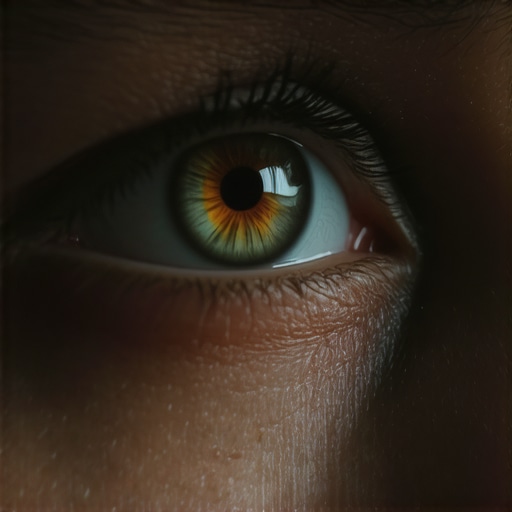
The deposition disaster of the over-explaining defendant
I watched a client lose their entire claim in the first ten minutes of a deposition because they ignored one simple rule about silence. They tried to explain away their medical history instead of just answering the question directly. This individual had a legitimate neurological condition that caused involuntary eye movement. Instead of letting the evidence speak, they rambled. They looked nervous. To a prosecutor, nervousness is the scent of blood in the water. To a jury, it looks like guilt. In the high stakes environment of a DUI defense, your physical appearance is the primary evidence before a breathalyzer is ever touched. If your eyes are red, watery, or twitching, the officer has already decided you are intoxicated. This is the brutal truth of the roadside stop. The law is not a neutral arbiter. It is a system of perceptions. When those perceptions are fueled by medical ignorance, an innocent driver becomes a criminal defendant in the eyes of the state. You need a dui lawyer who understands that biology is not a crime.
The optical illusion of probable cause
Probable cause in a DUI stop often hinges on the officer observation of bloodshot or watery eyes and involuntary movements. These physical markers are frequently misinterpreted by law enforcement who are trained to look for intoxication rather than medical distress. Under the pressure of a midnight traffic stop, a officer is not looking for signs of uveitis or ocular rosacea. They are looking for a reason to cuff you. They use the standard field sobriety tests as a trap. When you call an attorney, the first thing we look at is the dashcam footage to see if the officer followed the strict protocols required for these observations. Most do not. They skip steps. They ignore environmental factors like wind or dust. They assume the worst. This is why a strategic dui defense is built on deconstructing the initial contact. We do not just accept the officer word. We challenge the very foundation of their observation.
“Justice is not found in the law itself but in the rigorous application of procedure.” – Common Law Maxim
How nystagmus tricks the roadside officer
Horizontal Gaze Nystagmus or HGN is an involuntary jerking of the eyeball that occurs naturally in many individuals. Officers are taught that this jerking only happens when a person is under the influence of alcohol or certain drugs. This is a scientific fallacy. Over forty different medical conditions can cause nystagmus. If you have an inner ear infection or a minor concussion, your eyes will jerk during that pen test. The officer will record a failure. They will say you had four out of six clues. What they won’t say is that the lighting was poor or that you have a documented medical history of vertigo. A dui attorney must be able to cross examine an officer on the biology of the human eye. We must show that the officer lacked the medical training to distinguish between a drunk driver and a person with a chronic health issue. The nystagmus test is a tool of convenience for the state, not a tool of truth.
The medical reality behind the red eyes
Common eye conditions such as conjunctivitis, seasonal allergies, and dry eye syndrome mimic the classic signs of alcohol consumption. When a driver has been working a double shift at a hospital or a construction site, their eyes are naturally fatigued. Redness is a sign of exhaustion, not necessarily impairment. However, in the narrative of a police report, those red eyes are always labeled as bloodshot and glassy. This phrasing is intentional. It is designed to trigger a specific legal response. The strategic play is often the delayed demand letter to let the defendant insurance clock run out while we gather medical records. We use these records to prove that the driver condition was chronic. If we can show the court that your eyes look the same on a Tuesday morning as they did during the Friday night stop, the state case begins to crumble. This is about procedural leverage. We use your health history as a shield against aggressive prosecution.
“The integrity of the judicial process depends upon the absolute adherence to evidentiary standards during the initial investigation.” – American Bar Association Journal
Why your doctor is your best witness
Expert medical testimony can invalidate the subjective observations made by a police officer during a DUI investigation. When we bring in an ophthalmologist to testify about your glaucoma or your cataracts, we are changing the narrative. We are taking the power away from the officer and giving it to a scientist. A dui legal strategy that ignores medical experts is a failing strategy. The jury needs to see that what the officer called impairment was actually a physical limitation. I have seen cases where a client had a glass eye or a prosthetic that the officer failed to notice. The officer still marked down that the pupillary response was slow. This proves that many officers see what they want to see. They are biased toward a conviction. By presenting hard medical data, we force the prosecution to defend a flawed observation. We turn the officer lack of medical knowledge into the centerpiece of the defense.
The strategic move to call an attorney early
Engaging a dui lawyer immediately after an arrest allows for the preservation of critical evidence like medical records and pharmacy logs. If you wait too long, the opportunity to document your physical state at the time of the arrest might vanish. We need to see what medications you were taking. We need to know if you had a recent eye exam. Every detail matters. The prosecution will try to use your silence against you. They will try to use your confusion as proof of intoxication. We stop that. We build a wall between you and the state. A strong dui defense is not about making excuses. It is about demanding that the state meet its burden of proof with actual evidence, not just the biased guesses of a patrolman. When the stakes are your freedom and your license, you cannot afford a generic defense. You need a litigation architect who knows how to tear down a police report brick by brick.
Fighting back against the breathalyzer bias
The results of a breathalyzer test are often used to bolster the officer claims about your physical appearance even when the machine is poorly calibrated. There is a feedback loop in DUI law. The officer sees red eyes, assumes you are drunk, and then interprets the breathalyzer result to fit that assumption. If the machine says you are at a point zero eight, they say your eyes confirmed it. If the machine says you are at a point zero four, they say you are under the influence of drugs. It is a no win scenario for the driver without a dui lawyer. We challenge the machine and we challenge the observation. We look for the gaps in the logic. We look for the procedural errors that happen when an officer is in a hurry to finish their shift. The courtroom is a territory of logistics. If the state cannot prove their logistics were perfect, they do not deserve a conviction. We hold them to the highest possible standard because that is what the law requires. Your eyes might have misled the officer, but they will not mislead a well prepared legal team.