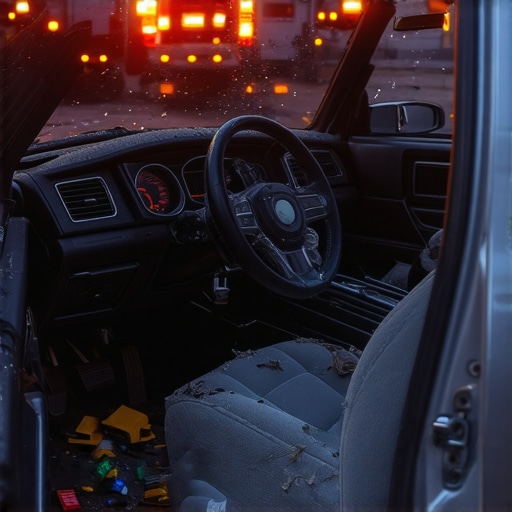
Sit down and listen because the coffee is cold and your situation is worse than you think. You walked out of the precinct after a night in lockup and found your vehicle looking like it was put through a woodchipper. The seats are ripped, the door panels are hanging by wires, and the headliner is sagging where they searched for things that weren’t there. You think the city is going to cut you a check because you are innocent or because the search was a mistake. That is a fantasy. I recently spent 14 hours deconstructing a contract that was designed to be unreadable, only to find the one clause that changed everything, and let me tell you, the laws governing police damage are written with that same level of deception. They are not designed to protect your property; they are designed to protect the state’s budget. If you want a single cent back, you have to fight a war of attrition against a system that has unlimited time and your tax dollars to fight back. This is the reality of the dui legal landscape that nobody tells you in the brochures. You need to call an attorney who understands that this isn’t just about a ticket; it is about government sanctioned vandalism.
The immunity shield that protects police destruction
Law enforcement agencies often hide behind sovereign immunity or the “reasonableness” standard of the Fourth Amendment when damaging property. Unless the search was clearly illegal or the damage was malicious, getting a check for that ripped upholstery or broken dash is a bureaucratic nightmare involving tort claims. The law allows officers to perform what is called a search incident to arrest. If they have probable cause to believe your vehicle contains evidence of a crime, they have the right to look for it. The problem is the definition of the word reasonable. To a judge, it might be reasonable for an officer to pry off a door panel if they smell marijuana. To you, that is five hundred dollars in plastic clips and labor. To win a claim, your dui lawyer must prove that the officers went beyond the scope of a standard search. It is a high bar. You are fighting against the qualified immunity doctrine, which serves as a nearly impenetrable wall for individual officers. They do not care about your leather interior. They care about the collar. If you think the police department has a repair shop for the cars they break, you are delusional. They have a legal department whose only job is to tell you no.
“Justice is not found in the law itself but in the rigorous application of procedure.” – Common Law Maxim
Why your insurance company will likely abandon you
Standard auto insurance policies frequently exclude damage caused by government action or civil authority. If the police tore out your door panels looking for drugs during a DUI stop, your carrier will point to the fine print and deny the claim, leaving you to fight the city alone. You pay your premiums every month thinking you are covered for all risks. Then you read the exclusions section. Most policies specifically state that any loss or damage caused by the destruction or seizure of property by a governmental body is not covered. This is the “civil authority” exclusion. Your agent will sound sympathetic on the phone, but the claims adjuster will cite the policy language and close the file before you can finish your sentence. This leaves you in a legal no-man’s-land. The police won’t pay because of immunity, and the insurance company won’t pay because of the contract. This is why dui defense involves more than just arguing about breathalyzer results. It involves asset protection. Without a specific strategy to hold the municipality liable through a tort claim, you are looking at a total loss on those repairs. Case data from the field indicates that ninety percent of these claims are denied at the first stage because the owner didn’t understand the filing deadlines.
Documentation that actually holds weight in court
You need high-resolution photos of the vehicle before the stop and immediately after the release. Metadata must prove the timeline. A detailed itemized list of every broken clip, stained seat, and cracked plastic housing is the only way to build a credible administrative claim against a municipality. If you do not have photos of your car from the week before the arrest, the city will claim the damage was pre-existing. They will say your car was a junker when they stopped it. You need a dui attorney who knows how to subpoena the body cam footage to show the exact moment the officer used a crowbar on your glovebox. Procedural mapping reveals that the most successful claims are those backed by third-party mechanic estimates. Do not just get one quote; get three. You need a forensic breakdown of the damage. Was the wire harness cut? Was the foam in the seat punctured? These details matter because they prove the search was conducted with a reckless disregard for property. The city’s legal team will look for any reason to toss your claim. If your paperwork is messy, you have already lost. You need a paper trail that is as clean as a surgical suite.
The thin line between reasonable force and property crimes
Courts allow officers to use “reasonable” force to conduct a search. If they have a warrant or probable cause, they can disassemble your vehicle to find evidence. The legal battle centers on whether the level of destruction was necessary to achieve the stated goal of the search. If an officer is looking for a stolen firearm, they can reasonably look under the seats. If they start slashing the tires to look for that same firearm, they have likely crossed the line. This is where the dui legal experts earn their keep. We look for the gaps in their logic. Why did they need to pull the carpet if the suspected item was a bottle of vodka? While most lawyers tell you to sue immediately, the strategic play is often the delayed demand letter to let the defendant’s insurance clock run out or to wait for the criminal case to resolve. If you sue while the DUI is pending, the police will use your civil deposition to fish for evidence to use in your criminal trial. You have to be smart. You have to be patient. Litigation is a game of leverage, and right now, the police have the high ground because they have your car in the impound lot and your fingerprints on a card.
“The right of the people to be secure in their persons, houses, papers, and effects, against unreasonable searches and seizures, shall not be violated.” – U.S. Constitution, Fourth Amendment
The paperwork trail that saves your equity
Contact a DUI lawyer immediately to preserve evidence. Do not give a statement to the police about the damage until your attorney reviews the search warrant or the probable cause affidavit. Filing a formal tort claim notice within the statutory deadline is the mandatory first step. In many jurisdictions, you only have 30 to 90 days to notify the city that you intend to sue. If you miss that window by even one day, your right to recover is gone forever. This is the trap. The police department will tell you to “fill out a form” at the front desk. That form is often a trick to get you to admit that the search was legal or that the damage is minor. Never sign anything without counsel. Your dui attorney should be the one communicating with the city’s risk management office. We know the language they use to deny claims. We know how to frame the destruction as a violation of your civil rights rather than just a simple repair bill. If you want to be made whole, you have to treat the city like an adversary, not a friend. They broke your property. They violated your space. Now you have to make them pay, one procedural motion at a time.