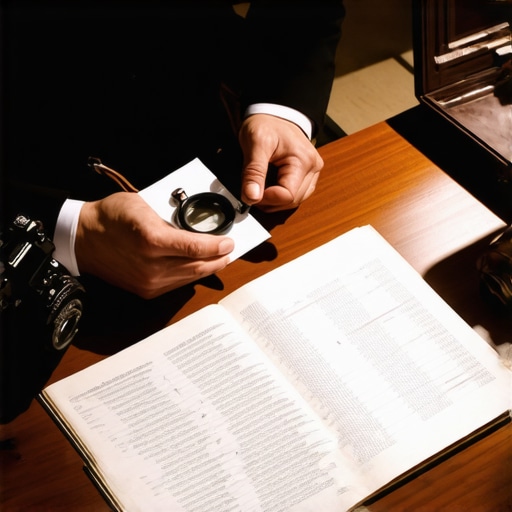
The air in my office smells like strong black coffee and the cold reality of a pending trial. You think your case is about the law. You are wrong. It is about the evidence. Most defendants believe the police report is a holy text. It is not. It is a one-sided narrative written by an individual whose job is to justify your arrest. If you want to survive a dui legal challenge, you need more than a dui attorney who can cite statutes. You need a dui lawyer who understands that the real battle happens in the weeds, the alleys, and the digital logs that the police ignored. I have spent decades watching the machinery of the state grind people down. I have seen the way dui defense falls apart when the defense team relies solely on the discovery provided by the prosecution. This is the brutal truth. The state is not your friend. The officer is not objective. The truth is something you have to hunt.
I watched a client lose their entire claim in the first ten minutes of a deposition because they ignored one simple rule about silence. They thought they could explain their way out of a dui legal mess. They wanted the room to like them. They filled the silence with nervous chatter. By the time they were done, they had admitted to things the police hadn’t even suspected. This is why we use investigators. An investigator finds the facts so the client does not have to talk. An investigator creates the shield. We do not ask for mercy. We look for the procedural errors that make the state’s case collapse. If you are serious about your freedom, you call an attorney who treats your case like a forensic autopsy. Every detail matters. Every second of that traffic stop is a potential exit ramp from a conviction.
The fatal flaw in the standard police narrative
Police reports are often subjective documents designed to secure a conviction rather than reflect the objective truth. By hiring a private investigator, a dui defense team can challenge the officer’s testimony and find exculpatory evidence that the prosecution ignored during the initial arrest phase. The report says you swerved. The investigator finds the pothole the officer failed to mention. The report says your eyes were bloodshot. The investigator finds the medical records showing your chronic allergies or the sixteen hour shift you just finished. We do not take the officer’s word for anything. We verify. We measure. We document. This is how we win. Statistics show that when a defense team conducts an independent investigation, the likelihood of a reduced charge or dismissal increases. This is not magic. It is hard work. It is the tactical application of doubt. You cannot build a defense on hope. You build it on the wreckage of the prosecution’s narrative.
“The duty of the prosecutor is to seek justice, not merely to convict.” – American Bar Association Standards for Criminal Justice
Evidence the prosecution conveniently forgot to find
Exculpatory evidence is frequently overlooked by law enforcement during a dui lawyer investigation because it does not fit the arresting officer’s theory of the crime. A private investigator will canvas the area for private security footage, interview witnesses who were not included in the police report, and analyze environmental factors. Many officers treat a DUI like a closed loop. They stop the car. They smell alcohol. They stop looking for other explanations. An investigator looks for the bar’s surveillance tape that shows you only had two drinks over four hours. They look for the bystander who saw the officer skip the mandatory observation period before the breathalyzer test. These are the details that the state will never give you for free. You have to go get them. You have to be aggressive. You have to be relentless. The state has the resources of the government. You have us. We make the scale level. We find the ghost in the machine.
How investigators break the state witness
Witness credibility is the foundation of any dui defense, and a skilled investigator can identify inconsistencies in the state’s evidence that a dui legal team can exploit. By conducting background checks on the arresting officer and reviewing their disciplinary history, an investigator provides the dui attorney with the leverage needed for cross-examination. Officers are human. They make mistakes. They have biases. Sometimes they have a history of cutting corners. We find those corners. We look at their certification logs for the Intoxilyzer 8000. We check if they were actually up to date on their training for standardized field sobriety tests. If the officer lied once in their career, we will find it. If they have a pattern of profiling, we will map it. A trial is a theater of perception. We ensure the jury perceives the officer as someone who is capable of being wrong. We break the aura of authority. We replace it with the reality of human error.
“Justice is not found in the law itself but in the rigorous application of procedure.” – Common Law Maxim
The physics of a roadside stop
Accident reconstruction and physical evidence analysis are fundamental components of a dui defense that requires a private investigator to evaluate the scene of the arrest. Investigating the road conditions, lighting, and mechanical state of the vehicle provides a dui attorney with the scientific data to refute police observations. Did the officer say you failed the walk and turn because of impairment? The investigator finds that the road had a four degree incline and was covered in loose gravel. Did the officer say you were speeding? The investigator checks the tire pressure and the calibration of your speedometer. We use physics to fight opinions. Law enforcement officers are trained to look for signs of guilt. They are not scientists. They are observers with a bias. We bring in the experts who can explain why a sober person would look impaired under those specific environmental conditions. We turn the scene of the crime into a laboratory of defense.
Digital footprints and the dashcam gap
Electronic evidence such as dashcam footage, bodycam recordings, and GPS data must be scrutinized by a private investigator to ensure the dui legal process remains transparent. Often, police departments fail to preserve digital evidence unless a dui defense team immediately issues a preservation letter and sends an investigator to secure the data. I have seen cases where the bodycam mysteriously cuts out right as the officer begins the field sobriety tests. We don’t accept that as a coincidence. We look for the metadata. We look for the dispatch logs that contradict the officer’s timeline. We look at your phone’s GPS data to show exactly how you were driving three miles before the stop. Data is harder to fake than a story. Data stays cold. Data does not have a career to protect. We find the data and we make it speak. If there is a gap in the record, we ask why. We make the jury ask why.
Why your attorney cannot be the investigator
Legal ethics and procedural rules dictate that a dui lawyer cannot serve as a witness in their own case, making the role of a private investigator essential for admitting evidence. If an attorney finds a witness, they cannot easily testify about what that witness said without creating a conflict of interest. The investigator is the bridge. They conduct the interviews. They write the reports. They take the stand. They are the objective third party that the court respects. This is about the ROI of litigation. You spend the money on an investigator now to avoid the lifelong cost of a conviction later. It is a clinical calculation. Do you want a lawyer who just talks, or do you want a team that builds a wall of facts? The defense is only as strong as its foundation. We build foundations out of granite. We do not settle for the crumbs the prosecution drops. We take the whole loaf. This is the only way to play the game and win.
The tactical advantage of the delayed demand
Strategic timing in a dui defense involves using investigative findings to time the delivery of evidence to the prosecutor for maximum negotiation leverage. While most dui legal professionals tell you to sue immediately or push for trial, the strategic play is often the delayed demand letter to let the defendant’s insurance clock run out and wait for state witnesses to lose their memory of events. We let the prosecution get comfortable with their thin file. We let them think we have nothing. Then, we drop the investigator’s report three days before the hearing. We show them the video they missed. We show them the witness they didn’t interview. We force them to make a choice. They can go to trial and get embarrassed, or they can drop the charges. This is the chess match of high stakes litigation. We do not move until the board is in our favor. We do not react. We anticipate. We win by being the most prepared person in the room. That preparation starts with an investigator who knows where the bodies are buried and how to dig them up. If you are facing a DUI, stop talking to the police and start talking to us. The clock is already ticking. The evidence is already disappearing. Get an investigator on the ground today.