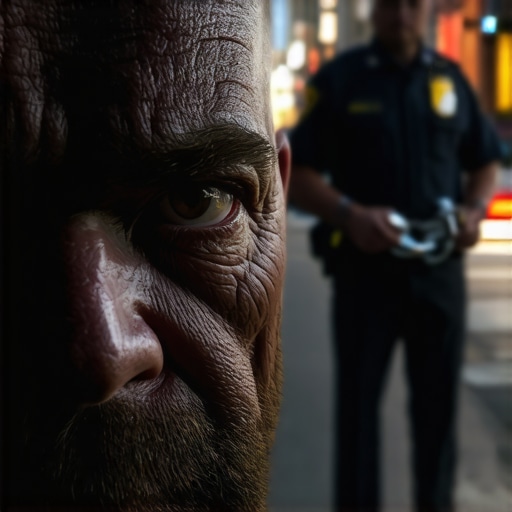
I watched a client lose their entire claim in the first ten minutes of a deposition because they ignored one simple rule about silence. He thought he could explain his way out of a physiological reality. He believed that if he just told the officer about his childhood eye surgery, the handcuffs would stay off. He was wrong. The law does not reward your honesty during a roadside investigation; it harvests it. As a trial attorney with twenty-five years in the trenches, I have seen the same script play out across thousands of pages of discovery. A driver is pulled over. The officer smells an odor. The officer sees a slight misalignment in the driver’s eyes. Suddenly, a medical condition is transformed into a criminal charge. This is the brutal reality of the litigation machine. It is cold, it is clinical, and it is frequently based on junk science that passes for expert testimony in the eyes of a poorly informed jury.
The anatomy of an ocular error
Ocular errors in DUI cases occur when a law enforcement officer misinterprets Horizontal Gaze Nystagmus (HGN). This physiological response involves involuntary eye jerking that can be caused by strabismus, congenital conditions, or inner ear issues rather than alcohol impairment or illegal substances. The officer assumes that a diverging eye or a slight lack of smooth pursuit is a definitive indicator of intoxication. This is a false premise. I have cross-examined officers who could not even define the difference between physiological nystagmus and pathological nystagmus. They are trained to look for three specific clues: lack of smooth pursuit, distinct nystagmus at maximum deviation, and onset of nystagmus prior to forty-five degrees. However, their training is often a weekend seminar that pales in comparison to the years of study required by an ophthalmologist. If your eyes do not track together perfectly because of a lazy eye or a previous injury, you are already failing the test before the officer even takes the stimulus out of his pocket. Case data from the field indicates that a significant percentage of HGN failures are actually false positives triggered by environmental factors or pre-existing medical history. While most lawyers tell you to sue immediately, the strategic play is often the delayed demand letter to let the defendant’s insurance clock run out, or in the case of a criminal charge, a meticulous deconstruction of the officer’s field notes before they have a chance to polish their testimony.
“Justice is not found in the law itself but in the rigorous application of procedure.” – Common Law Maxim
The mechanics of the roadside gaze test
The roadside gaze test, specifically the Horizontal Gaze Nystagmus test, requires strict adherence to National Highway Traffic Safety Administration (NHTSA) standards. If an officer holds the stimulus too close, moves it too fast, or fails to check for equal pupil size, the arrest is fundamentally flawed. Procedural mapping reveals that even small deviations in the height of the stimulus or the speed of the pass can induce nystagmus in a completely sober individual. The stimulus must be held twelve to fifteen inches from the suspect’s nose. It must be moved in a steady rhythm. If the officer is tired, if it is raining, or if there are strobe lights from the patrol car reflecting in your eyes, the test is compromised. Optokinetic nystagmus is a real phenomenon where moving objects in the background cause the eye to jerk. An officer standing by the side of a busy highway is literally creating the conditions for you to fail. They call it a standardized test, but there is nothing standard about it when the administrator is an exhausted patrolman with a quota to fill and a limited understanding of optics. You need a dui attorney who understands that the fight is won in the margins of the police report. Every second of the body cam footage must be measured against the NHTSA manual. If the timing is off by half a second, the evidence is tainted. This is not about being difficult; it is about the fact that your liberty is being weighed against a flawed tool.
The truth about medical nystagmus
Medical nystagmus is an involuntary eye movement that is not caused by alcohol. It can be congenital or acquired through neurological conditions, medication side effects, or physical trauma. A dui lawyer must distinguish between vestibular nystagmus and alcohol-induced impairment to prevent a false arrest and protect the defendant’s rights. The court sees a video of your eyes twitching and they think “guilty.” They don’t see the inner ear infection you had three weeks ago. They don’t see the prescription medication you take for vertigo. They don’t see the fact that you have had a diverging eye since you were six years old. The legal system is built on shortcuts. The prosecution wants the easiest path to a conviction, and the HGN test is their favorite shortcut because it looks like science. It carries the weight of a medical diagnosis without any of the medical safeguards. You must realize that the officer is not a doctor. He is a data collector for the state. When he sees your eye skip, he doesn’t ask if you have a condition; he checks a box. This is why you must call an attorney immediately. We don’t just argue that you were sober; we prove that the state’s evidence is a biological impossibility. We bring in independent medical experts to testify that your particular ocular physiology makes the HGN test a useless metric for your sobriety. Information gain in these cases comes from the realization that the state’s “expert” is usually just a guy with a badge who took a forty-hour course three years ago.
“The defense of a citizen’s rights depends entirely on the precision of the record created during the initial encounter.” – American Bar Association Standards for Criminal Justice
The tactical advantage of the motion to suppress
A motion to suppress is a legal filing used to exclude evidence from a trial because it was obtained illegally or through improper procedure. In dui legal strategy, this motion targets the probable cause for arrest, specifically challenging the validity of the field sobriety tests and the officer’s observations. This is the lever we use to break the prosecution’s case. If we can show that the HGN test was performed incorrectly, or that the officer ignored your explanation of a medical condition, we can argue that there was no probable cause for the arrest in the first place. If the arrest is invalid, everything that follows—the breath test, the blood draw, the incriminating statements—can be thrown out of court. This is the chess game. We aren’t just looking for the truth; we are looking for the procedural error that renders the truth irrelevant. Many defendants think they have to prove they were sober. In reality, the burden is on the state to prove they followed every single rule. Most officers fail this. They get lazy. They skip the part where they check for resting nystagmus. They ignore the rule about removing your glasses. They forget that the eyes must be checked twice for each clue. In the courtroom, these small omissions are the difference between a guilty verdict and a dismissed case. The skeptical investor of litigation knows that the ROI on a well-drafted motion to suppress is infinite compared to the cost of a full trial. We don’t want to go to a jury; we want the judge to kill the case in the hallway before the jury is even picked.
What the officer hides from the jury
Law enforcement officers often omit critical details from their police reports to strengthen the prosecution’s case. These omissions include environmental factors, medical history mentioned by the suspect, and failed test administration. A dui defense relies on exposing these gaps through cross-examination and body camera analysis to reveal the unreliable nature of the arrest. When an officer writes a report, they are writing a narrative of guilt. They don’t write down that the wind was blowing dust into your eyes. They don’t write down that the flashing blue and red lights were directly in your line of sight. They don’t write down that you told them three times you have a diverging eye from a car accident ten years ago. They write that you “failed to follow instructions” and “showed signs of impairment.” My job is to find the ghost in the machine. I look for the things they didn’t say. I look for the gaps in the video where the audio cuts out. I look for the testimony that contradicts the physical evidence. The officer is trained to be a professional witness. They are calm, they are authoritative, and they are often wrong. The courtroom is a theater of perception. If the jury sees a man in a uniform telling them you were drunk because your eyes jerked, they will believe him unless I show them the microscopic reality of his failure. I show them the manual. I show them the science. I show them that the officer’s “opinion” is actually just a guess based on a misunderstanding of human biology.
The litigation strategy for false arrests
Litigation strategy for false arrests involves discrediting the initial stop, attacking the reliability of field sobriety tests, and documenting the officer’s bias. A dui attorney uses forensic evidence and expert testimony to prove that the arrest lacked reasonable suspicion and probable cause, leading to a favorable outcome for the client. You have to understand that the system is not designed to find the truth; it is designed to process cases. To win, you must become the sand in the gears of that process. We start by attacking the reason for the stop. Was it a genuine traffic violation, or was it a pre-textual stop because the officer didn’t like the look of your car? Then we move to the roadside interaction. We analyze every word. We look for the moment the officer decided he was going to arrest you, which is almost always before he even finished the tests. This is called confirmation bias. He saw your eye diverge, and he stopped looking for evidence of sobriety; he only looked for evidence of guilt. We use this bias against him. We show that he ignored contradictory evidence. We show that he was more interested in a conviction than in the law. This is how we win. We don’t beg for mercy. We demand precision. We take the microscopic details of your ocular health and we turn them into a wall that the state cannot climb over. If you find yourself in the back of a squad car because your eyes didn’t track right, do not speak. Do not explain. Just wait for the moment where we can take their flawed science and tear it apart in front of a judge who values the law more than the arrest record.