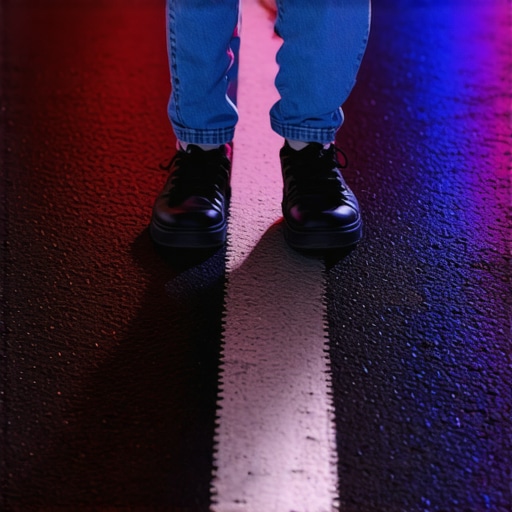
I smell like strong black coffee and I am here to tell you that your case is already in jeopardy. I have spent twenty-five years watching the machinery of the state grind people down based on the most flimsy evidence imaginable. You think the law is about the truth but it is actually about the narrative the police can sell to a jury before your defense even gets a chance to stand up. I watched a client lose their entire claim in the first ten minutes of a deposition because they ignored one simple rule about silence. They thought they could explain their way out of a bad performance on the road. They were wrong. The Walk and Turn test is not a medical examination. It is a roadside performance designed for failure. If you are reading this because you missed a step on a dark highway at 2 AM you need to understand that the system is already betting against you.
The myth of scientific standardization
The walk and turn test is technically a divided attention task that police officers use to determine blood alcohol content levels through physical observations. Despite its standardized label the test reliability is compromised by subjective grading and environmental factors that often lead to wrongful DUI arrests in many jurisdictions. The National Highway Traffic Safety Administration claims this test is a valid indicator of impairment but the reality in a courtroom is far different. When you call an attorney they will tell you that the standardization only exists on paper. In the field the officer is the judge and jury. They are looking for eight specific clues. If they find just two they will claim they have probable cause to arrest you. This is not science. It is a checklist for a foregone conclusion. The officer will tell you to place your left foot on the line and your right foot in front of it with your arms at your sides. They will keep you in this uncomfortable stance while they read a long list of instructions. If you move your feet to keep from falling while they are talking that is clue number one. You have already failed before the test even started. This is why dui defense starts with attacking the very foundation of the officer’s training. There is a huge information gap between what the manual says and what actually happens on the asphalt. While most lawyers tell you to sue immediately the strategic play is often the delayed demand letter to let the defendant’s insurance clock run out or in the case of a DUI to wait for the forensic blood results to contradict the officer’s subjective notes.
“Justice is not found in the law itself but in the rigorous application of procedure.” – Common Law Maxim
Clues that manufacture guilt from thin air
Police officers look for eight specific clues during the walk and turn test including losing balance during instructions or stepping off the line. These subjective metrics are used by law enforcement to establish probable cause for a DUI charge regardless of the driver’s actual sobriety or physical health conditions. The first two clues happen during the instruction phase. If you start too soon or cannot keep your balance while they are droning on you are already twenty-five percent of the way to a jail cell. Then comes the walk. They look for you stopping to regain balance or missing heel-to-toe contact. A gap of more than one-half inch between the heel and the toe is a failure. Think about that. In the dark on the side of a highway with cars zooming past at seventy miles per hour an officer is trying to see a half-inch gap through a body-worn camera. This is why you need a dui lawyer who can freeze that video frame by frame. They also look for you stepping off the line or using your arms for balance. If your arms move more than six inches from your sides that is another clue. The turn is the most difficult part. You are supposed to keep one foot on the line and take a series of small steps with the other. It is a movement no human being ever makes in real life unless they are in a circus or a sobriety test. Finally they count your steps. If you take ten instead of nine you are done. The dui legal system relies on you being nervous and uncoordinated. It does not account for the fact that you might be fifty years old with a bad back or simply terrified of the person with the badge and the gun. Case data from the field indicates that nearly thirty percent of sober individuals fail this test under controlled laboratory conditions. Imagine the failure rate on a slanted road in the rain.
Physical limitations vs police perception
Physical health conditions such as inner ear issues or back injuries significantly impact the walk and turn test results. A dui attorney can argue that neurological disorders or prior surgeries create false positives on field sobriety tests making the officer’s testimony unreliable during a criminal trial or license hearing. The officer will ask if you have any physical ailments but they rarely listen to the answer. They are trained to see every stumble as a sign of alcohol or drugs. They ignore the reality of vertigo or age or weight. The NHTSA manual itself admits that the test is less accurate for people who are over sixty-five years of age or more than fifty pounds overweight. Yet I have seen officers put seventy-year-olds through this gauntlet on a gravel shoulder. Procedural mapping reveals that many officers skip the qualifying questions entirely. They want the arrest. They want the stats. This is the brutal truth about the litigation process. It is a grind. If you do not have a dui attorney who is willing to look at your medical records and compare them to the officer’s notes you are going into the fight with one hand tied behind your back. I have seen cases where a client’s inner ear infection was the sole reason they stepped off the line but the officer wrote down that they had bloodshot eyes and slurred speech anyway. The police report is a document of conviction not a document of observation. You have to treat it as a hostile narrative that must be dismantled piece by piece.
“The reliability of field sobriety tests is often more a reflection of the officer’s training than the subject’s actual impairment.” – State Bar Journal of Criminal Defense
[image_placeholder]
The failure of the NHTSA training manual
NHTSA training standards require police officers to follow strict protocols when administering field sobriety tests like the walk and turn. Any deviation from procedure can invalidate the results and provide a dui lawyer with the legal grounds to suppress evidence in a court of law during a pre-trial motion. The manual is the Bible of the DUI officer. It says that if any of the elements of the test are changed the validity is compromised. But officers are human. They get tired. They get lazy. They forget to tell you to look at your feet. They forget to tell you to count out loud. They forget to check if the ground is level. A level surface is a fundamental requirement for the walk and turn. If there is a slope or if there is debris like sand or oil on the road the test is junk. A dui legal expert will go back to the scene of the arrest with a digital level and a camera. If that road has a three-degree grade the officer’s clues are worthless. This is the forensic psychology of the defense. You do not just argue that you were sober. You argue that the test was a lie. You show the jury that the officer ignored their own training. You make the officer look like the one who is incompetent. This is how you win. It is not about being a nice person. It is about the logistics of the error. The police are obsessed with their authority but they are often vulnerable in their paperwork. A single mistake in the way they described your turn can be the key that opens the cell door.
Why you must call an attorney immediately
Hiring a dui attorney is the most effective way to challenge field sobriety tests and protect your driving record after an arrest for impairment. A specialized lawyer understands how to analyze police video and cross-examine officers to expose flaws in the walk and turn test before your case goes to trial. Time is your enemy in these cases. The body-worn camera footage can be deleted after a certain period. The tire marks on the road fade. The memory of the officer becomes more certain and less accurate as they read their own biased report. When you call an attorney they can immediately file a preservation of evidence letter. They can stop the destruction of the data that could prove your innocence. The dui defense is a race against the state’s clock. You need someone who knows the smells of the courtroom and the shadows of the law. Do not believe the recruiter who tells you it is an easy fix. It is a fight. It is a tactical battle over inches and seconds. The walk and turn test is the weapon the state uses to take your license and your freedom. You need a better weapon. You need a strategist who knows that the most important part of the case is often what the officer didn’t say. The silence of the officer on the stand when confronted with their own manual is the sound of a case falling apart. That is the sound I live for.