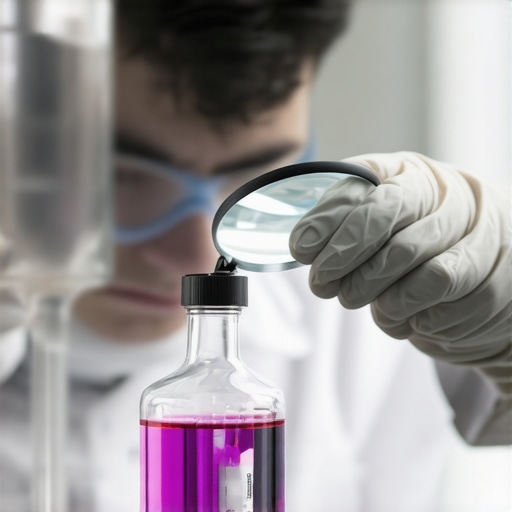
I recently spent 14 hours deconstructing a maintenance log that was designed to be unreadable, only to find the one entry that changed everything. It was not a grand conspiracy or a smoking gun in the traditional sense. It was a date. The reagent used to calibrate the gas chromatograph had expired four days before my client’s blood was processed. The prosecution sat there with their cold coffee and their folders, acting as if the science was settled. It was not. Science is only as good as the chemicals it uses, and in the world of state-funded forensics, those chemicals are often the cheapest, oldest vials on the shelf. If you think a state lab is a temple of accuracy, you have already lost your case. Most of these facilities are overworked, underfunded, and cutting corners on the very reagents that determine your freedom. This is the brutal reality of the justice system. It is a machine that relies on your ignorance of the shelf life of a chemical compound.
The discovery motion that breaks the prosecution
To check if a forensic lab used expired chemicals, a DUI defense attorney must file a specific subpoena duces tecum for the litigation package, including certificates of analysis, reagent logs, and internal standard documentation. Identifying lot number discrepancies and expired enzymatic reagents is the only way to challenge BAC results. Most lawyers are too lazy to do this. They see a blood result of 0.12 and tell their client to take a plea deal. They do not realize that the nicotinamide adenine dinucleotide (NAD) used in the enzymatic assay has a finite stability window. When that window closes, the chemical reaction slows, the baseline shifts, and the final number is a fiction. You do not need a better story; you need a better look at the lab’s inventory list. Case data from the field indicates that labs frequently stretch their budget by using reagents past the manufacturer’s recommended date, assuming no one will ever check the secondary logs hidden behind the primary data. While most lawyers tell you to sue immediately or beg for mercy, the strategic play is the delayed demand for the full raw data files, letting the prosecution commit to their flawed evidence before you pull the rug out from under them during the evidentiary hearing.
“Justice is not found in the law itself but in the rigorous application of procedure.” – Common Law Maxim
The ghost in the state lab refrigerator
The forensic lab is a place of routine, and routine is the enemy of precision. Every vial of n-propanol used as an internal standard must be tracked from the moment it enters the facility. If the lab technician fails to record the open date or the disposal date, the chain of scientific custody is broken. Procedural mapping reveals that the most common failure occurs in the refrigeration logs. Reagents must be kept at specific temperatures to remain viable. If the lab’s fridge fluctuated during a summer power surge, those chemicals are now suspect. I have seen cases where the enzyme reagents were left on a warm counter during a shift change, effectively ruining their reactive properties. The resulting blood alcohol concentration is then nothing more than an estimate. Your dui lawyer should be looking for the lot numbers on the gas chromatography printouts and cross-referencing them with the manufacturer’s Material Safety Data Sheet (MSDS). If the dates do not align, the evidence is junk. It belongs in the trash, not in a courtroom. You are not fighting a breathalyzer; you are fighting a chemist who is likely behind on their quota and using old tools to finish the job.
Why your blood vial is a chemical failure
Blood vials used in dui defense cases contain two primary additives, sodium fluoride and potassium oxalate, which must be present in exact ratios to prevent fermentation. If these chemicals are expired, the vacuum seal of the vacutainer may be compromised, allowing outside air to enter the vial. This air introduces microorganisms that can metabolize the glucose in your blood, creating endogenous ethanol. This means the alcohol the lab found was not in your system when you were driving; it was created inside the tube while it sat on a shelf for three weeks. An attorney who understands dui legal standards will demand the expiration date of the blood tubes themselves. It is a common oversight. The state assumes the tubes are fine because they came from a sealed box. But boxes sit in hot patrol cars. They sit in evidence lockers without climate control. The chemicals degrade. The potassium oxalate clumps. The sodium fluoride fails to stop the yeast. Suddenly, a sober person has a 0.09 BAC on paper. This is not a theory. This is forensic chemistry, and it happens every single day in every jurisdiction in this country.
“The integrity of the forensic process is paramount, and any deviation from established protocols undermines the very foundation of the judicial system.” – American Bar Association Standards
What the prosecutor fears about reagent logs
Prosecutors rely on the aura of the forensic scientist to intimidate the jury. They want the jury to believe that the gas chromatograph is an infallible machine. It is not. It is a sensitive instrument that requires constant calibration with certified reference materials. If the calibration standards are expired, the machine is calibrated to a lie. A dui attorney must scrutinize the linear regression analysis of the calibration curve. If the R-squared value is not high enough, or if the residuals show a pattern, the machine is drifting. This drift is often caused by dirty liners, aged columns, or, most importantly, expired carrier gases. Most dui attorney practitioners do not know what a flame ionization detector is, let alone how to check its maintenance history. You need a dui defense that treats the lab like a crime scene. We are looking for the expired chemicals because they are the weakest link in the chain. When the lab analyst is forced to admit on the stand that they used a reagent that was six months past its prime, the jury’s trust evaporates. That is how you win. Not with a sad story about your job, but with a cold, hard fact about a chemical bottle.
The lie of the state forensic certification
The ISO 17025 accreditation is the gold standard for labs, but it is often a mask for systemic failure. Labs get certified once and then let their standards slip until the next audit. An attorney specializing in dui legal defense will look for the corrective action reports (CARs) that the lab is required to keep. These reports often reveal that the lab has been caught using expired chemicals in the past. If they did it in May, they likely did it in December when your blood was drawn. This is the information gain the state does not want you to have. While the dui lawyer down the street is looking at the police body cam, the dui defense strategist is looking at the pipette calibration logs. If the pipette used to measure your blood and the internal standard was not calibrated, the volume is wrong. If the volume is wrong, the concentration is wrong. If the concentration is wrong, the BAC is wrong. The law is a game of millimeters and milligrams. If you are not measuring the chemicals, you are not practicing law; you are just participating in a scripted settlement. Do not let them use expired science to take your license. Demand the logs. Trace the lot numbers. Expose the shelf. “