The Biological Lie That Can End Your Freedom
I drink my coffee black and I take my legal strategy even darker. Most people think a breathalyzer is a divine instrument of truth. It is not. It is a fallible piece of technology that relies on a scientific assumption that is frequently, and sometimes intentionally, wrong. If you have been arrested based on a breath test, you are likely the victim of a mathematical ghost known as mouth alcohol. This isn’t a theory. It is a physiological reality that converts innocent behavior into a criminal record. When you call an attorney, you need someone who understands that the machine is often lying because it cannot distinguish between the air in your lungs and the molecules trapped in your teeth.
I watched a client lose their entire claim in the first ten minutes of a trial because they ignored one simple rule about silence. They thought they could explain away the machine. They couldn’t. I had to step in and deconstruct the entire arrest sequence to show the jury that the officer skipped the mandatory observation period. That tiny gap allowed residual ethanol to skew the results. The prosecution hates it when we zoom in on the physics because physics doesn’t care about their conviction rates. If you are facing these charges, you need a dui defense that treats the breathalyzer like a hostile witness.
The chemistry of a false positive
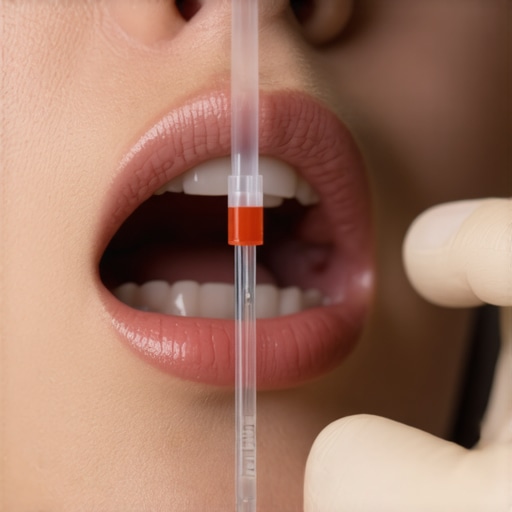
Mouth alcohol occurs when ethanol stays in the oral cavity, dental work, or esophagus, causing the breathalyzer to register an artificially high blood alcohol concentration (BAC). This residual alcohol creates a spike in the sensor that does not reflect the actual amount of alcohol absorbed into the driver’s bloodstream. I see this happen most often when the twenty minute observation period is ignored by the arresting officer. A dui lawyer knows that the machine assumes a 2100 to 1 ratio between breath and blood alcohol. When mouth alcohol is present, that ratio collapses, making a sober person look like a felon on paper.
Breathalyzers use infrared spectroscopy or fuel cell technology to detect ethanol. They are programmed to detect the ‘plateau’ of a breath sample. If the alcohol levels drop too quickly, the machine’s slope detector is supposed to flag it as mouth alcohol. However, these detectors are notoriously unreliable. If you have any kind of bridge work, a crown, or even just a piece of food trapped in your gums, it can hold onto raw alcohol that has not been metabolized. This is the ‘bleed’ in the litigation. It is a technical failure that the state tries to pass off as a moral one.
Why your breathalyzer is actually a liar
Breathalyzers are designed to measure alveolar air from the deep lungs, but they often capture mouth alcohol which leads to a false high reading. This happens because the machine cannot differentiate between alcohol that has passed through the liver and alcohol that just sat in your mouth. This error is the primary reason why any dui legal expert will tell you that the numbers on the screen are the start of the investigation, not the end. The machine is a guesser, not a knower.
“Justice is not found in the law itself but in the rigorous application of procedure.” – Common Law Maxim
Consider the mechanics of a burp. If a driver has a small amount of alcohol in their stomach and they experience a slight gastric reflux or a burp within twenty minutes of blowing into the tube, the machine is now measuring raw stomach vapors. This isn’t your blood alcohol level. It’s a measurement of your digestion. If the officer was looking at their laptop instead of your face, they missed the event. This procedural failure is the flank attack I use to dismantle the state’s case. We don’t argue with the machine. We argue with the integrity of the sample.
How GERD destroys a dui prosecution
Gastroesophageal Reflux Disease (GERD) is a medical condition that frequently causes mouth alcohol to be introduced into the breath stream during a DUI test. This condition allows stomach acid and alcohol vapors to rise into the esophagus and mouth, where they are captured by the breathalyzer sensor. This results in a BAC reading that is significantly higher than the driver’s actual level of intoxication. A dui attorney will use medical records to prove that the defendant’s physiology made a fair test impossible.
The state will try to say that GERD doesn’t matter. They are wrong. Case data from the field indicates that individuals with acid reflux can blow a 0.12 when their actual blood alcohol is 0.05. The difference is the difference between going home and going to jail. We look for the ‘silent reflux’ symptoms. We look for the medical history that the officer never asked about. The courtroom isn’t about truth. It’s about perception. My job is to make the jury perceive the machine as the broken tool it is. While most lawyers tell you to sue immediately, the strategic play is often the delayed demand letter or the aggressive motion to suppress to let the defendant’s insurance clock run out while we gather the medical evidence.
The ghost in the settlement conference
Settlement conferences often hinge on the reliability of the breath evidence, which can be challenged if there is proof of mouth alcohol contamination. When the prosecution realizes their primary piece of evidence is scientifically compromised by a physiological glitch, the leverage shifts to the defense. A dui defense built on the failure of the slope detector can force a dismissal before a jury is ever empaneled. I look for the gaps in the officer’s log. If they didn’t check the mouth for foreign objects, the test is garbage.
“The burden of proof remains with the state to ensure that every scientific test meets the highest standards of procedural reliability.” – ABA Standards for Criminal Justice
Procedural mapping reveals that many officers treat the observation period as a suggestion. They check their email. They talk to their partner. They fill out paperwork. But the law requires them to watch the suspect continuously to ensure no burping, vomiting, or mouth alcohol contamination occurs. If I can find three seconds where the officer turned their head, I have the leverage I need. I don’t care about the officer’s intent. I care about the failure of the protocol. That is how you win.
What the defense doesn’t want you to ask
Defense strategies must include a deep dive into the specific model of breathalyzer used, such as the Intoxilyzer 8000, to identify known issues with mouth alcohol detection. These machines have documented failures in their software that allow mouth alcohol to bypass the slope detector under certain conditions. Asking about the machine’s maintenance history and the ‘source code’ of its error logs is a move that most dui legal teams overlook. I don’t overlook it. I obsess over it.
There is a contrarian data point here. Most people think that more air means a better sample. The reality is that the longer you blow, the more likely you are to introduce deep lung air that might be contaminated by esophageal vapors if you have any digestive issues. The machine wants you to blow until it’s satisfied. I want to know if the machine was calibrated to handle your specific lung capacity. If the machine wasn’t calibrated for the environmental temperature of the room, the results are skewed. Every degree of temperature change in the breath can result in a 6.8 percent increase in the BAC reading. This is the microscopic reality of the case.
The tactical timing of a motion to suppress
A motion to suppress is a tactical legal filing designed to have breathalyzer results thrown out of court due to mouth alcohol contamination or procedural errors. This motion is most effective when filed after the prosecution has committed to a specific narrative of the arrest. By forcing the officer to testify about the observation period under oath, a dui lawyer can trap them in a contradiction that proves the breath sample was unreliable. This is the chessboard.
When you call an attorney, you aren’t just looking for someone to hold your hand. You are looking for a strategist who can identify the ‘bleed’ in the state’s case. The state wants a quick plea. They want you to see the number on the paper and give up. I see the number and I see a target. I see a machine that hasn’t been cleaned. I see an officer who was distracted. I see a client who has a medical condition they didn’t know could help them. Litigation is about finding the one clause, the one error, or the one biological glitch that changes everything. Don’t let a machine’s lie become your truth.