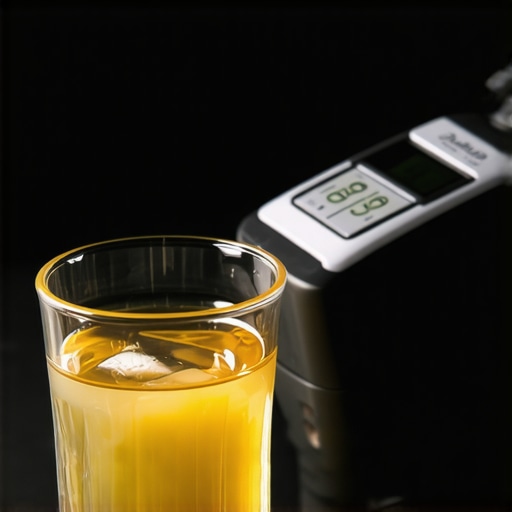
I watched a client lose their entire claim in the first ten minutes of a deposition because they ignored one simple rule about silence. They thought they could explain away the breathalyzer with excuses about how much they ate or how tired they were. They were wrong. The machine does not care about your narrative. It cares about the chemical vapor in your oral cavity. As a trial attorney with twenty five years in the trenches, I can tell you that the legal system is a meat grinder for the unprepared. You walk into a courtroom thinking it is about the truth, but it is actually about the calibration of a machine and the adherence to a fifteen minute observation period that most officers treat as a suggestion rather than a mandate. I smell like strong black coffee and the exhaust of a hundred late night strategy sessions. Your case is failing before you even say hello because you assume the numbers on that little printout are absolute. They are not. They are often the result of physiological noise that the law ignores unless your attorney knows how to peel back the layers of the infrared spectrometry process. The presence of mouth alcohol is the single most common cause of a wrongful DUI conviction, yet it remains the most misunderstood defense in the modern legal landscape. If you do not understand how a burp or a piece of dental work can land you in a cell, you are already behind the count.
The phantom liquor in the breathalyzer chamber
Mouth alcohol is any residual ethanol trapped in the oral cavity, dental hardware, or esophagus that a breathalyzer incorrectly identifies as deep lung air. This false positive occurs because the device calculates blood alcohol concentration (BAC) based on vapor concentration, which is significantly higher in the mouth than in the lungs. DUI defense requires proving this contamination happened. The machine is designed to capture alveolar air, the air from the deepest part of the lungs that supposedly reflects blood alcohol levels. However, the mouth is a volatile environment. If you consumed a drink within twenty minutes of the test, or if you have a medical condition that brings stomach contents into your throat, the machine is not reading your blood. It is reading the concentrated fumes of a liquid that has not even been metabolized. This is the gap where innocent people are turned into defendants. Most attorneys will look at the 0.09 reading and tell you to take the plea. That is because they are settlement mills. A real trial lawyer looks at the slope detector data and the officer logs to see if that 0.09 was actually a spike caused by a single drop of alcohol trapped under a bridge or a crown.
“Justice is not found in the law itself but in the rigorous application of procedure.” – Common Law Maxim
Why a simple burp costs five thousand dollars
Gastroesophageal Reflux Disease (GERD) and simple regurgitation can trigger a false positive by moving undigested alcohol from the stomach back into the oral cavity. When a DUI lawyer identifies a client with acid reflux, they can challenge the breath test results because the breathalyzer cannot distinguish between stomach vapors and deep lung air. This is a biological reality that hardware often fails to detect. The science of the breathalyzer relies on the Henrys Law principle, which assumes a fixed ratio between the alcohol in your breath and the alcohol in your blood. But when you burp, you are bypassing that ratio entirely. You are introducing raw alcohol vapor into the sample chamber. The machine sees a massive spike and assumes your blood is saturated. In reality, you might be stone cold sober, but your stomach acid just cost you your license. While most lawyers tell you to sue immediately, the strategic play is often the delayed demand letter or the request for the machines internal maintenance logs to let the defendant’s insurance clock run out or to find the pattern of failure in that specific device. We are looking for the ROI of litigation, and the ROI on a flawed breath test is high if you know where the physics breaks down.
The failure of the fifteen minute observation rule
The observation period is a mandatory timeframe where an officer must watch a suspect for fifteen to twenty minutes to ensure no mouth alcohol is introduced or brought up. Failure to strictly follow this DUI legal procedure can lead to the suppression of evidence because any breath test conducted without this window is scientifically unreliable and legally inadmissible. Officers hate this rule. They want to get through the paperwork and get back on the road. They will sit you in the back of a cruiser and check their email or talk to their partner. They are not watching your mouth. They are not looking for the slight hiccup or the silent burp. If they miss that, the entire test is garbage. In the courtroom, we zoom in on this microscopic detail. We look at the body cam footage. We sync the timestamp of the arrest with the timestamp of the breath test. If that clock shows fourteen minutes and fifty nine seconds, the state has a problem. The law is a game of inches, and procedure is the ruler we use to measure it.
“A defendant’s right to confront the evidence against them is the bedrock of a fair trial.” – American Bar Association Standards for Criminal Justice
Scientific flaws in the infrared spectrometry process
Infrared spectrometry is the technology used in a breathalyzer to detect alcohol molecules by measuring how they absorb specific wavelengths of light. However, this dui defense strategy highlights that the machine often confuses other chemicals, like acetone or isopropanol, with ethanol, leading to an inaccurate BAC reading. The machine is essentially a color blind witness. It sees a certain shape of molecule and screams alcohol. But if you are on a ketogenic diet, or if you are a diabetic, your body produces isopropyl alcohol. The machine often cannot tell the difference. This is a contrarian data point that the prosecution hates. They want the jury to believe the machine is an infallible god of glass and wires. It is not. It is a fallible tool that makes assumptions based on a generic human model. Most people think the breathalyzer is an absolute number, but the contrarian reality is that it is a mathematical estimate based on a fluctuating partition ratio that varies from person to person. If you have a high body temperature or a low hematocrit level, the machine is lying about you.
How to break the officer during cross examination
A dui attorney will use cross examination to highlight the officers failure to recognize signs of mouth alcohol or their lack of training on breathalyzer slope detectors. By exposing these procedural errors, the defense can create reasonable doubt about the BAC results and the validity of the DUI charges. I don’t ask the officer if they followed the rules. I ask them to define the physics of the slope detector. I ask them how many times they blinked during the observation period. I use silence as a weapon. When they realize they cannot explain how the machine works, the jury realizes the officer is just a technician following a script. If the script is flawed, the conviction is flawed. We look for the bleed in the prosecution’s case. We look for the moment where the officer admits they were distracted. That is the moment the case dies for the state. Litigation is chess, and most officers are playing checkers with a broken board.
The chemical reality of GERD and dental work
Dental work such as bridges, crowns, or dentures can trap food particles and mouth alcohol, creating a reservoir that leaches ethanol into the breathalyzer sample over time. A dui lawyer must investigate the defendants medical and dental history to prove that the false positive was caused by these physical traps rather than actual intoxication. It is not just about what you drank; it is about where the drink stayed. If you have a periodontal pocket, it can hold a microscopic amount of liquid. That liquid is enough to blow a 0.10 when you are actually a 0.05. We bring in experts to talk about the volumetric displacement of a dental bridge. We turn the courtroom into a biology lab. We show the jury that the law is not a blunt instrument but a scalpel. If the state wants to take away your freedom, they better have a sample that isn’t contaminated by a trip to the dentist three years ago.
Questions for the state expert witness
Expert witnesses for the state often rely on the assumption that the breathalyzer is always accurate, but a dui defense lawyer will challenge them on the slope detector‘s inability to catch all mouth alcohol events. Forcing the expert to admit the scientific limitations of the device is key to winning a DUI trial and protecting the legal rights of the accused. Does the machine have a margin of error? Yes. Does the machine account for the partition ratio of a person with a fever? No. Does the machine know if the subject has a hiatal hernia? Absolutely not. When you force the expert to say I don’t know, you win. The burden of proof is on the state, and every I don’t know is a brick in the wall of reasonable doubt. We don’t need to prove you were sober. We only need to prove their machine is a liar.