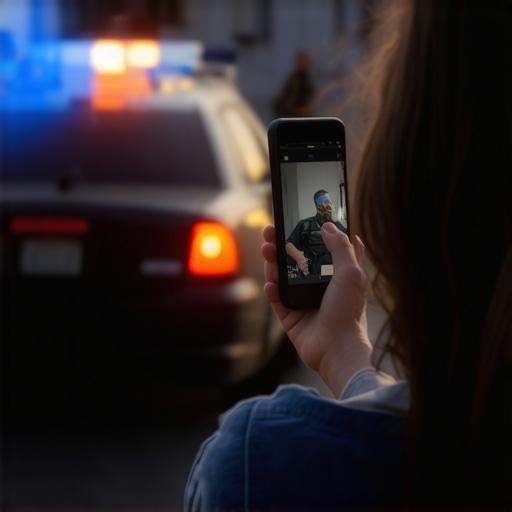
The camera is the only witness that never forgets
The coffee in my mug is cold and the air in this room smells like stale ink. I watched a client lose their entire claim in the first ten minutes of a deposition because they ignored one simple rule about silence. They thought their memory of the traffic stop was enough. It was not. Memory fades. It warps. It bends under the pressure of a prosecutor’s glare. A smartphone camera does not have nerves. It does not forget the exact second the officer touched his holster. If you are facing a charge, you must understand that the police report is a work of fiction written to justify an arrest. You need an objective narrator. You need a dui lawyer who knows how to use digital evidence to dismantle a narrative built on subjective observations. Most people think they can talk their way out of a pair of handcuffs. They are wrong. Every word you speak is a stone in the wall the state is building around your freedom. The only thing that can break that wall is a high definition record of what actually happened on that asphalt at 2 AM.
The camera captures the procedural failures of the officer
Recording police stops provides an objective record that counters the officer’s testimony in a DUI case. When a dui attorney reviews the footage, they look for procedural errors and constitutional violations that can lead to a motion to suppress evidence. The video provides a timestamped sequence of events that often contradicts the written report. Case data from the field indicates that officers frequently deviate from the National Highway Traffic Safety Administration standards when performing field sobriety tests. They rush the instructions. They fail to check for resting nystagmus. They ignore the environmental factors like wind or passing traffic that make the balance tests impossible for a sober person. Without your own recording, it is your word against a man with a badge and a pension. The court will choose the badge every time unless you provide a reason not to. Procedural mapping reveals that the first sixty seconds of an encounter are the most vital for your dui legal strategy. If the officer lacked reasonable suspicion to stop your vehicle, the entire case collapses. Your phone captures the lack of swerving. It captures the clear speech that the officer will later describe as slurred.
Why your silence alone will not save your license
Maintaining silence during a stop is a constitutional right but recording the encounter provides the context of compliance that a dui defense requires to prove the officer’s bias. A video shows that you were not combative or bellicose. It proves that you followed all lawful orders while refusing to answer self-incriminating questions about your night. A dui attorney can use this to show a jury that you were in full control of your mental and physical faculties. Silence is a weapon, but video is the armor that protects that weapon. Look at the data. Most arrests are based on the officer’s subjective opinion. They say your eyes were bloodshot. They say they smelled the odor of an alcoholic beverage. These are phrases they are trained to write. They are templates for probable cause. If your video shows you have clear eyes and a steady gait, that template becomes a lie. You must call an attorney as soon as the cuffs are on, but the work starts the moment you see the blue lights. The video you take is the only thing that will keep your dui legal team from fighting with one hand tied behind their back.
“Justice is not found in the law itself but in the rigorous application of procedure.” – Common Law Maxim
The fatal flaw in the standard field sobriety test
Standardized field sobriety tests are designed for you to fail the evaluation regardless of your blood alcohol content because they rely on subjective grading by the arresting officer. A dui defense relies on showing that these tests are scientifically shaky when not performed under perfect conditions. Your recording will show the uneven pavement, the blinding flashlights, and the officer’s failure to demonstrate the test correctly. Information gain suggests that while most lawyers tell you to sue immediately, the strategic play is often the delayed demand letter to let the defendant’s insurance clock run out. We wait for the bodycam footage to be processed. We wait for the officer to commit to his story under oath. Then we hit them with the video from your phone that proves he skipped the medical clearance questions. He never asked if you had a back injury. He never asked if you had inner ear issues. He just graded you as a failure. Statutory zooming into the NHTSA manual shows that if one clue is missed in the HGN test, the entire test is technically invalid. Most officers do not even know their own manual. They rely on the fact that you do not know it either.
How a defense attorney deconstructs the dashcam gap
Police dashcam footage often has blind spots or audio cutouts that conveniently occur during the most contentious moments of a stop, making your personal recording the only complete record. A dui lawyer uses your footage to fill these gaps and prove that the missing police audio was a deliberate choice. This creates a narrative of bad faith. When the prosecution cannot explain why their equipment failed at the exact moment the officer allegedly heard a confession, the jury begins to doubt everything else. The dui legal process is about creating reasonable doubt. A video from your perspective shows the officer’s hand on his gun. It shows the aggressive stance. It shows the intimidation tactics used to coerce a breath sample. This is not just about your driving. This is about the 14th Amendment. This is about due process. If the state wants to take your liberty, they must follow every single rule. Your phone is the supervisor they never wanted on the scene. It forces them to be better, or it provides the evidence we need to bury the charges.
“The right of the people to be secure in their persons, houses, papers, and effects, against unreasonable searches and seizures, shall not be violated.” – Fourth Amendment of the United States Constitution
Legal standards for recording in public spaces
Recording the police is a First Amendment right protected by federal court rulings as long as you do not physically interfere with the officer’s official duties during the stop. You do not have to hide the phone. You do not have to be secretive. You have the right to hold that device and capture the reality of your situation. If an officer tells you to put the phone away, he is likely violating your rights. A dui attorney will use that violation to challenge the arrest itself. We look for the moment the officer gets angry because he is being recorded. That anger leads to mistakes. Mistakes lead to dismissals. While most lawyers tell you to sue immediately, the strategic play is often to hold that evidence until the preliminary hearing. We want the officer to testify to a version of events that your video proves is false. This is called impeachment. Once an officer is impeached on the stand, the case is over. The prosecutor will look for any way out. They will offer a plea to a lesser charge, or they will drop the case entirely to avoid the embarrassment of a perjury investigation.
What the prosecution fears most about high definition evidence
High definition video removes the ambiguity of testimony and forces the prosecutor’s office to confront the physical reality of a flawed arrest before a jury trial. They want to rely on the officer’s experience and training. They want the jury to believe that the officer is a human lie detector. Your video proves he is just a man who is tired, frustrated, and perhaps bad at his job. When you call an attorney, make sure they have a digital forensics expert on speed dial. We need to verify the metadata of your video to prove it has not been altered. We need to sync it with the police radio logs. This is the microscopic reality of modern litigation. It is not about who is a better person. It is about who has the better data. The state has unlimited resources. You have a phone in your pocket. Use it. It is the only thing that levels the playing field when the weight of the government is pressing down on your shoulders. Do not trust the system to be fair. Force it to be fair with a lens that sees everything and forgets nothing. This is the only way to win in a world where the truth is whatever the man with the badge says it is.