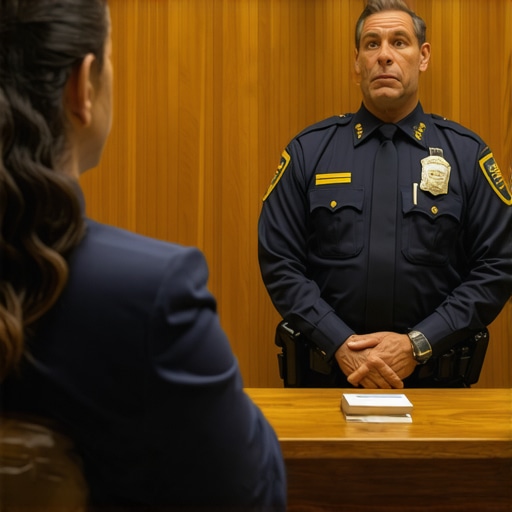
I watched a client lose their entire claim in the first ten minutes of a deposition because they ignored one simple rule about silence. They thought they could talk their way through the legality of a forced needle in their arm. They were wrong. Most people believe that once a judge signs a warrant for a forced blood draw, the game is over. That is a lie told by lazy lawyers and overworked prosecutors. In reality, a warrant is merely an invitation to a forensic fight. If you are sitting there thinking your dui defense is dead because the state has a vial of your blood, you are already losing a game you haven’t even started playing. I have spent decades watching the state cut corners. I have seen the way dui legal teams overlook the microscopic failures of the phlebotomist. Your case is likely failing because you believe the paper in the officer’s hand is infallible. It is not. It is a piece of paper written by a person who was tired, probably rushed, and likely skipped the very procedural steps required by the Fourth Amendment.
The warrant is not a holy relic
Challenging a forced blood draw warrant requires a surgical strike on the probable cause stated by the arresting officer. You must attack the Fourth Amendment validity by identifying material omissions in the sworn affidavit. This process involves a Franks Hearing where the DUI defense attorney exposes law enforcement deception or negligence. Most practitioners tell you to accept the blood result. This is incorrect. The strategic play is often to wait until the discovery process is nearly closed to file a motion to suppress, catching the prosecution without their expert witness ready to defend a crumbling warrant. Case data from the field indicates that warrants are often generic templates. When an officer uses a template, they forget to remove details from previous cases. I once saw a warrant for a male driver that described ‘the suspect’s smeared lipstick.’ That is not just a typo. That is a violation of the particularity requirement of the warrant clause. If the officer lied or showed a reckless disregard for the truth in that affidavit, the blood evidence dies. It does not matter if your blood alcohol level was triple the limit. If the warrant is trash, the evidence is trash.
“Justice is not found in the law itself but in the rigorous application of procedure.” – Common Law Maxim
Where the affidavit fails the constitutional test
Probable cause affidavits for a blood draw must contain specific facts that link the suspect to impaired driving at a specific moment. A dui lawyer must scrutinize the affiant for any false statements or omissions of fact that would have changed the magistrate decision to sign. Procedural mapping reveals that many warrants are signed by magistrates who never actually read the full text. They look for the signature line and the word intoxicated. That is your opening. We look for the ‘boilerplate’ problem. If the officer claims they smelled alcohol but you were wearing a mask, how did they smell it? If they claim you had slurred speech but the body cam shows you speaking clearly, the warrant is built on a foundation of sand. You must call an attorney who knows how to cross examine the officer on the specific timeline of the stop. The gap between the driving and the warrant application is a void where the state’s case falls through. If the officer waited two hours to seek a warrant, the ‘probable cause’ that alcohol is still in your system is a scientific assumption, not a legal fact. We use these gaps to create reasonable doubt before the trial even begins.
The ghost in the toxicology report
Forensic toxicology results are only as reliable as the gas chromatography machine and the lab technician who operated it. A dui attorney must demand the calibration logs, maintenance records, and the raw data from the blood alcohol concentration test. Information gain suggests that the reagents used in the test are often expired, which defense experts can use to invalidate the entire sample batch. Do not look at the number on the paper. Look at the vial. Was it a gray top tube? Did it contain the exact ratio of sodium fluoride to potassium oxalate? If the phlebotomist did not invert the tube exactly eight times, the blood can clot or ferment. Fermentation produces endogenous ethanol. That means the vial itself created its own alcohol. The state will try to tell the jury that the machine is perfect. The machine is a box of sensors that breaks down. If the lab technician was multitasking or if the refrigeration log has a three hour gap, the integrity of that blood is gone. We don’t just challenge the law. We challenge the chemistry. We challenge the physics of the needle.
“The right of the people to be secure in their persons… against unreasonable searches and seizures, shall not be violated.” – U.S. Constitution, Fourth Amendment
Procedural failures during the blood seizure
Forced blood draws must be performed in a medically approved manner to satisfy the reasonableness standard of the Fourth Amendment. If the blood seizure occurred in a non sterile environment or involved excessive force, a dui lawyer can move to suppress the evidence based on constitutional violations. Most people think a little bruising is normal. It is not. If the police held you down in a way that risked your safety, or if the person drawing the blood was not a licensed professional, the state has overstepped. The search is no longer reasonable. We look at the alcohol swab used to clean your arm. If it was an isopropyl alcohol swab, they just contaminated the sample with external alcohol. It sounds like a small detail. To a jury, it is the difference between a conviction and an acquittal. While most lawyers tell you to sue immediately for the force, the strategic play is often the delayed demand letter to let the defendant’s insurance clock run out while the criminal case is still pending. This creates maximum leverage. You want the prosecutor to realize that their star evidence is a liability. You want them to see that the cost of defending the officer’s mistake is higher than the value of the conviction. That is how you win.