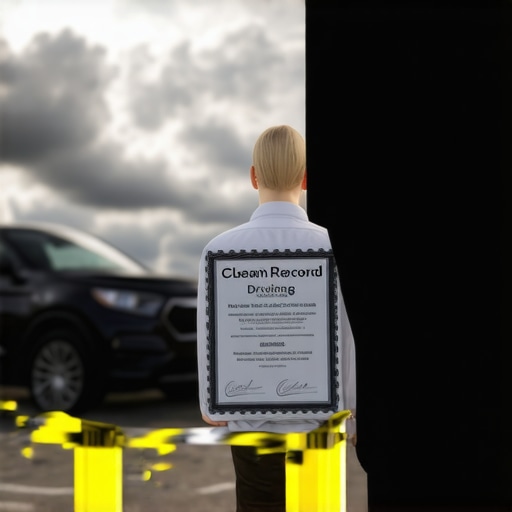
The Brutal Reality of Your Clean Record in a DUI Prosecution
The air in my office usually smells like strong black coffee and the faint metallic tang of old law books. It is the scent of reality hitting a client who believed that their fifteen years of accident-free driving would buy them a pass from the District Attorney. I watched a client lose their entire defense in the first ten minutes of a deposition because they ignored one simple rule about silence. They walked into the room thinking their clean record meant they could explain their way out of the handcuffs. They spoke until they provided the prosecution with the exact timeline needed to establish a rising blood alcohol defense in reverse. A clean record is not a shield; it is often a blindfold that prevents a defendant from seeing the procedural buzzsaw they are about to walk into. You are not being judged on the person you were for the last decade. You are being judged on the chemical composition of your blood at 11:45 PM on a Saturday night.
The myth of the one free pass
A clean driving record does not provide legal immunity or a procedural shortcut during a DUI defense. Prosecutors view a spotless history as an aggravating factor sometimes, suggesting the defendant has simply avoided detection until now. Relying on character alone is a failing strategy in criminal court. The law does not care about your insurance discount when the state is looking for a conviction. I have seen judges who are insulted by the suggestion that a clean record should lead to a dismissal. To them, it implies that the rules are negotiable based on past performance. It is a transactional view of justice that simply does not exist in a courtroom. If you think your history will save you, you have already lost the tactical advantage. The prosecution is building a case based on the National Highway Traffic Safety Administration (NHTSA) standards, not your resume. They are looking at the ‘clues’ in your field sobriety tests, the calibration logs of the breathalyzer, and the specific wording of the officer’s narrative. Your lack of prior tickets does not invalidate a single one of those data points.
“Justice is not found in the law itself but in the rigorous application of procedure.” – Common Law Maxim
The technical failure of the horizontal gaze nystagmus test
The Horizontal Gaze Nystagmus (HGN) test is a physiological measurement of the involuntary jerking of the eye. A DUI attorney must scrutinize the officer’s technique, as improper stimulus speed or incorrect positioning can produce false positives. This forensic evidence often outweighs a clean record in the eyes of a jury. Procedural mapping reveals that the HGN test is the most scientific of the roadside assessments, yet it is also the most frequently botched. If the officer moves the stimulus too fast (less than two seconds from the center to the side), the resulting nystagmus may be a result of the eye’s inability to track rather than alcohol impairment. My job is to take the officer’s body cam footage and time the stimulus movement with a stopwatch. When we find that the officer ignored the two-second rule, the entire test result becomes inadmissible. This is where the case is won. It is not won by telling the judge that you are a good person who volunteers at the local library. It is won by destroying the credibility of the state’s scientific evidence through microscopic attention to detail.
The hidden trap of the administrative license hearing
The administrative hearing at the department of motor vehicles is a parallel proceeding that functions independently of the criminal case. A defendant must request this hearing within a strict timeframe, usually ten days, or face automatic suspension. The DUI lawyer uses this administrative venue to subpoena evidence early. Case data from the field indicates that most drivers assume the court handles everything. This is a fatal mistake. The DMV is an administrative entity that operates under a ‘preponderance of evidence’ standard, which is much lower than the ‘beyond a reasonable doubt’ standard used in criminal court. In this room, your clean record is almost entirely irrelevant. The only questions are: did the officer have reasonable suspicion to stop you, did they have probable cause to arrest you, and did your breath or blood test result exceed the legal limit? While most lawyers tell you to sue immediately, the strategic play is often the delayed demand for specific maintenance records of the breathalyzer during this phase to catch the state off guard before the criminal trial begins.
“The lawyer’s duty is to the system of justice, ensuring that procedural integrity is maintained even in the face of overwhelming public opinion.” – ABA Model Rules of Professional Conduct
The science behind the gas chromatography blood draw
The blood draw process involves complex chemistry and chain of custody protocols that a DUI legal expert must verify. Issues like fermentation in the vial or improper refrigeration can lead to inaccurate blood alcohol concentration (BAC) readings. A clean driving history cannot overcome a flawed lab report. When a blood sample is taken, it is placed in a vial containing an anticoagulant (potassium oxalate) and a preservative (sodium fluoride). If the vial is expired or if the officer fails to mix the blood with the chemicals properly, the sample can ferment. Fermentation produces endogenous ethanol, which means the blood sample is literally manufacturing alcohol while sitting on a shelf. In a courtroom, we don’t argue that you are a ‘nice person.’ We argue that the gas chromatograph measured alcohol that wasn’t in your body at the time of the stop. We demand the raw data from the laboratory, the ‘chromatograms,’ which show the peaks and valleys of every chemical found in that vial. If the peaks are not separated correctly, the machine cannot distinguish between ethanol and other contaminants.
The strategic silence during the traffic stop
The Fifth Amendment provides the right to remain silent, which is the most underutilized tool in a DUI defense. Anything a driver says to the arresting officer is recorded evidence that will be used to corroborate impairment. A spotless record does not mitigate the damage of an admission. Most people think that if they are polite and explain their situation, the officer will let them go. This is a fantasy. Officers are trained to gather evidence, not to be your friend. They use ‘divided attention’ tasks from the moment they approach your window. They ask for your license and registration and then immediately ask a distracting question like ‘where are you coming from’ to see if you can multitask. Every stutter, every pause, and every admission of ‘two beers’ is written into the report as a sign of mental impairment. The high-stakes lawyer knows that the best client is the one who says nothing. You provide your documents, you state that you are exercising your right to remain silent, and you wait for the handcuffs. It sounds aggressive, but it is the only way to prevent the prosecution from having a mountain of admissions to use against you at trial.
Why you must call an attorney before the first hearing
The initial arraignment is a critical phase where the prosecution sets the tone for the case. An experienced DUI attorney can often negotiate charges or identify procedural errors before the case progresses. Waiting to call an attorney until after the first court date is a tactical error. At the arraignment, the judge will consider bail and conditions of release. If you walk in without counsel, the prosecutor may ask for an ignition interlock device to be installed in your car immediately, even before you have been convicted of anything. An attorney knows how to argue against these ‘pretrial conditions’ by highlighting your ties to the community and, yes, your clean record at this specific moment to show you are not a flight risk or a danger. However, the record is used here as a tool for liberty, not as a defense against the crime itself. The movement of the case is dictated by the deadlines. If you miss the window to challenge the search warrant or the motion to suppress the stop, those opportunities are gone forever. The law is a game of inches and seconds. If you are not playing the game with a professional, you are simply waiting to be processed by a machine that does not care about your past achievements.