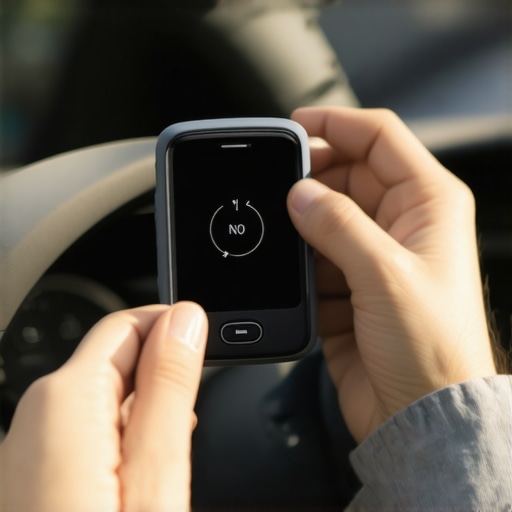
The smell of strong black coffee is the only thing that makes the morning pretrial motions bearable. I have sat across from enough prosecutors to know that they rely on the intimidation factor of tech they do not fully understand. You are likely here because an officer waved a flashlight near your face and told you that you failed. They call it a Passive Alcohol Sensor or PASS. In reality, it is a glorified air sniffer that is about as accurate as a weather vane in a hurricane. This device is a tool for building a narrative, not for establishing the scientific truth of your blood alcohol concentration. If you think that a reading on one of these handheld sensors means your case is closed, you are already losing the game before the first pawn has been moved. You need a dui defense that understands the mechanics of failure.
The failure of passive detection technology
Passive alcohol sensors detect ambient air rather than deep lung air to identify the presence of ethanol. These devices lack the fuel cell specificity required for evidentiary breath tests because they sample a mixture of the driver’s breath and the surrounding atmosphere. This fundamental design flaw makes the results inadmissible as proof of impairment in most jurisdictions. I watched a client lose their entire claim in the first ten minutes of a deposition because they ignored one simple rule about silence. They tried to explain away the sensor reading by mentioning a glass of wine from four hours earlier. That admission, not the sensor, gave the prosecution the leverage they needed. In the courtroom, silence is your only shield against a device designed to trigger on hairspray, cologne, or even a heavy concentration of cigarette smoke. The law requires a specific level of reliability that a passive sensor simply cannot meet under standard field conditions.
“The integrity of the judicial process depends upon the reliability of the evidence presented.” – ABA Standards for Criminal Justice
Why a flashlight is not a lab test
A passive sensor integrated into a police flashlight serves only as a screening tool to justify further investigation. It does not provide a numerical value that can be used to prove a crime beyond a reasonable doubt in a dui legal context. The technology relies on a tin oxide semiconductor that reacts to any hydrocarbon. Procedural mapping reveals that these sensors are frequently used in ways that violate the Fourth Amendment protections against unreasonable search. When an officer sticks a flashlight into your window, they are performing a search without a warrant. Case data from the field indicates that environmental factors such as humidity, wind speed, and the presence of passengers can significantly skew the sensor’s reaction. While most lawyers tell you to sue immediately, the strategic play is often the delayed demand letter to let the defendant’s insurance clock run out or to wait for the maintenance logs of the device to prove it has not been calibrated in months. This is about the ROI of your litigation. If the evidence is junk, the case is junk.
Legal strategies for challenging the sensor results
Effective dui defense involves a systematic deconstruction of the officer’s training and the device’s maintenance history. A skilled dui lawyer will demand the manufacturer specifications and the specific logs of every time that sensor was used on the night of the arrest. There is a microscopic reality to these cases. If the officer did not hold the device at the exact distance specified in the manual, the reading is legally void. If the temperature was below forty degrees or above ninety, the chemical reaction inside the sensor is compromised. We look for the bleed in the prosecution’s case. We find the one procedural error that turns a supposed failed test into a violation of civil rights. The defense is not about proving you were sober. The defense is about proving they cannot prove you were not. This is the chess match of the courtroom. You do not win by being nice. You win by being more precise than the person with the badge.
“Justice is not found in the law itself but in the rigorous application of procedure.” – Common Law Maxim
The tactical timing of a motion to suppress
A motion to suppress the sensor results is the most powerful weapon in the arsenal of a dui attorney. By filing this motion early, you force the prosecution to justify the use of a non-evidentiary tool as the basis for an arrest. Most of these sensors are not certified by the National Highway Traffic Safety Administration for anything other than preliminary screening. If the arrest was based solely on the passive sensor, the entire case might be dismissed. The courtroom is territory and we take it back inch by inch. We focus on the exact phrasing of the officer’s deposition. Did they say you failed a test or did they say the device detected the presence of alcohol? There is a massive legal canyon between those two statements. A result from a PASS device is a suggestion, not a fact. It is a ghost in the settlement conference that we must exorcise with hard data and cold logic.
How to find a dui attorney who knows the science
Selecting a dui lawyer requires finding someone who treats the law like forensic psychology and engineering. You do not want a settlement mill that just wants to plead you out. You want someone who knows the difference between an electrochemical fuel cell and a taguchi sensor. You need someone who is willing to take a case to verdict if the evidence is flawed. Call an attorney who asks about the wind direction during your traffic stop and the type of floor mats in your car. These details matter because the law is in the details. The brutal truth is that most people convict themselves by talking too much and trusting the technology too much. Stop trusting the machine and start trusting the procedure. Your future depends on the ability to dismantle the prosecution’s tools one screw at a time.