The silence that kills a DUI case
I watched a client lose their entire claim in the first ten minutes of a deposition because they ignored one simple rule about silence. They felt the vacuum of the room and tried to fill it with justification. In the world of high-stakes litigation, silence is your only armor. If you are sitting across from a prosecutor, every word you utter that is not a direct, minimal answer is a gift to the state. My office smells of strong black coffee and the acidic scent of old laser printers because we spend eighteen hours a day dissecting these moments of weakness. You think you are explaining your way out of a handcuffs. You are actually tightening the ratchets. Most people hire a lawyer because they want a shield, but they end up with a high-priced administrative assistant who just wants to process their paperwork and move to the next file. This is the reality of the legal industry today. It is a machine that prefers the grease of a plea bargain over the friction of a trial. If your attorney is more interested in your credit card limit than the calibration logs of the breathalyzer used during your arrest, you are not in a law office. You are in a factory.
The factory floor of criminal defense
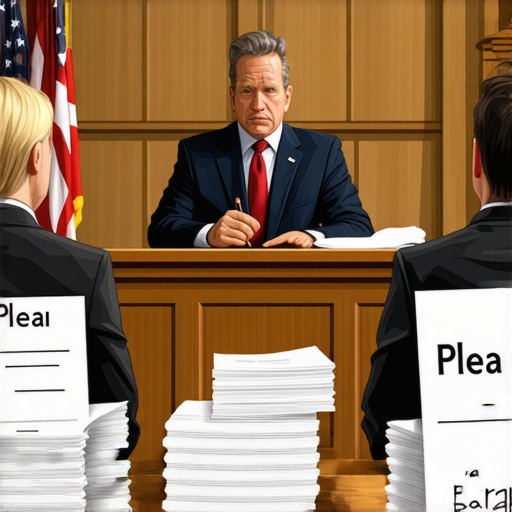
A plea mill is a law firm or dui lawyer that prioritizes high volume over individual dui defense strategy. These attorneys often negotiate a guilty plea or plea bargain before examining the arrest record or police report in detail. They avoid litigation to maximize their revenue per hour. Case data from the field indicates that these firms often operate on a flat fee that is suspiciously low. They know that if they take a case to trial, they lose money. Their business model depends on you surrendering your rights as quickly as possible. You are a number on a ledger. I have seen firms where the lead attorney never even meets the client until the day of the hearing. They send a junior associate who was hired three weeks ago to handle the heavy lifting. This is not defense. This is a processing line. When you call an attorney, you should be asking about their trial-to-plea ratio. If they cannot tell you the last time they stood in front of a jury, hang up. The legal system is designed to be adversarial. When your lawyer becomes a collaborator with the prosecution to clear the docket, you are the one who pays the price with your permanent record. [image_placeholder]
Signs your lawyer is afraid of the jury
A trial attorney must be willing to engage in aggressive litigation and procedural maneuvering to protect a defendant. In dui legal matters, the dui defense attorney should analyze the field sobriety tests and blood alcohol content data for technical errors or constitutional violations. Procedural mapping reveals that the most effective defense is often built on the smallest errors. Does your lawyer talk about the Fourth Amendment, or do they talk about the judge’s temperament? While most lawyers tell you to sue immediately, the strategic play is often the delayed demand letter to let the defendant’s insurance clock run out or to wait for the prosecution to miss a discovery deadline. A plea mill will never suggest this. They want the case closed in thirty days. They will tell you that the prosecutor is offering a great deal. They will tell you that the judge is in a bad mood. They will use fear as a tool to get you to sign the paperwork. They are not afraid of the judge. They are afraid of the work. Real defense requires a microscopic look at the officer’s training records. It requires an audit of the maintenance history of the breathalyzer. It requires a lawyer who actually enjoys the hunt.
“Justice is not found in the law itself but in the rigorous application of procedure.” – Common Law Maxim
The technicality of the breathalyzer challenge
A dui attorney understands that the intoxilyzer 8000 or similar breath testing equipment is a fallible machine subject to software glitches and calibration errors. Effective dui defense involves a motion to suppress evidence based on at-risk results or improper maintenance of forensic tools. The machine is not a god. It is a box of sensors that can be tripped by mouth alcohol, acid reflux, or even the temperature of the room. I have spent hours in a basement looking at the circuit boards of these devices. I know that a power surge in the police station can throw off a reading by 0.02. That 0.02 is the difference between a dismissed case and a conviction. A plea mill lawyer will look at the printout and tell you that the evidence is overwhelming. They are lying. The evidence is only overwhelming if it is admissible. My job is to make sure it never reaches the jury’s ears. We look at the observation period. Did the officer watch you for twenty continuous minutes? Or was he filling out paperwork while you were burping? These are the questions that win cases. They are also the questions that a high-volume firm will never ask because they don’t have the time to care about your digestion.
Why the motion to suppress is the real battle
The motion to suppress is a legal filing used by a dui lawyer to exclude evidence obtained through illegal search and seizure. This procedural motion can result in the dismissal of charges if the arresting officer violated the Fourth Amendment during the traffic stop. If your lawyer is not talking about the legality of the stop within the first twenty minutes of your consultation, they are looking for the exit. The stop is the foundation of the case. If the officer didn’t have reasonable suspicion to pull you over, everything that happened afterward is fruit of the poisonous tree. I have won cases because an officer’s dashcam showed that the client didn’t actually cross the fog line. The officer said they did. The video said they didn’t. In a plea mill, that video is never watched. The associate just reads the police report and takes it as gospel. They treat the police as the ultimate authority instead of the opposition. You need a skeptic. You need someone who views the police report as a work of fiction until proven otherwise. Every officer is a witness, and every witness has a bias. My job is to find that bias and expose it under the fluorescent lights of the courtroom.
“The right to counsel is the right to the effective assistance of counsel.” – McMann v. Richardson
How to call an attorney who values the win
When you call an attorney for a dui case, you must demand a litigation plan that includes a pre-trial investigation and expert testimony. A dui defense requires more than a legal license; it requires a forensic understanding of toxicology and police procedure. Don’t be fooled by the mahogany desks and the expensive suits. Look at the bookshelves. Are they filled with trial guides or are they empty? Ask to see their motion library. A real lawyer has a thick folder of motions they have written and won. They should be able to cite the specific case law that applies to your situation without looking it up. They should know the names of the officers in the DUI task force. They should know which officers are known for cutting corners. This is the level of detail that saves a career. This is the level of detail that a plea mill considers a waste of time. They think their job is to be a middleman between you and the prosecutor. I think my job is to be a barrier between you and the state. I don’t want to make friends in the courthouse. I want to make them uncomfortable. I want them to know that if they bring a case against my client, they are in for a long, painful, and expensive fight.
Audit your lawyer before the first hearing
The attorney-client relationship is built on the legal obligation of zealous advocacy and competent representation. If your dui lawyer avoids courtroom trials or fails to file discovery motions, you may be the victim of legal malpractice or ineffective assistance. Check the court records. Most jurisdictions allow you to search for an attorney’s name in the public docket. See how many of their cases end in a plea of ‘Guilty’ or ‘No Contest’. If the percentage is above ninety, you are looking at a mill. You want the lawyer whose name appears on the ‘Dismissed’ or ‘Not Guilty’ entries. You want the lawyer the prosecutors complain about in the breakroom. That is the lawyer who will actually look at your case. They will notice that the officer’s certification for the breathalyzer expired three days before your arrest. They will notice that the blood sample was not stored at the correct temperature. They will notice the things that a plea mill is too busy to see. You are paying for their eyes, not just their name. Make sure those eyes are actually on your file. If they aren’t, you aren’t being defended. You are being processed. And in the criminal justice system, the process is the punishment.