The Ghost in the Breathalyzer Tube
The air in this office smells like strong black coffee and the cold reality of a pending criminal charge. You are here because a machine told a police officer that you were intoxicated. You are here because you believe the machine lied. I am here to tell you that it probably did. Most people assume that a breath test is an infallible diagnostic tool, a digital oracle that speaks the truth of your biology. It is not. It is a mathematical approximation masqueraded as forensic science. If you suffer from Gastroesophageal Reflux Disease or simple acid reflux, that machine did not measure your blood alcohol content. It measured the vapor of your last meal. This is the biological glitch that ruins lives, and if you do not call an attorney who understands the molecular physics of infrared spectrometry, you are walking into a guilty plea that you do not deserve. The legal system does not reward the innocent; it rewards the prepared. A dui defense built on physiological reality is often the only thing standing between a dismissal and a permanent record.
A deposition that ended before it started
A deposition disaster occurs when a defendant provides unnecessary testimony regarding their physical state without understanding legal procedure. I watched a client lose their entire claim in the first ten minutes of a deposition because they ignored one simple rule about silence. They began explaining how they felt fine despite having two drinks, but then they mentioned they had a spicy dinner that gave them heartburn. They thought they were being helpful. In reality, they were handing the prosecutor a roadmap to claim they were masking symptoms. However, that same heartburn was the key to their defense. By talking too much, they nearly buried the lead. The truth is that the acid in your throat is more than a discomfort; it is a chemical weapon used by the prosecution to secure a conviction based on false data. When you hire a dui lawyer, you are paying for the discipline to remain silent while we deconstruct the machine’s failure. The deposition is a minefield where every word is a potential detonator. You do not win your case at a deposition, but you can certainly lose it. We focus on the forensic evidence because the machine has no feelings and the data has no agenda. We look for the errors in the 0.08 reading that the officer took as gospel.
Why your stomach acid is a prosecutor
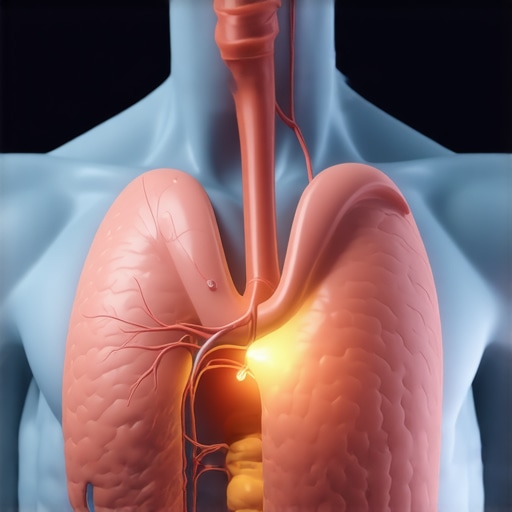
Acid reflux creates mouth alcohol which triggers falsely high BAC readings during a police breathalyzer test. This biological process introduces ethanol vapors from the stomach into the oral cavity, bypasses the alveolar air requirement, and results in a wrongful dui arrest. When you have GERD, your lower esophageal sphincter is a faulty valve. It allows the contents of your stomach to travel back up your esophagus. If you had a single beer an hour before driving, that alcohol might still be lingering in your stomach. Under normal circumstances, it would stay there. With reflux, it rises. When you blow into that tube, the machine is programmed to look for deep lung air, known as alveolar air. It assumes the alcohol it detects has already passed through your bloodstream and into your lungs. The machine cannot distinguish between the alcohol in your blood and the alcohol vapor that just traveled up your throat. This is a fatal flaw in the technology. The dui attorney must use this flaw to challenge the validity of the state’s evidence. We are talking about a scientific error rate that can double or triple your actual score. A 0.04 can become a 0.12 in the blink of an eye. This is not a theory. This is organic chemistry.
“Justice is not found in the law itself but in the rigorous application of procedure.” – Common Law Maxim
The failure of the twenty minute observation
The mandatory observation period requires a police officer to watch a suspect for twenty continuous minutes to ensure no mouth alcohol is present. Any burp, hiccup, or regurgitation during this window invalidates the breath test and necessitates a restart of the procedure. Most officers treat this twenty minute period as a time to fill out paperwork. They are not watching your throat. They are not looking for the subtle signs of a silent reflux episode. They are looking at their watches. If you suffer from chronic reflux, you might be regurgitating small amounts of gastric fluid without even realizing it. This is called silent reflux. If the officer fails to observe this, the entire test is compromised. A dui defense specialist will scrutinize the dashcam or bodycam footage to prove that the officer was distracted. We look for the exact second the officer turned his back. We look for the moment he started checking his phone. Every second of distraction is a crack in the prosecution’s foundation. If the protocol is not followed with surgical precision, the results are legally radioactive. We do not accept the results of a flawed process. We demand the data be suppressed. This is how cases are won in the trenches of procedural law.
How a dui attorney dissects the data
Expert dui defense involves the forensic analysis of breathalyzer maintenance logs and calibration records to identify mechanical bias. A dui lawyer uses these technical discrepancies to argue for the suppression of evidence in a criminal court. Every machine has a history. We subpoena the logs. We look for a pattern of