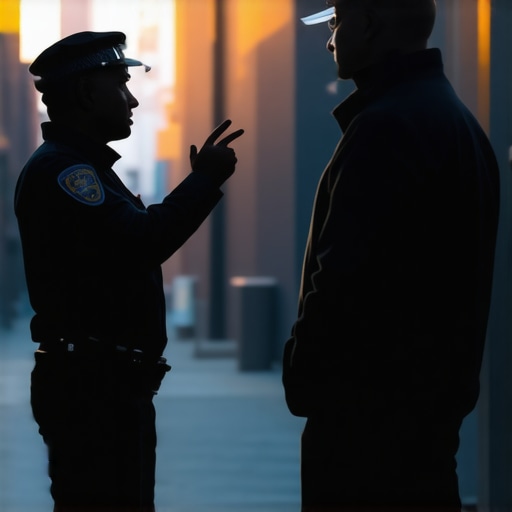
I watched a defendant lose their driver license in the first ninety seconds of a traffic stop because they believed they could out-perform a rigged game. They were sober, or at least they felt sober, but they did not understand that the officer had already reached a conclusion before the first instruction was ever spoken. The smell of strong black coffee is usually what greets me in my office at five in the morning as I review dashcam footage that reveals the same patterns of failure. Most people believe that field sobriety tests are objective scientific measurements. That is the first lie. These tests are not designed to prove you are sober. They are designed to document your failure and build the probable cause necessary to put you in handcuffs. As a veteran dui lawyer, I see the same story every day. The officer uses silence as a weapon, waiting for you to fill the air with nervous admissions. When you agree to do the roadside gymnastics, you are providing the state with the rope they need to hang your reputation. This article is the cold reality of the litigation architecture involved in dui defense.
The myth of the roadside balance check
Field sobriety tests are subjective assessment tools that allow law enforcement to establish the legal grounds for an arrest. These maneuvers, including the One-Leg Stand and the Walk-and-Turn, are categorized as divided attention tasks meant to simulate the mental and physical requirements of driving a motor vehicle under stress. Data from the field indicates that these tests are highly susceptible to officer error and environmental interference. When you are standing on a sloped shoulder of a highway with blue and red lights strobing against your retinas, you are not being tested on your sobriety. You are being tested on your ability to remain calm while a trained observer looks for any reason to justify a search. The standardized field sobriety test manual dictates specific conditions for these tests, yet those conditions are rarely met in the real world of midnight patrols. If you have been stopped, you must recognize that the dui legal process has already begun. The officer is not your friend. They are a data collector for the prosecution. You need to call an attorney before you make a statement that cannot be retracted.
“Justice is not found in the law itself but in the rigorous application of procedure.” – Common Law Maxim
Why the officer already decided you failed
Law enforcement officers utilize pre-exit clues to determine if a driver is impaired before they even step out of the car. These observations include fumbling with a wallet, the scent of alcohol, or bloodshot eyes which are often attributed to fatigue rather than intoxication. Procedural mapping reveals that once an officer suspects impairment, their observation becomes filtered through a confirmation bias. They are no longer looking for signs of sobriety. They are cataloging clues of impairment. Every stagger, every stutter, and every moment of hesitation is documented in the arrest report. If you stand perfectly still but your eyes do not follow a pen correctly, that is a clue. If you start the test too soon, that is a clue. There are no points for passing, only deductions for failing. This is why a dui attorney focuses on the officer’s training records and the specific phrasing of the instructions given during the stop. The discrepancy between the written manual and the verbal instructions is often the first crack in the state’s case.
The biological trap of gaze nystagmus
Horizontal Gaze Nystagmus is an involuntary jerking of the eyeball that occurs naturally as the eye gazes to the side. While this jerking can be exaggerated by alcohol consumption, it is also caused by over forty different medical conditions, including inner ear infections and caffeine intake. The test requires the officer to move a stimulus, usually a pen or a flashlight, at a specific speed and distance from your face. Procedural zooming shows that if the officer moves the stimulus too fast, the nystagmus can be induced by the test itself. This is known as optokinetic nystagmus. Most officers are not medical professionals, yet they are allowed to testify as if they have performed a clinical neurological exam. A specialized dui defense requires an expert who can challenge the scientific validity of how the test was performed on that specific night. The legal system allows this evidence because it looks like science, but without strict adherence to the nystagmus protocols, it is merely a guess in the dark.
Your shoes are evidence against you
The physical environment and your clothing play a massive role in the outcome of any roadside test. NHTSA guidelines specifically state that people over sixty-five years of age or those with fifty or more pounds of excess weight may have difficulty performing these tests regardless of their sobriety. High heels, heavy work boots, or even flip-flops can make the Walk-and-Turn test an impossible feat of balance. A cracked sidewalk or a gravel shoulder is not a laboratory. When the defense team reviews the footage, we look at the incline of the road and the wind speed. If the officer did not ask you about your physical health or your footwear before starting the clock, they have violated the core protocol of the evaluation. This information gain is what differentiates a standard defense from a high-stakes litigation strategy. We do not just look at the result. We look at the logistics of the failure. The judicial system relies on the assumption that the test was fair, but we know the pavement is often an enemy of the truth.
“The integrity of the judicial process depends upon the absolute adherence to the rules of evidence and the rights of the accused.” – American Bar Association Standards
The tactical move to refuse the gymnastics
Refusing field sobriety tests is often a strategic necessity because these tests are entirely voluntary in many jurisdictions. While refusing a breathalyzer may carry administrative penalties for your license, refusing to stand on one leg does not provide the same level of incriminating evidence to the prosecution. The officer will likely arrest you anyway if they have decided you are impaired, but they will do so without the benefit of a video showing you stumbling on a dark road. This is the contrarian data point most people ignore. They think that by performing the tests, they will prove they are okay. In reality, they are just giving the dui attorney more work to do in trying to suppress the evidence later. The tactical play is to remain polite but firm. You state that you are not comfortable performing physical tests on the side of the highway and that you wish to speak with your lawyer. Silence is not an admission of guilt. It is the exercise of a right that was bought with centuries of legal blood.
How a dui defense dismantles the arrest report
Dismantling a dui case requires a forensic analysis of the officer’s narrative versus the digital reality of the dashcam and bodycam video. We look for the exact timing of the instructions. We look for the officer’s failure to observe the required twenty-minute waiting period before a chemical test. We examine the calibration logs of the breath machine and the certification dates of the officer’s training. Litigation is not about being a nice person. It is about finding the procedural leverage to make the evidence inadmissible. Case data from the field indicates that when a lawyer can show the officer skipped even one step in the standardized protocol, the reliability of the entire arrest is put into question. The courtroom is a territory, and we defend it by making the prosecution prove every single inch of their claim. If the tests were rigged, the result is fruit of the poisonous tree. We do not accept the state’s version of the story. We write our own based on the forensic facts of the stop. The truth is usually found in the details the officer forgot to write down.