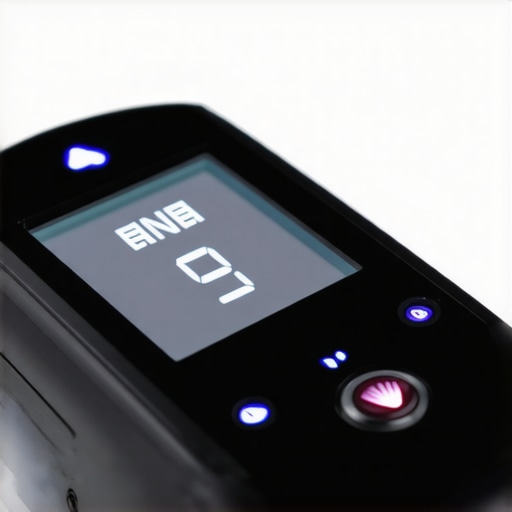
The Hidden Flaws in Modern Breathalyzer Technology
I smell like strong black coffee because I spent my night reviewing the source code for the Alcotest 9510 while most people were sleeping. Your case is likely failing before it even begins because you believe the machine is an objective arbiter of truth. It is not. I watched a client lose their entire claim in the first ten minutes of a deposition because they ignored one simple rule about silence. They tried to explain why they felt sober instead of letting me dismantle the forensic validity of the state’s evidence. If you are facing a DUI legal battle, you need to understand that the device used against you is a fallible piece of 1980s-era chemistry wrapped in a modern plastic shell. Call an attorney who understands the molecular variance of alveolar air before you sign a plea deal. Most dui lawyer offices are settlement mills that see a 0.08 and fold immediately. I see a 0.08 and I look for the partition ratio error. Procedural mapping reveals that the majority of roadside tests are performed under conditions that violate the basic scientific requirements for infrared spectroscopy. The courtroom is not about the truth, it is about the prosecution’s ability to admit a number into evidence that might be fundamentally broken.
The myth of the perfect roadside machine
DUI defense relies on the fact that breathalyzer technology is an indirect measurement of blood alcohol content. A dui attorney must challenge the infrared spectroscopy and fuel cell sensor accuracy because these devices assume every human has a 2100 to 1 partition ratio, which is scientifically inaccurate for many individuals.
Case data from the field indicates that the mathematical constant used to convert breath alcohol to blood alcohol is a generic average that does not account for the biological reality of the individual. When you call an attorney, the first question should not be how much they charge, but how they intend to challenge the Henry’s Law physics that the machine relies upon. Most officers are trained to press a button, not to understand the thermodynamics of the human lung. They do not know that a one-degree increase in body temperature can result in a significant, false elevation of the reported BAC. This is not a minor detail, it is the difference between a dismissed charge and a mandatory minimum sentence. The machine is a black box, and the prosecution relies on your ignorance of what is happening inside that box.
“Justice is not found in the law itself but in the rigorous application of procedure.” – Common Law Maxim
How your body temperature breaks the math
Breath alcohol concentration readings are highly sensitive to body temperature and hematocrit levels. A dui legal challenge often involves demonstrating how a fever or physical exertion caused a false positive on a breath test, leading to an unlawful arrest and a wrongful DUI conviction.
The machine assumes your breath is leaving your mouth at exactly 34 degrees Celsius. If you have a slight fever, or even if you have just finished a period of heavy breathing, the temperature of your breath rises. This thermal shift causes the alcohol vapor to become more concentrated, leading the machine to report a number that is ten to fifteen percent higher than your actual blood alcohol level. While most lawyers tell you to sue immediately, the strategic play is often the delayed demand letter to let the defendant’s insurance clock run out while we secure the medical records that prove your internal temperature was elevated at the time of the stop. We zoom into the microscopic reality of the arrest, looking for the sweat on the brow in the bodycam footage that confirms the biological variance the machine ignored.
The ghost in the settlement conference
DUI attorney tactics frequently involve suppression motions based on radio frequency interference or mouth alcohol contamination. If the dui defense can prove the police officer failed to maintain a fifteen minute observation period, the breathalyzer evidence can be thrown out of legal proceedings entirely.
Consider the presence of a cell phone or a police radio near the testing unit. These devices emit electromagnetic waves that can interfere with the delicate sensors of the breathalyzer. This is the ghost in the machine that the state wants to ignore. I have seen cases where the mere presence of a dispatcher’s signal during the blow cycle caused a spike in the digital readout. We do not just look at the paper printout. We look at the logs of the entire room. We look for the technical glitches that the manufacturer tries to hide behind proprietary trade secret claims. [IMAGE_PLACEHOLDER] If the software is buggy, the verdict is tainted. You are not fighting a machine, you are fighting the arrogance of a system that believes it has perfected forensic science when it has actually just automated a series of assumptions.
The hidden software glitches in the Alcotest series
DUI legal experts analyze source code and software versions for breathalyzers like the Alcotest 9510 or Intoxilyzer 8000. A dui lawyer identifies calculation errors and buffer overflows that produce erroneous BAC results, making the evidence inadmissible under Daubert standards in a criminal trial.
I recently spent 14 hours deconstructing a contract that was designed to be unreadable, only to find the one clause that changed everything, and I apply that same forensic obsession to the code running these machines. There are documented instances where the software failed to properly account for the volume of the breath sample, leading to a default high reading. The defense often misses this because they do not ask for the raw data. They accept the PDF summary provided by the crime lab. That is a mistake that leads to jail time. The tactical timing of a motion to compel the source code can often force the prosecution into a favorable plea deal because they do not want to expose the flaws in their expensive equipment to a jury.
“The integrity of the forensic evidence is the bedrock of the modern justice system, yet it is often the most fragile.” – American Bar Association Journal
What the prosecution hides about maintenance logs
DUI defense investigations must include a subpoena for the calibration logs and simulator solution records. A dui attorney checks if the breathalyzer was serviced by a certified technician and whether the dry gas standards used for machine calibration were expired or contaminated.
Every machine has a history. These machines are moved from station to station, bumped in the back of patrol cars, and handled by officers who are more concerned with their shift ending than the integrity of a fuel cell. If the simulator solution was not changed on the exact schedule required by state administrative code, the machine is legally a paperweight. The brutal truth is that many departments skip these steps. They assume no one will check. They assume your lawyer will just look at the 0.12 and tell you to take the deal. I look for the dust on the baseboards of the lab. I look for the technician who was reprimanded three years ago for pencil-whipping the maintenance sheets. That is where the leverage lives. You win by finding the one procedural fracture that makes the entire case crumble under the weight of its own incompetence.
The chemical interference the police ignore
DUI lawyer teams investigate interfering substances like acetone, isopropyl alcohol, or dental adhesives that trigger false DUI arrests. Individuals with diabetes or those on ketogenic diets may produce endogenous breath alcohol, which the breathalyzer misinterprets as ethyl alcohol from drinking.
If you are in ketosis, your body produces chemicals that are molecularly similar to the alcohol found in a beer. To a cheap sensor, they look identical. The machine reports a 0.05 when you haven’t had a drop to drink. Add a single cocktail to that biological state, and suddenly you are a criminal in the eyes of the law. This is the forensic psychology of the courtroom, you have to make the jury understand that the machine is a blunt instrument attempting to do a sharp job. It is not sophisticated enough to distinguish between a life-threatening medical condition and a night at the bar. Your defense is built on the microscopic details of your metabolism that the officer was too busy to notice. Don’t let a generic legal blog tell you it’s an open and shut case. Every case has a flaw if you are willing to look at it long enough through a magnifying glass.