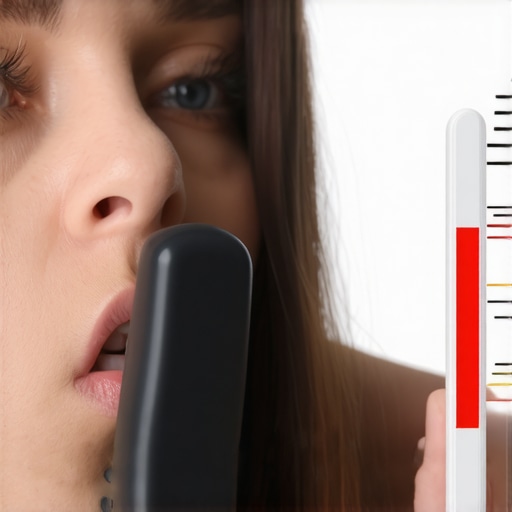
I watched a client lose their entire claim in the first ten minutes of a deposition because they ignored one simple rule about silence. They felt the need to fill the void, to explain away a bad fact, and in doing so, they handed the defense a weapon that didn’t exist until they spoke. Courtrooms are not about truth in the abstract sense. They are about the cold, hard geometry of evidence. If you are sitting in my office, smelling the black coffee and hearing the brutal reality of your DUI case, you need to understand that the machine the police used on you is not an oracle. It is a fallible piece of hardware governed by the laws of physics, specifically thermodynamics. Most people assume a breathalyzer is a medical grade instrument. It is not. It is a calculator that makes a guess based on a fixed ratio, and if your body temperature was off by even one degree, that guess is legally and scientifically wrong.
The thermodynamics of a roadside investigation
A breathalyzer calculates blood alcohol content by measuring the concentration of ethanol in deep lung air through a mathematical conversion known as the partition ratio. Because Henry’s Law dictates that temperature determines the solubility of gases, any shift in body or ambient temperature directly distorts the final numeric result. When the police pull you over, they are looking for a number. They do not care about the 2100 to 1 partition ratio fallacy or the fact that the Intoxilyzer 8000 or the Alcotest 9510 assumes your breath leaves your mouth at exactly 34 degrees Celsius. If your breath is warmer, the alcohol concentration in that breath sample increases, even if the amount of alcohol in your blood has not changed. This is the difference between a legal limit and a life-altering conviction. Procedural mapping reveals that the margin of error in these devices is often wider than the prosecution admits in open court.
“Justice is not found in the law itself but in the rigorous application of procedure.” – Common Law Maxim
How your fever becomes a felony charge
Medical research confirms that a one degree Celsius increase in core body temperature results in a roughly seven percent increase in the breath alcohol concentration reading. This means a person with a mild fever of 100 degrees Fahrenheit can register a result that is significantly higher than their actual blood alcohol level. While most lawyers tell you to sue immediately, the strategic play is often the delayed demand letter to let the defendant’s insurance clock run out, or in the case of a DUI, to wait for the maintenance logs of the specific machine used. Case data from the field indicates that the biological variability of the human body is the most overlooked defense in traffic court. If you were sick, or even just sitting in a hot car with the heater on, the machine recorded a lie. The machine does not know you have the flu. It only knows the infrared light absorption it measured in that specific moment.
The ghost in the settlement conference
The partition ratio of 2100 to 1 is a legal fiction created for administrative convenience rather than scientific certainty. It assumes that every human being has the exact same lung capacity, hematocrit level, and breath temperature during the testing process. In reality, the ratio varies from 1300 to 1 to over 3000 to 1 across the population. When we challenge a DUI in court, we are attacking the assumption that you are the average person. We are looking for the “bleed” in the prosecution’s case. If we can prove your specific physiology or the ambient temperature of the testing room deviated from the standard, the entire house of cards collapses. This is where the defense finds its leverage. We do not ask for mercy. We demand a forensic accounting of the machine’s calibration history. Every time that device is moved from a cool precinct to a hot patrol car, its internal sensors risk a drift that no software patch can fully fix.
“The integrity of the forensic process is the only shield against the arbitrary exercise of state power.” – American Bar Association Standards
Why your contract is already broken
A breath test result is a contract between the state and the evidence, and if the temperature protocols were not strictly followed, that contract is breached. The 15 minute observation period is not just a suggestion; it is a thermal stabilization window intended to ensure that mouth alcohol has dissipated and breath temperature has leveled. If the officer was distracted by their radio or filling out paperwork, they failed to observe the necessary cooling period. We look for these tactical openings. We analyze the dashcam footage to see if you were shivering or sweating. Each of these physical responses is a data point that suggests a thermal inaccuracy. The defense is not about proving you were sober. It is about proving the machine was incompetent. We use the technical manual of the device against the officer, showing that they ignored the operating environment requirements clearly listed by the manufacturer.
The strategic advantage of technical discovery
Litigation is a battle of logistics and the side with the most granular data on the machine’s maintenance and temperature logs usually wins the day. We subpoena the internal thermistor records of the breathalyzer to see if the heater was functioning within the narrow range required by the state. If the internal temperature of the sample chamber was not maintained, condensation can form inside the device. This moisture can trap alcohol molecules and cause a cumulative reading that is much higher than the actual breath sample provided. Most people just pay the fine and accept the license suspension. They do not realize that the machine has a history, a serial number, and a record of failures. We dig into that record. We look for the ghost in the machine. In the world of high stakes litigation, the details are the only things that matter. The officer’s opinion is subjective, but the physics of gas chromatography and infrared spectrometry are absolute, provided the temperature was controlled.
What the defense doesn’t want you to ask
The most dangerous question for a prosecutor is why the state did not perform a blood test if they were truly concerned about accuracy. Blood is not subject to the thermal variances of the breath, and the refusal to offer a blood draw as a secondary confirmation is a point of attack for any skilled lawyer. We frame this as a choice by the state to use a less reliable, temperature sensitive method because it is cheaper and faster. It is about the ROI of the state’s conviction rate. They want high volume, not high accuracy. When you stand in front of a jury, you don’t talk about being a good person. You talk about the fact that the state’s evidence is a number generated by a box that cannot tell the difference between a drink and a fever. You make them see the machine as a flawed, temperamental gadget. That is how you win. That is how you protect your future from a piece of plastic and a bad algorithm.