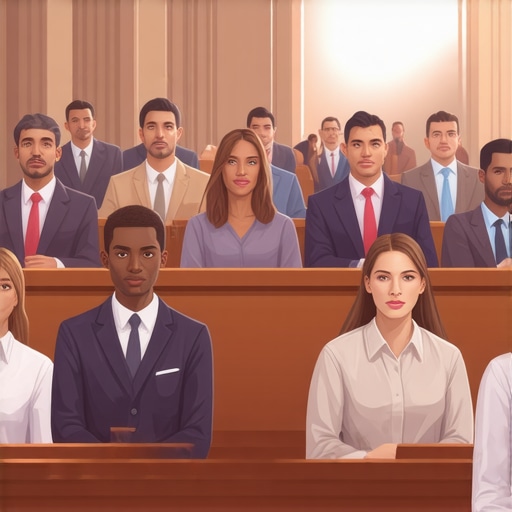
Your case is currently failing. You sit in my office with the smell of stale coffee and the weight of a looming license suspension, thinking the truth will set you free. It will not. In the legal system, truth is a secondary concern to procedure and perception. Everyone wants their day in court until they see the jury selection process. It isn’t about truth; it’s about perception. I have seen defendants enter the courtroom with a stack of character references and a clean record, only to realize the judge has already heard five identical cases this morning and is checking their watch for lunch. If you leave your fate to a single judge in a bench trial, you are essentially asking a government employee to decide if another government employee, the police officer, was wrong. That is a losing bet. A DUI attorney knows that your only real leverage is the chaos and human element of a jury.
The myth of the fair bench
A bench trial relies on a single judge to act as both the finder of law and the finder of fact. This means the person who decides which evidence is admissible is the same person who decides if you are guilty, often leading to inherent cognitive biases in DUI cases. Judges see hundreds of DUI files every month. To them, you are a docket number. They have heard every excuse about the calibration of the Intoxilyzer 8000 and every complaint about the officer’s aggressive demeanor. They are desensitized. When a DUI lawyer presents a motion to suppress evidence, a judge might grant it on paper, but it is nearly impossible for them to un-see the evidence they just threw out. They are human, and they are tired of the repetitive nature of traffic court. The strategic play is to move the case away from this jaded perspective and into the hands of people who still believe in the burden of proof.
“Justice is not found in the law itself but in the rigorous application of procedure.” – Common Law Maxim
Why twelve strangers beat one judge
Juries represent a diverse cross-section of the community who do not have the same professional desensitization as a sitting criminal judge. They bring their own skepticism of authority and their own experiences with police overreach into the deliberation room, which a skilled DUI lawyer can utilize. While most lawyers suggest an early plea to save on legal fees, the strategic play is to demand a jury trial to expose the fact that the arresting officer likely skipped the mandatory twenty-minute observation period. A jury of twelve requires a unanimous verdict. This is the ultimate mathematical advantage for the defense. You do not need to prove you were sober; you only need to convince one person out of twelve that the state’s science is flawed. One person who thinks the Horizontal Gaze Nystagmus test is subjective. One person who once had a bad experience with a roadside stop. In a bench trial, you need 100 percent of the judge’s favor. In a jury trial, you only need 8.3 percent of the jury to hold a reasonable doubt to prevent a conviction.
The mechanical failure of the state case
The technical equipment used in DUI arrests such as breathalyzers and blood testing kits are prone to mechanical error and improper maintenance. Jurors are often fascinated by the forensic failures of the state when a DUI lawyer breaks down the gas chromatography process or the lack of laboratory certification. Consider the air temperature, the defendant’s body temperature, and the specific software version of the breath testing device. If the officer failed to properly calibrate the machine within the required window, or if the solution used in the test was expired, a jury will often view the entire arrest as a house of cards. Judges often gloss over these technicalities because they have seen the same machine work a thousand times. A jury, however, sees a broken machine as a reason to acquit. We zoom in on the microscopic details: the exact angle of the officer’s pen during the field sobriety test, the slope of the road where you were asked to walk a straight line, and the flickering lights of the patrol car that can cause vestibular nystagmus, mimicking the signs of intoxication.
The psychological leverage of a hung jury
A hung jury occurs when the twelve members cannot reach a unanimous decision, often leading to a mistrial and a significant advantage for the defense. This outcome often forces the prosecution to offer a much better plea deal or drop the charges entirely rather than spend the resources on a second trial. Prosecutors are evaluated on their win-loss record. They hate mistrials. They hate the uncertainty of a jury that refuses to move. When you call an attorney who is known for taking cases to verdict, the prosecutor knows they are in for a fight. They know that a jury might see through the “officer’s training and experience” trope and realize that the officer was just a person at the end of a long shift making a subjective call. This pressure is your best friend. It turns a standard DUI legal battle into a war of attrition that the state may not have the stomach to finish.
“The right to a jury trial is a fundamental safeguard against the exercise of arbitrary power.” – American Bar Association Standards for Criminal Justice
The price of administrative speed
Choosing a bench trial or an early plea is often a move designed for speed and convenience rather than the protection of your legal rights. While the legal system prizes efficiency, a DUI defense should prize the friction that a jury trial creates to slow down the machinery of the state. The prosecution wants you to plead out. They want you to accept the standard fines, the standard classes, and the standard ignition interlock device. They want you to go away quietly. By demanding a jury, you are throwing a wrench into the gears. You are demanding that the state produce every log, every video, and every witness. You are making them work for a conviction. In many cases, when the DUI lawyer starts digging into the personnel files of the lab technicians or the maintenance records of the patrol vehicle, the state finds that the cost of the trial outweighs the value of the conviction. This is where the real deals are made, not in the hallway five minutes before a bench hearing, but in the weeks leading up to a jury trial where the state’s evidence is under a microscope.[IMAGE_PLACEHOLDER]