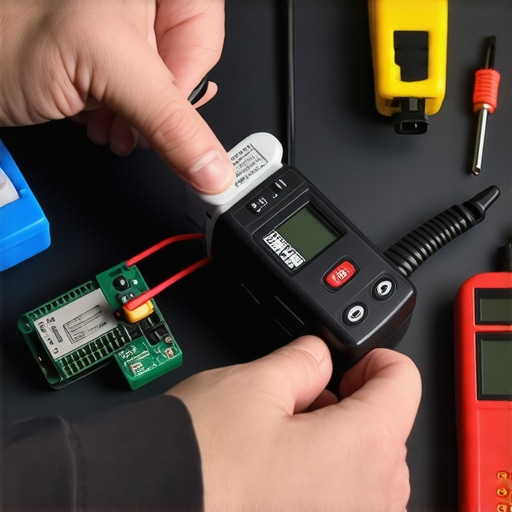
The Harsh Reality of Ignition Interlock Failures and Your Defense
I watched a client lose their entire claim in the first ten minutes of a deposition because they ignored one simple rule about silence. They tried to explain away a failed breath test instead of letting the science speak. They assumed the machine was right and they were wrong. That is a fatal mistake in any dui defense. You are fighting a piece of hardware that was likely manufactured by the lowest bidder and calibrated by a technician who had a thirty minute lunch break. If you think the state has an airtight case because a digital screen says ‘fail,’ you have already lost the psychological war. The truth is that these devices are prone to massive scientific error. To protect your future, you must call an attorney who views these devices as flawed tools rather than divine arbiters of truth. Legal success is not about being a good person; it is about exposing the mechanical failures of the prosecution’s evidence.
The myth of fuel cell infallibility in modern breath testing
Ignition interlock devices utilize electrochemical fuel cell sensors that are marketed as specific to ethanol but frequently react to interferent substances and ambient air contaminants. A qualified dui attorney understands that these sensors operate on an oxidation process that cannot distinguish between the alcohol you drank and the isopropanol or acetone produced by a ketogenic diet. This is not a theory. It is a chemical reality. The fuel cell generates a current when it oxidizes a substance. If that substance is not ethanol, the machine still records a ‘fail.’ This is where your dui lawyer must intervene. We look at the anodic oxidation rates. We look at the voltage spikes in the logs. When the state claims you were drinking, we demonstrate that the sensor was simply overwhelmed by the chemical composition of your breath or the environment of your vehicle. The dui legal standards require a level of precision that these handheld units simply cannot meet in the field.
“Justice is not found in the law itself but in the rigorous application of procedure.” – Common Law Maxim
Slope detection failure and the mouth alcohol trap
Slope detection is the software mechanism intended to identify residual mouth alcohol but ignition interlock devices often lack the sophisticated infrared spectroscopy necessary to differentiate between deep lung air and oral contaminants. If you just finished using a mouthwash or have gastroesophageal reflux disease, the device will register a massive spike. Most dui lawyer professionals will tell you that the machine is supposed to wait for a 15 minute observation period. But the interlock is in your car. There is no officer observing you. You are alone with a sensor that doesn’t care about your GERD symptoms or your dental work. This creates a false positive that the DMV will use to revoke your driving privileges. You need to call an attorney immediately when a lockout occurs. We don’t wait for the hearing. We begin the forensic audit of the device’s internal log immediately to show the slope of the alcohol curve was too steep to be systemic alcohol from the bloodstream.
Calibration drift and the records the monitoring company hides
Calibration logs and maintenance certificates are the primary evidence used to challenge the reliability of an ignition interlock and must be scrutinized for sensor degradation. Every dui defense strategy must involve a subpoena for the full data download from the service provider. These devices ‘drift.’ Over time, the electrolyte in the fuel cell dries out. The sensor becomes more sensitive or less sensitive. It is a biological organism made of chemicals. If the shop did not perform a dry gas standard check within the last thirty days, the results are legally radioactive. We look for the variance reports. If the device was off by even .005 percent during the last check, the entire month of data is suspect. This is the dui legal leverage we use to suppress the evidence. We do not accept the summary report. We demand the raw hex data. If the technician used a gas canister that was near its expiration date, the dui attorney can move to have the results excluded entirely. Procedure is the only thing standing between you and a permanent mark on your record.
“The right of the accused to confront the evidence against them is the bedrock of our adversarial system.” – American Bar Association Standards for Criminal Justice
Environmental contamination in the vehicle cabin
Ambient air interference from cleaning products or gasoline fumes can penetrate the ignition interlock sensor during the initial blow or the rolling retest sequence. I have seen cases where a client’s dui defense was saved simply by proving they had recently detailed their car with armor-all. The chemicals in those cleaners contain hydrocarbons that mimic the electrochemical signature of ethanol. The machine doesn’t know you just cleaned your dashboard. It only knows that the current in the fuel cell shifted. This is why you must call an attorney before you give any statement to the probation officer. Your first instinct will be to tell the truth. The truth is irrelevant if the machine says you failed. Your dui lawyer will use procedural mapping to show that the cabin air was not purged. We look for the pre-test baseline. If the sensor did not return to zero before the test began, the result is scientifically void. We use the gas chromatography reports from independent labs to prove what was actually in your car.
Cross examining the state certified technician
Technician testimony is often the weakest link in the dui legal chain because most service center employees lack a background in chemistry or metrology. When we get them on the stand, we don’t ask about your breath. We ask about the hygrometer in their shop. We ask about the traceability of their reference standards to the National Institute of Standards and Technology. If they cannot prove the chain of custody for the calibration gas, the evidence is junk. A dui attorney who knows how to conduct a voir dire of a technician can dismantle the state’s case in twenty minutes. These people are trained to push buttons, not to understand electrochemical kinetics. They often skip steps. They forget to record the barometric pressure during calibration. In the world of high-stakes dui defense, these small procedural errors are the keys to the jail cell. We don’t argue that you weren’t drinking. We argue that the technician cannot prove the machine was capable of measuring what it claimed to measure.
Constitutional challenges to automated guilt
Due process violations occur when the state relies on proprietary software that the dui defense cannot independently verify or audit under confrontation clause rights. You have a right to know how the machine that is judging you actually works. Many interlock manufacturers claim their software is a trade secret. This creates a dui legal conflict. How can you defend yourself against a secret? Your dui lawyer must file motions to compel the source code. We have seen instances where the code had ‘bugs’ that triggered failures during rapid temperature changes. If the state refuses to provide the code, we move for dismissal. This is the military strategist approach to the law. We attack the logistics. We attack the foundation. We don’t just sit there and hope the judge is nice. We force the state to choose between protecting a private company’s secrets and upholding your constitutional rights. If you find yourself in this position, call an attorney who is not afraid to challenge the entire system. The dui attorney who wins is the one who refuses to accept the machine’s word as law. The device is a witness, and we will cross examine it until it breaks.