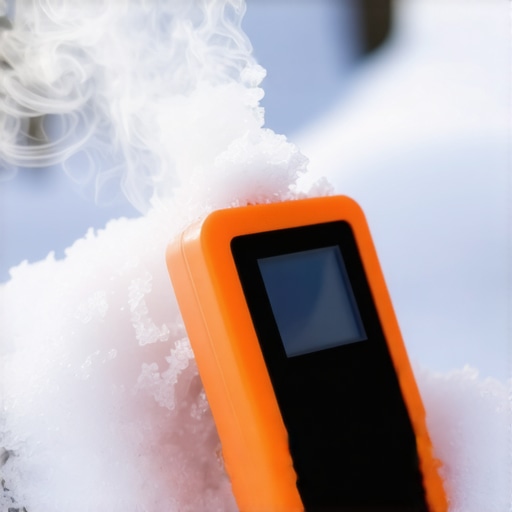
The Fragility of the Roadside Machine in Cold Weather
I watched a client lose their entire claim in the first ten minutes of a deposition because they ignored one simple rule about silence. They felt the need to fill the void, so they started speculating about facts they did not know. This same psychological pressure exists during a DUI stop in the dead of winter. You trust the machine because the officer acts like it is an oracle of truth. It is not. The machine is a sensitive piece of laboratory equipment being used in a harsh, uncontrolled environment. When the temperature drops, the chemical and physical assumptions that these devices rely upon begin to shatter. If you are facing charges based on a winter breath test, you are not fighting the law; you are fighting flawed physics. A DUI lawyer understands that the machine is often the weakest witness for the prosecution.
The failure of thermal compensation in roadside testing
Breathalyzers require a stable internal temperature of 34 degrees Celsius to accurately simulate human breath. Cold weather interferes with the internal heating elements and the fuel cell sensor, leading to a condensation effect that concentrates alcohol molecules. This thermal instability frequently results in BAC readings that are artificially inflated beyond the legal limit. When the air outside is freezing, the breath you exhale cools rapidly as it enters the device. This causes water vapor to condense on the sensor. Since alcohol has a high affinity for water, the concentration of ethanol at the sensor plate increases. The machine is programmed to assume a standard 2100 to 1 partition ratio, but that ratio assumes a specific temperature. When the temperature is wrong, the math is wrong. A DUI attorney knows that the state must prove the device was operating within strict environmental parameters. If the officer left the unit in a cold patrol car for hours, the calibration is compromised before you even blow into the tube.
“Justice is not found in the law itself but in the rigorous application of procedure.” – Common Law Maxim
The science behind atmospheric pressure and fuel cells
Fuel cell sensors are the standard in modern breath testing, but they are remarkably temperamental when the barometer drops. These sensors work by oxidizing alcohol to create an electrical current. In sub-zero temperatures, the chemical reaction on the platinum electrode slows down significantly. This delay can cause the machine to misinterpret the curve of the breath sample. Most officers will not tell you that the device has an acceptable margin of error that expands as the mercury falls. They want you to believe the 0.084 reading is an absolute fact. In reality, that number is a guess made by a microprocessor struggling to maintain its own operating temperature. Defense strategies often focus on the thermodynamic limitations of the Intoxilyzer series. If the officer did not allow the machine a proper warm-up cycle, the results are legally radioactive. Any dui defense must investigate the ambient temperature logs from the night of the arrest.
How the state hides calibration drift
Law enforcement agencies are notorious for maintaining sparse logs regarding the environmental conditions of their testing sites. They rely on the fact that most people will simply plead guilty rather than challenge the technical proficiency of the equipment. Calibration drift occurs when the sensor becomes desensitized due to repeated use in extreme weather. Think of it like a guitar string that won’t stay in tune because of the humidity. The machine needs constant adjustment to remain accurate. When a dui legal expert reviews the maintenance records, they look for gaps in the NIST-traceable thermometer checks. If the station was not keeping the room at a controlled temperature, every test from that machine is suspect. Procedural mapping reveals that many labs ignore the manufacturer’s warnings about operating in cold environments to keep their numbers high. This is not just a technicality; it is a fundamental breakdown of the evidence chain.
“The integrity of the forensic process is the only barrier between a citizen and the arbitrary power of the state.” – ABA Standards for Criminal Justice
Why your defense starts with the weather report
Evidence from the field indicates that a sudden cold snap can lead to a spike in DUI arrests that have nothing to do with increased drinking. The strategic play is often the delayed demand letter for the meteorological data from the exact time and location of the stop. This data creates a baseline for challenging the officer’s testimony. If the officer claims the device was working perfectly but the local weather station recorded a temperature of ten degrees, there is a conflict. A call an attorney who specializes in litigation architecture can use this to file a motion to suppress. The court must decide if a machine operating outside its design specifications can provide evidence beyond a reasonable doubt. Usually, when the science is this shaky, the prosecution starts looking for a way to settle. Information gain suggests that the physical state of the machine is more important than the physical state of the driver in these specific cases.
The legal path to suppressing flawed data
Challenging a breathalyzer is about deconstructing the machine’s perceived authority. We use expert witnesses who understand the microscopic reality of fuel cell oxidation. We demand the internal diagnostic logs that show the temperature of the simulator solution. If the state cannot produce these, they cannot prove the test was valid. Most people assume that if they blew over the limit, the case is closed. That is a lie. The case is only beginning when we start looking at the mechanical failures caused by the winter air. The goal is to show the jury that the 0.08 they see on the paper is a product of cold metal and bad math, not a crime. This requires a dui lawyer who is not afraid to spend hours in the discovery phase looking for a single missing decimal point in a maintenance log. Your freedom depends on proving that the machine was just as cold and confused as the officer on the side of the road.