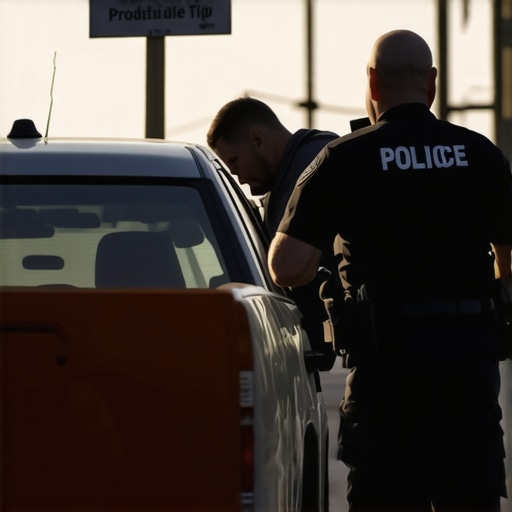
The shadow between suspicion and arrest
Reasonable suspicion is the low legal standard allowing police to briefly detain you. It requires specific articulable facts rather than a vague hunch. In a DUI legal context, this is the threshold for the initial stop before a dui attorney can intervene. I am sitting here with a cold cup of black coffee, looking at your file. Your case is likely in trouble because you thought you could talk your way out of a flashing light. I watched a client lose their entire claim in the first ten minutes of a deposition because they ignored one simple rule about silence. They thought they could explain their way out of a charge. You cannot. You only talk your way into a conviction. Most people do not understand that the police are not your friends during a traffic stop. They are data collectors. They are building a narrative of your guilt while you are still trying to find your registration. The difference between suspicion and probable cause is the difference between being pulled over and being handcuffed. It is a thin line. It is a line made of procedure and microscopic observations. You need to understand this distinction before you ever step foot in a courtroom.
“The integrity of the criminal justice system depends on the strict adherence to evidentiary standards during the initial contact.” – American Bar Association Standards for Criminal Justice
Why your roadside performance doesn’t matter
Field sobriety tests are designed for failure. The National Highway Traffic Safety Administration (NHTSA) protocols are rigid. If you have a physical disability or are nervous, the dui defense hinges on proving the officer failed to score the test according to standardized legal guidelines. The officer wants you to perform the Horizontal Gaze Nystagmus test. They are looking for a lack of smooth pursuit in your eyes. They are looking for distinct nystagmus at maximum deviation. This is not a test you pass. It is a test they use to justify an arrest. Your performance is subjective. The officer’s notes are the only thing the jury will see if you do not have a dui lawyer to challenge the record. Most drivers believe that if they just try hard enough, the officer will let them go. That is a fantasy. The moment the officer asks you to step out of the car, the reasonable suspicion has likely already shifted toward probable cause. Your goal at that moment is not to prove you are sober. Your goal is to stop providing evidence. Every word you say is a nail in the coffin of your case.
The microscopic data of a field sobriety test
Standardized Field Sobriety Tests consist of three specific evaluations including the One-Leg Stand and the Walk and Turn. These are divided into the instruction stage and the performance stage. An officer must observe specific clues to establish probable cause for a DUI arrest. In the Walk and Turn, there are eight specific clues. If you start too soon, that is a clue. If you stop to rest, that is a clue. If you miss heel-to-toe by more than half an inch, that is a clue. The officer is a machine recording errors. They are not looking for your balance. They are looking for your inability to follow complex, multi-layered instructions under duress. This is where the dui attorney finds the leverage. We look for the officer’s failure to give the instructions correctly. If the ground was not level, the test is invalid. If the lighting was poor, the test is invalid. If you are over fifty pounds overweight, the NHTSA guidelines suggest the tests are unreliable. These are the technicalities that win cases while you are busy worrying about how you looked on camera.
Where the Fourth Amendment actually lives
Probable cause requires a higher level of evidence than reasonable suspicion and is the constitutional requirement for an arrest warrant or a warrantless arrest. It means a reasonable person would believe a crime has been committed. This is the Fourth Amendment in action. When you call an attorney, the first thing they look for is a violation of this standard. Was there a valid reason for the stop? Did the officer have a specific reason to believe you were impaired? An odor of alcohol alone is often not enough for probable cause for an arrest, though it is enough for reasonable suspicion to investigate. The law is a game of definitions. If the officer jumps the gun and arrests you without meeting the probable cause threshold, the entire case can fall apart. This is the strategic play. While most lawyers tell you to sue immediately, the strategic play is often the delayed demand letter or the pre-trial motion to suppress evidence. We let the prosecution build their house on sand, and then we pull the tide in. Information gain in these cases comes from the officer’s own body camera footage, which often contradicts their written report.
“Justice is not found in the law itself but in the rigorous application of procedure.” – Common Law Maxim
The tactical reality of a motion to suppress
A motion to suppress is a legal request to exclude evidence from trial because it was obtained in violation of your constitutional rights. If the probable cause was manufactured or weak, a dui lawyer will file this motion to kill the case before it reaches a jury. This is the surgical strike of litigation. If the breathalyzer results are suppressed, the prosecution usually has no choice but to offer a plea or dismiss the charges. The state hates these motions. They require the officer to sit on the stand and justify their actions under oath. This is where we see the cracks. We look for the gap between the initial stop and the arrest. We look for the 15-minute observation period that is legally required before a breath test. If the officer was filling out paperwork instead of watching you, the breath test result is garbage. It is a technicality, yes. But the law is nothing but technicalities strung together by procedure. If you ignore the procedure, you lose the right to complain about the outcome.
Procedural traps in the initial traffic stop
The initial traffic stop is where most drivers provide the dui defense with its greatest challenges. Police use pretextual stops for minor infractions like a cracked windshield or a failure to signal to initiate a DUI investigation. These are legal. The Supreme Court has ruled that the officer’s underlying motive does not matter as long as a traffic violation occurred. You are being hunted for data. The officer asks, Have you had anything to drink tonight? This is a trap. If you say yes, you provide the suspicion. If you say no and they smell alcohol, you are a liar. The only correct answer is silence or a request for your dui attorney. Silence is a weapon. Use it. Most people feel a psychological need to fill the silence. They feel the need to be polite. Politeness will not keep you out of a cell. Only the law will do that. The officer is trained to keep you talking. The more you talk, the more your speech might slur. The more you talk, the more you might admit to things you didn’t even do. Stop talking.
The failure of the breathalyzer science
Breathalyzer results are often treated as objective truth by juries, but they are prone to significant mechanical error and calibration drift. Machines like the Intoxilyzer 8000 use infrared spectroscopy to measure alcohol in your breath. This science assumes a 2100-to-1 partition ratio between breath and blood alcohol. This ratio is an average. It is not a constant. If your body temperature is slightly elevated, the machine will report a falsely high BAC. If you have acid reflux or GERD, the machine may pick up mouth alcohol instead of deep lung air. The dui attorney must demand the calibration logs and the maintenance records of the specific machine used. These machines are computers. Computers fail. They require regular software updates and hardware checks. If the police department skipped a single monthly check, the results are legally questionable. We look for RFI interference from police radios. We look for slope detection errors. We zoom in on the data until the prosecution’s certainties turn into doubts.
Strategic silence during a roadside interrogation
Your Fifth Amendment right against self-incrimination is most vital at the moment of the stop, yet it is the most frequently waived right in DUI legal history. When you call an attorney, they will tell you that everything you said before the phone call is now evidence. The officer is not required to read you your Miranda rights until you are in custody and under interrogation. The roadside questioning is a grey area where they get you to confess voluntarily. They ask where you are coming from. They ask how much you have had. They are building a timeline. If you give them that timeline, you have destroyed your dui defense. A strategic defense is built on the absence of evidence. If there is no confession and the breathalyzer is suppressed, what is left? Only the officer’s opinion. And opinions are easy to tear apart on cross-examination. I have seen cases where the driver was clearly impaired but the state could not prove it because the driver had the discipline to remain silent and the officer had the incompetence to skip a procedural step. That is how the game is played.
The financial bleed of a poorly handled defense
The ROI of litigation in a DUI case is measured in the avoidance of long-term costs like insurance hikes, license revocation, and loss of employment. A cheap lawyer is a settlement mill. They will take your money and tell you to plead guilty at the first hearing. That is not a defense. That is an expensive white flag. A real dui lawyer looks at the case like a skeptical investor. Where is the bleed? Where can we cut the prosecution’s leverage? The cost of a trial is high, but the cost of a conviction is higher. You are paying for the forensic analysis of the evidence. You are paying for the expert witnesses who can testify about the flaws in breath science. You are paying for a strategist who knows the local court’s habits. If you try to save money now, you will pay for it for the next ten years in premiums and lost opportunities. Litigation is an investment in your own freedom. It is cold. It is clinical. It is necessary.
Final legal reality
The legal standard for a DUI conviction requires the state to prove guilt beyond a reasonable doubt, a much higher burden than the probable cause needed for an arrest. This is your only advantage. The system is a machine designed to process you. Your dui defense is the wrench in the gears. Understand the difference between suspicion and cause. Understand that your roadside cooperation is a myth. The police are there to build a case, not to help you get home. When you see the lights, the time for talking is over. The time for dui legal strategy begins. You need a dui attorney who views the courtroom as a battlefield of procedure. If you do not fight the process, the process will consume you. That is the brutal truth of the law. It does not care about your intent. It only cares about what can be proven in a transcript. Get a lawyer who understands the microscopic details of the law and let them do the heavy lifting while you stay silent.