The Truth About Field Sobriety Tests: Why Even Sober People Fail Them
I once sat across from a client who told me he felt confident because he crushed his roadside tests. He was proud of his balance. Then I watched the dashcam. He looked like a panicked animal under the glare of high-intensity strobe lights and the weight of a professional predator’s gaze. This is the reality of the dui defense process. I smell the stale black coffee in my mug and I tell him the truth he does not want to hear. You did not pass. You were never meant to pass. The entire scenario was constructed to ensure your failure before you even took your first step. These tests are not medical exams. They are forensic tools used to build a narrative of guilt. When you call an attorney, you are not just looking for a lawyer; you are looking for a forensic architect who can dismantle this rigged game piece by piece. The law is a machine, and if you do not know where the gears are, you will be crushed by them.
The roadside trap is set
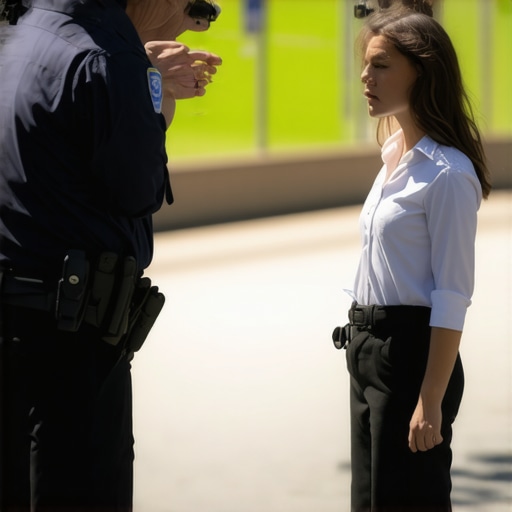
DUI legal proceedings often hinge on the performance of physical tasks under extreme duress. These tests are designed by the NHTSA to be difficult for the average person regardless of alcohol consumption. Your dui attorney knows that failing these tests provides the biological evidence needed for an arrest. Most individuals believe that if they just try hard enough, they can prove their sobriety. This is a fundamental misunderstanding of the officer’s role. The officer is not an impartial judge; they are an investigator looking for specific clues to justify a custodial arrest. Case data from the field indicates that the environment of a traffic stop is inherently biased against the driver. The flashing lights create a strobe effect that disrupts the vestibular system. The sound of passing traffic at sixty miles per hour creates a sensory overload. The uneven grade of a highway shoulder makes a straight walk physically impossible for someone with perfect equilibrium. You are being judged on a scale that is tilted against you from the first second the officer approaches your window.
[IMAGE_PLACEHOLDER_1]
The biological betrayal of the human eye
The dui lawyer focusing on the horizontal gaze nystagmus test understands that this is the most scientific yet most prone to officer error. This dui defense tactic highlights that many medical conditions cause eye jerking. When you call an attorney, they will examine the officer’s specific training records and the angle of the stimulus. The horizontal gaze nystagmus (HGN) test involves the officer moving a pen or small light in front of your eyes. They are looking for an involuntary jerking of the eyeball. The problem is that over forty different types of nystagmus exist, most of which have nothing to do with alcohol. Caffeine, nicotine, aspirin, and simple fatigue can all trigger these eye movements. Furthermore, if the officer holds the stimulus too high or moves it too fast, they can induce nystagmus in a perfectly sober person. It is a technical trap. The officer claims to see a microscopic movement that is invisible on dashcam footage, and the court is expected to take their word for it. This is why we challenge the certification of the officer and the exact methodology used during those three minutes on the side of the road.
“Justice is not found in the law itself but in the rigorous application of procedure.” – Common Law Maxim
The physical impossibility of the nine step turn
The dui lawyer knows the Walk and Turn test is a divided attention task designed to overwhelm your cognitive load. In a dui legal context, the officer is looking for eight specific clues of impairment. Even a sober person can fail by simply starting the test one second too early. This is not a test of your ability to walk; it is a test of your ability to follow hyper-specific, unnatural instructions while under extreme psychological stress. You are told to stand in a heel-to-toe position while the officer recites a long list of requirements. If you lose your balance for a fraction of a second while waiting, that is a clue. If you use your arms for balance by more than six inches, that is a clue. If you take ten steps instead of nine, or if you turn to the left instead of the right, you are marked as impaired. Procedural mapping reveals that the scoring is entirely subjective. There is no credit for what you do correctly. You can perform ninety percent of the test perfectly, but the two small errors you make will be the only things written in the police report. It is a zero-sum game where the house always wins.
Why the pavement is your worst enemy
A dui attorney will tell you that the physical conditions of the road are rarely mentioned in a police report. During dui defense, we often find that the slope of the road or the presence of loose gravel was the real reason for a failed test. No one should be expected to perform a balance act on a 10-degree incline at midnight. Information gain from veteran litigators suggests that the strategic play is often the delayed challenge to the road conditions via expert testimony from a civil engineer. Consider the footwear you were wearing. Consider the wind speed. Consider the fact that a heavy truck drove by at seventy miles per hour just as you were attempting to turn. These are not excuses; they are the physical realities that the prosecution wants to ignore. They want the jury to see a sterile environment that does not exist. The courtroom is about perception, and my job is to change the jury’s perception of that roadside from a controlled laboratory to the chaotic, dangerous, and unfair environment it truly was.
“The integrity of the judicial system depends upon the reliability of evidence presented at trial.” – American Bar Association Guidelines
The tactical advantage of total silence
When you call an attorney, the first thing they will ask is what you said to the officer. In dui legal situations, your words are just as dangerous as your physical performance. Most people try to talk their way out of an arrest, which only provides the state with more evidence. Silence is not an admission of guilt; it is a constitutional shield. The officer will ask you if you have been drinking. They will ask you where you are coming from. They will ask you how you think you did on the tests. Every answer is a potential nail in your coffin. The brutal truth is that you cannot help yourself by talking. You can only hurt yourself. I tell my clients to be polite but firm. Request your lawyer immediately. Do not explain the one beer you had three hours ago. Do not explain your bad knees. Do not apologize. The officer is recording every stutter, every slur, and every contradiction to use against you in a court of law. The machine is listening, and it has a very long memory.
The false science of the one leg stand
The dui attorney recognizes the one leg stand as the most flawed of the three standardized tests. In a dui defense, we point out that the NHTSA’s own research shows a high failure rate among sober individuals over the age of sixty-five or those with back problems. The dui lawyer must expose the officer’s failure to screen for these physical limitations. The test requires you to hold one foot six inches off the ground while counting aloud. The officer looks for swaying, hopping, putting the foot down, or using arms for balance. It sounds simple. It isn’t. Try doing it right now in your living room. Now try doing it while a man with a gun and a badge stands over you with a flashlight in your eyes and a siren wailing in the background. The psychological pressure alone is enough to cause a cortisol spike that leads to muscle tremors and loss of focus. The state calls it science. I call it a theatrical performance designed to make you look like a criminal before you have even been charged. The final reality is that these tests are the weakest link in the prosecution’s chain, and a skilled lawyer will snap that link with the precision of a surgeon.