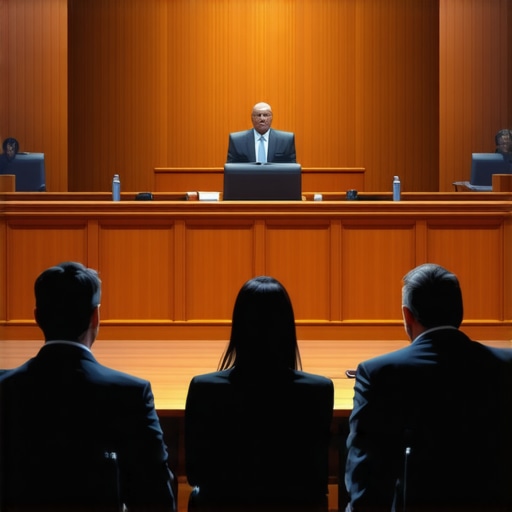
The air in my office smells like strong black coffee and the weight of another late night spent deconstructing a flawed arrest report. I do not offer comfort. I offer the brutal reality of the legal system. Most people walk into a courtroom like lambs to the slaughter because they believe the prosecution plays a fair game. They do not. I watched a client lose their entire claim to innocence in the first ten minutes of a roadside stop because they ignored one simple rule about silence. He thought he could explain his way out of a dui legal nightmare. He thought the officer was his friend. By the time he reached the station, he had already confessed to things he had not even done, simply because the pressure of the silence was too much to bear. This is how the state wins. They rely on your discomfort and your ignorance of the microscopic procedural errors that occur during every dui defense case. If you want to survive, you need to understand the logistics of the war being waged against you.
The myth of the voluntary field test
DUI defense strategies often hinge on the fact that field sobriety tests are not mandatory in many jurisdictions. DUI lawyers know that these tests are designed for failure, serving as subjective evidence gatherers for the dui attorney to later challenge during a dui legal proceeding or trial motion. Procedural mapping reveals that the Standardized Field Sobriety Test or SFST is a rigged game. The National Highway Traffic Safety Administration has a specific manual that officers must follow with surgical precision. If the officer fails to mention that you should keep your arms at your side or if they perform the Horizontal Gaze Nystagmus test at the wrong angle, the results are scientifically invalid. Yet, the police will never tell you that you can say no. They want you to stand on one leg on the side of a highway while strobe lights flash in your eyes. They want you to fail. While most lawyers tell you to cooperate, the strategic play is often the refusal of these specific coordination tests. Refusal limits the amount of subjective evidence the state can use to build a narrative of impairment. Case data from the field indicates that a jury is much more likely to doubt a breath machine than they are to doubt an officer’s description of a stumbling defendant. Do not give them the footage they need to bury you.
“Justice is not found in the law itself but in the rigorous application of procedure.” – Common Law Maxim
Why the breathalyzer software is a black box
DUI lawyer expertise is required to dismantle the scientific facade of the breathalyzer machine used in dui defense. A dui attorney must understand that these machines use infrared spectroscopy to measure alcohol, yet the dui legal standards often ignore the significant margin of error inherent in human biology. The machine assumes everyone has a partition ratio of 2100 to 1. This is a mathematical lie. Your actual ratio depends on your hematocrit levels, your body temperature, and even the air quality in the room. If you have a fever, the machine will report a significantly higher blood alcohol concentration than what is actually in your system. The prosecution treats the printout like a divine decree, but in reality, it is a calculation based on a guess. We demand the maintenance logs. We demand the calibration records. If the Intoxilyzer 8000 has not been checked within the state mandated window, that number on the paper is nothing more than expensive fiction. Information gain suggests that the state often fails to disclose when a machine has a history of ambient air failures. This is the leverage we use to force a dismissal before the trial even begins.
The hidden power of the motion to suppress
Call an attorney before you agree to any deals because the dui defense process requires a thorough investigation into the initial traffic stop. A dui lawyer uses the motion to suppress to strike evidence that was obtained through an illegal dui legal search or an unjustified dui attorney confrontation. The Fourth Amendment is not a suggestion. If the officer pulled you over because they had a hunch rather than a specific, articulable suspicion of a crime, everything that happened after the blue lights came on can be thrown out. I have seen cases where a pound of drugs and a high BAC were both suppressed because the officer did not like the way the driver looked at them. The courtroom is not about truth; it is about what the judge allows the jury to hear. We look for the gaps in the body cam footage. We look for the inconsistencies between the written report and the digital evidence. If the officer says you crossed the center line but the video shows you were safely within the lane, the entire case collapses. The state knows this, which is why they push for early pleas. They want you to sign away your rights before a professional has a chance to look at the evidence.
“The prosecutor has more control over life, liberty, and reputation than any other person in America.” – Robert H. Jackson
The failure of the partition ratio and biological variables
DUI legal professionals recognize that the dui defense must account for the biological reality that every body processes alcohol differently. A dui lawyer or dui attorney will tell you that the 2100 to 1 ratio is a standardized average that does not apply to the individual. The state relies on a one size fits all approach to criminal justice. This is a tactical error we exploit. Consider the gastroesophageal reflux disease or GERD. If you suffer from acid reflux, the breath machine is not measuring your deep lung air. It is measuring the alcohol vapors coming from your stomach. This leads to an artificially inflated reading that can be two or three times higher than your actual blood level. Procedural mapping of the arrest timeline often reveals that the officer failed to observe the mandatory twenty minute waiting period. This period is designed to ensure that no mouth alcohol or burping interferes with the test. When an officer gets impatient and rushes the process, they violate the protocol that makes the test admissible. This is not a technicality. This is the difference between a conviction and a walk-away.
Discovery gaps the state ignores
Call an attorney to ensure that the dui defense team receives every scrap of evidence that the dui legal system is required to produce. A dui attorney knows that the dui lawyer must hunt for the evidence the state accidentally loses. This includes the internal communications between officers, the repair history of the patrol car’s radar unit, and the disciplinary records of the arresting officer. Often, we find that the state is hiding a history of procedural misconduct. If the officer has been cited for failing to calibrate their equipment in the past, their testimony in your case becomes toxic. The prosecutor will never volunteer this information. You have to take it from them through aggressive discovery motions. The strategic play is often the delayed demand letter. By waiting until the state has committed to a specific timeline, we can catch them in a position where they cannot produce the evidence they claimed to have. This is the chess game. This is how we win when the odds are stacked against us. The courtroom is a territory of rules, and if you do not know how to weaponize those rules, you have already lost. Stop talking to the police and start talking to a strategist who knows how to tear their case apart piece by piece. The final tactical assessment of any DUI charge is simple. Never accept the state’s first version of the story. There is always a crack in the foundation. My job is to find it and drive a wedge through it until the whole thing falls down.