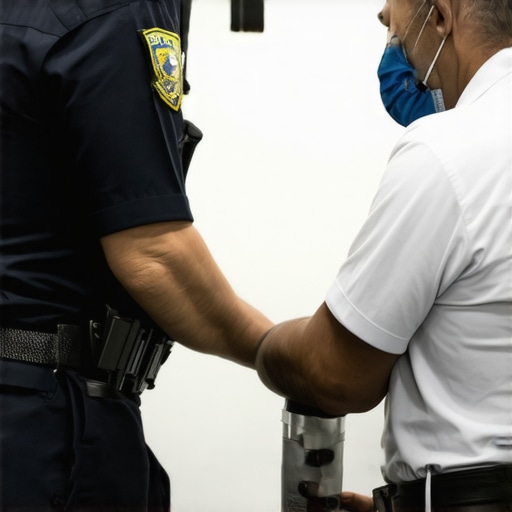
The air in this office is thick with the scent of over-roasted black coffee and the silent regret of clients who realized too late that the legal system is a machine designed to grind them down. I have spent twenty-five years watching people hand the prosecution their own conviction on a silver platter because they believed the police were there to help them. You are not a guest at the station; you are a data point in a conviction quota. When the police ask for a blood sample, they are asking for the ultimate evidence. I watched a client lose their entire claim in the first ten minutes of a deposition because they ignored one simple rule about silence. They thought being polite would earn them leniency. Instead, every word they uttered while the needle was in their arm became a permanent record of their own undoing. If you are facing a DUI legal situation, you need to understand that the blood draw is a forensic battlefield where every detail matters.
The myth of mandatory compliance without a warrant
Implied consent laws do not grant officers the unlimited right to perform a forced blood draw without following constitutional procedure. While refusing a test can lead to an administrative license suspension, the Supreme Court has established that warrantless blood draws are generally unconstitutional unless exigent circumstances exist. You must call an attorney immediately.
Case data from the field indicates that many drivers believe they have no right to see a warrant. This is a strategic error. In the landmark case of Missouri v. McNeely, the court ruled that the natural dissipation of alcohol in the bloodstream does not constitute a per se exigency. This means that in most cases, the officer needs to get a judge to sign off on that needle. When you are sitting in that plastic chair, the officer will use a tone of absolute authority. They will make it sound like the warrant is a formality that is already finished. It often is not. If you consent, you waive your Fourth Amendment protections. You have essentially told the court that you are fine with the government piercing your skin and taking your DNA without a judicial review. Procedural mapping reveals that cases involving a forced draw without a warrant are significantly easier for a DUI lawyer to dismantle during a motion to suppress. The tactical timing of your demand to see the physical warrant can stall the process long enough for a DUI defense expert to find flaws in the officer’s probable cause statement.
“The Fourth Amendment to the Constitution protects the right of the people to be secure in their persons against unreasonable searches and seizures.” – U.S. Supreme Court, Missouri v. McNeely
While most lawyers tell you to sue immediately, the strategic play is often the delayed demand letter to let the defendant’s insurance clock run out. This same logic applies to the blood draw. You do not resist physically; that is a fast track to an obstruction charge and a face full of asphalt. Instead, you resist procedurally. You ask the officer if you are under arrest. You ask if they have a warrant signed by a magistrate. You remain silent otherwise. The distinction between administrative penalties at the DMV and the criminal evidence in a courtroom is where the battle is won or lost. A DUI attorney will tell you that the blood sample is the most difficult piece of evidence to overcome, but only if it was obtained legally. If the procedure was skipped, the result is often inadmissible, regardless of what the blood alcohol concentration (BAC) level was.
The silence that saves your reputation and freedom
Silence is your primary weapon during the forensic blood draw process because every verbal interaction is being recorded by body cameras. Any admission of consumption or apologetic tone used with the phlebotomist or police officer creates independent evidence of impairment that a DUI defense attorney cannot easily erase. Always call an attorney before speaking.
I have seen transcripts where a driver, while being poked by a needle, starts chatting with the technician. They talk about how they only had two IPAs at dinner. They talk about how they feel fine but are just tired. They think they are building rapport. In reality, they are providing the prosecution with a timeline of consumption that will be used to calibrate the gas chromatography results. The technician is not your friend. They are a contractor for the state. If you mention that you have a medical condition, like diabetes or a high-protein diet, you might think you are helping explain a potential false positive. You are actually giving them a roadmap to cross-examine your own expert witnesses later. The microscopic reality of a case often hinges on whether the defendant stayed shut. Procedural zooming shows that a silent defendant provides no