The Brutal Truth About Your DUI Arraignment
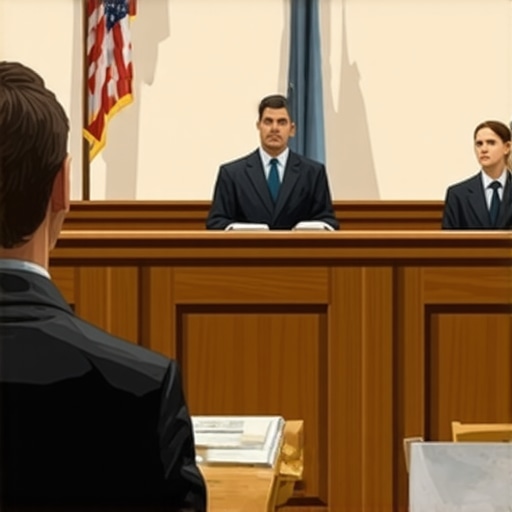
I once watched a defendant lose his entire defense in the first five minutes of a DUI arraignment because he thought the judge was his friend. He stood at the podium, smelling of cheap mints and desperation, and tried to explain that he only had two drinks. He didn’t realize that the court reporter was capturing every word. The prosecutor didn’t smile; he just sharpened his pencil. By the time the defendant realized he was confessing to the elements of the crime, the judge had already set a high cash bail. I smell the burnt coffee in the back of the courtroom and I see the same mistakes every Monday morning. You are not there to tell your story. You are there to survive a legal procedure designed to categorize you as a risk to the public.
The cold reality of the 9 AM calendar call
An arraignment is the formal process where the court reads the criminal complaint and the defendant enters a not guilty plea. It is not a trial, and the judge will not listen to your evidence or witnesses. The primary purpose is to establish jurisdiction and determine pretrial release. Case data from the field indicates that defendants who speak during this hearing without a DUI lawyer often provide incriminating statements that the prosecution uses to bolster a DUI conviction. You are a case number on a docket. The clerk calls your name, you step forward, and the legal machine begins to grind. If you do not have a dui attorney, the court may offer you a public defender, but only if you meet the indigency requirements. This is the moment where the dui legal framework first attaches to your life. The air in the courtroom is thick with the scent of floor wax and the low hum of the HVAC system, creating a clinical atmosphere that favors the state. You must understand that every procedural step is a potential pitfall. While most people think they should explain their sobriety, the strategic play is the standing mute defense to force the state to prove every element of the stop. The judge is looking for probable cause and ensuring you have legal counsel. Do not mistake their efficiency for empathy. They have fifty cases to hear before lunch. You are just a name on a charging document.
“Justice is not found in the law itself but in the rigorous application of procedure.” – Common Law Maxim
Why your silence is the only asset left
The Fifth Amendment provides a right against self-incrimination that is most frequently violated during the initial appearance and arraignment. Anything you say at the podium is recorded and can be used as a party admission in later dui defense motions. Silence is not an admission of guilt; it is a strategic shield. Procedural mapping reveals that the most successful outcomes originate from cases where the defendant remained absolutely silent, allowing their dui attorney to handle all legal arguments. The court will ask if you understand the charges. A simple yes is sufficient. If you attempt to explain the breathalyzer results or the field sobriety tests, you are handing the district attorney a gift. The prosecutor is looking for admissions of impairment or operation of a motor vehicle. Even a statement as simple as I was just trying to get home is a stipulation that you were the driver. In the litigation landscape, information is the only currency. If you give it away for free at the arraignment, you have no leverage for a plea bargain or a dismissal. The dui defense starts with the refusal to speak. You must treat the courtroom like a hostile environment where the only safe move is procedural compliance without narrative input.
[IMAGE_HERE]
The procedural trap of the initial plea
Entering a not guilty plea at a DUI arraignment is a legal necessity to preserve your constitutional rights and allow for the discovery process. A guilty plea at this stage ends the case and results in an immediate judgment of conviction, fines, and license revocation. It is a common legal misconception that pleading guilty early shows remorse and leads to leniency; in reality, it simply waives your right to examine the evidence. When you enter a not guilty plea, the court sets a pre-trial conference date. This triggers Rule 16 discovery, where your dui lawyer can demand the police reports, dashcam footage, and calibration records for the breath test machine. Without this data, you are flying blind. The arraignment is the gateway to litigation. If you plead guilty, you lose the ability to challenge the constitutionality of the traffic stop or the accuracy of the chemical test. The prosecutor wants a quick win. They want you to feel overwhelmed by the criminal charges so you fold early. Do not give them the satisfaction. The plea is your first tactical move. It says that you are holding the government to its burden of proof. Even if the evidence seems overwhelming, there are often procedural errors in the arrest that can only be found after the arraignment. A dui attorney will look for violations of the fourth amendment that you would never notice. Call an attorney before you even consider your plea.
“The right to be heard would be, in many cases, of little avail if it did not comprehend the right to be heard by counsel.” – Powell v. Alabama, 287 U.S. 45 (1932)
How bail conditions become a silent prison
Pretrial release conditions set during a DUI arraignment often include alcohol monitoring, travel restrictions, and the installation of an ignition interlock device. These conditions are technically not punishment but are designed to ensure public safety while the case is pending. However, for the defendant, they represent a significant burden on personal liberty and financial resources. The judge will evaluate your criminal history, ties to the community, and the severity of the DUI arrest to determine if cash bail is required. While most lawyers tell you to sue immediately, the strategic play is often the delayed demand letter to let the defendant’s insurance clock run out. In a criminal context, the strategic play is a motion to modify bail if the conditions are unconstitutionally broad. If the court orders a SCRAM bracelet, you are paying a private company daily to monitor your sweat for alcohol. If you fail a random test, you are remanded to custody without a trial. The arraignment is where these chains are forged. Your dui lawyer must argue for release on own recognizance (ROR) or a signature bond. Every restriction the judge places on you is a point of leverage for the prosecution. They know that if you are miserable under pretrial conditions, you are more likely to accept a bad plea deal just to get the case over with. You must fight the conditions of release as hard as the charges themselves.
The prosecutor is not your friend
The assistant district attorney assigned to the arraignment court is there to process convictions, not to ensure fairness or justice. They are viewing your arrest report for the first time and looking for aggravating factors like high blood alcohol content or a refusal to test. They will use the arraignment to request maximum bail and stringent conditions. Do not attempt to speak to the prosecutor in the hallway or at the podium. Any informal conversation is a waived privilege. They are trained litigators who know how to extract information under the guise of procedural help. They might ask where you were drinking or if you have a history of substance abuse. These questions are not friendly banter; they are forensic inquiries. The prosecutor knows the judge’s tendencies and will play to their biases. If the judge is known for being tough on crime, the prosecutor will emphasize any minor traffic infraction associated with the DUI stop. Your dui defense must be proactive. Your attorney will counteract the prosecutor’s narrative by highlighting procedural gaps in the police work. The litigation engine thrives on conflict. If you are compliant and passive, you are simply fuel for the machine. You need a dui lawyer who can interject and object when the prosecutor oversteps the bounds of the arraignment. The legal battle is won in the details of the discovery, but it can be lost in the first thirty seconds of the prosecutor’s statement.
Comments are closed.