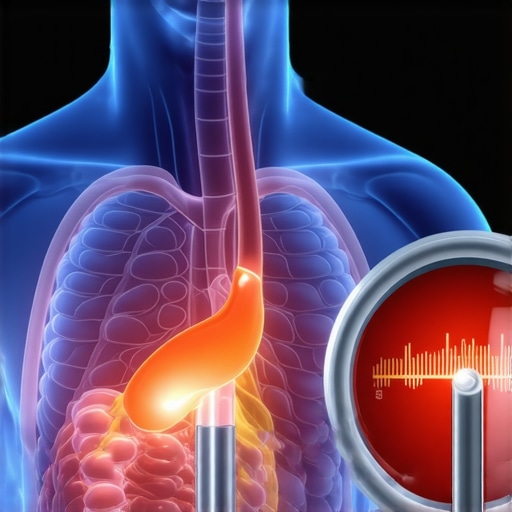
How Acid Reflux Can Falsely Inflate Your Blood Alcohol Score
The office smells like strong black coffee and the weight of a heavy file. You sit across from me, claiming you only had two glasses of wine, yet the police report shows a blood alcohol concentration of 0.15 percent. Most lawyers would look at that number and tell you to start negotiating a plea deal. They would tell you the machine is infallible. I am telling you the machine is a liar because your physiology is working against you. I recently spent 14 hours deconstructing a breath test maintenance log only to find that the machine had no defense against the biological reality of the suspect. A client once lost their entire claim to sobriety in the first ten minutes of an administrative hearing because they failed to mention their chronic heartburn. They thought it was a minor medical detail. It was actually the decisive factor that could have saved their license. When you face a DUI charge, you are not just fighting the police; you are fighting a flawed algorithm that assumes every human body functions like a sterile laboratory.
Why your stomach is lying to the breathalyzer
Acid reflux and Gastroesophageal Reflux Disease create mouth alcohol by transporting ethanol vapors from the stomach directly into the oral cavity. This physiological event bypasses the alveolar air from the lungs, resulting in a falsely high BAC reading during an evidential breath test. The breathalyzer is a primitive instrument that cannot distinguish between alcohol originating in the lungs and alcohol pushed up from the stomach. It operates on the Henry’s Law principle, which assumes a fixed ratio between breath alcohol and blood alcohol. When you suffer from GERD, that ratio is shattered. The machine captures raw gas from your esophagus and treats it as if it were filtered through your entire circulatory system. This creates a surge in the detected alcohol levels that does not reflect your actual level of impairment. Case data from the field indicates that individuals with chronic gastric issues can blow a 0.08 or higher even when their actual blood level is half that amount.
The failure of the slope detector
Slope detectors are internal software components designed to identify mouth alcohol by monitoring the rate of alcohol concentration change during a breath sample. However, these systems often fail to detect GERD related vapors because the reflux can be continuous and steady, mimicking the profile of deep lung air. The logic of the machine is based on the idea that mouth alcohol will dissipate quickly, creating a sharp spike and then a rapid decline. In a person with active reflux, the alcohol is being constantly replenished from the stomach reservoir. The machine sees a steady stream and assumes it is coming from the lungs. This is a fundamental flaw in the infrared spectroscopy used by modern police departments. While most DUI attorneys suggest immediate settlement, the strategic play is waiting for the maintenance logs of the specific Intoxilyzer unit to prove a pattern of sensor drift or a failure to flag physiological interference.
“Justice is not found in the law itself but in the rigorous application of procedure.” – Common Law Maxim
The twenty minute window of procedural failure
Title 17 regulations and standard police protocols require a continuous observation period of at least twenty minutes before a breath sample is taken. During this time, the arresting officer must ensure the suspect does not burp, belch, or regurgitate, as these actions introduce gastric vapors into the breathalyzer. If an officer is busy filling out paperwork or looking at their phone, they miss the silent burp that ruins the integrity of the test. Procedural mapping reveals that the majority of officers treat this observation period as a mere suggestion rather than a mandatory forensic requirement. When the officer fails to watch you with the intensity of a hawk, the results of the test are scientifically void. We look for the gaps in the video footage where the officer turns their back. That is where the defense begins. If the officer cannot swear under oath that they watched your mouth for 1,200 consecutive seconds, the 0.15 reading is nothing more than an educated guess.
The medical reality of GERD in the courtroom
Medical experts and gastroenterologists can provide expert testimony to prove that a defendant suffers from chronic acid reflux that invalidates breath test results. By using pH monitoring and endoscopy reports, a dui lawyer can demonstrate that the suspect had active gastric distress at the time of arrest. This information gain is the difference between a conviction and a dismissal. While a prosecutor will argue that the machine is a scientific marvel, our medical evidence proves it is a blunt instrument. We bring in the science of the lower esophageal sphincter. We explain how a hiatal hernia can create a pocket of trapped alcohol that remains in the throat for hours. The jury needs to understand that the machine is not measuring blood; it is measuring a burp.
“The integrity of the criminal justice system depends on the reliability of the scientific evidence presented against the accused.” – American Bar Association Standards for Criminal Justice
Tactical steps for the accused defendant
DUI defense strategies must include a comprehensive medical history and a forensic review of the breathalyzer’s accuracy in the presence of physiological interference. You must call an attorney who understands the Henry’s Law limitations and the partition ratio errors inherent in breath testing for GERD patients. The first step is securing your medical records. The second step is a formal demand for the breathalyzer’s COBRA data or its equivalent. We need to see the raw data points the machine used to calculate the slope. If the machine’s internal logs show any instability, we have the leverage needed to force a reduction or a total toss of the evidence. Do not assume that because you failed the test, you are guilty. The test failed you. The courtroom is a territory where evidence is either protected or dismantled. We choose to dismantle. The final strategic move is to force the state’s forensic toxicologist to admit, under the pressure of cross examination, that the machine cannot see inside your stomach. Once that admission is on the record, the 0.08 threshold becomes a ghost. You need a lawyer who treats the breathalyzer like a hostile witness. That is how cases are won in the trenches of the modern legal system.