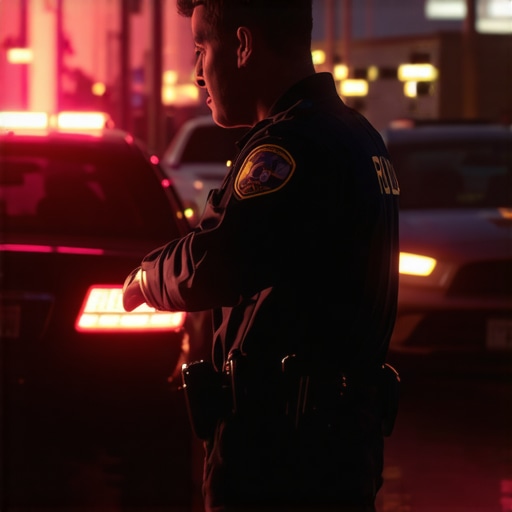
I smell strong black coffee and the acidic scent of a long night spent over police reports. I watched a defendant lose their entire future in the first five minutes on the roadside because they ignored the simple rule about silence and biology. Most people believe they can win a roadside coordination test through sheer willpower. They are wrong. These tests are not exams you pass. They are investigative tools designed to gather enough clues to justify an arrest. Your dui defense begins the moment those blue lights flicker in your rearview mirror, but most drivers have already convicted themselves before they even step out of the vehicle. I have seen surgeons, athletes, and sober professionals fail these tests because of a slight incline in the road or a gust of wind. The legal system calls them standardized, but the reality is a manufactured trap where the officer is the judge, jury, and scorekeeper on a dark shoulder of a highway.
The failure of standardized roadside metrics
Field sobriety tests are rigged because they rely on subjective officer observation rather than objective scientific measurement. These exercises are designed to divide your attention between physical tasks and mental instructions. A dui lawyer knows that the three standard tests, the Horizontal Gaze Nystagmus, the Walk and Turn, and the One-Leg Stand, are prone to environmental interference and human error. Case data from the field indicates that external factors like passing traffic, strobe effects from patrol lights, and even the shoes you wear can lead to false positives. When you call an attorney, the first thing they look for is whether the officer followed the strict National Highway Traffic Safety Administration guidelines. Even a minor deviation in the phrasing of instructions can invalidate the results. Procedural mapping reveals that officers often skip the mandatory screening questions regarding your physical health or age, both of which can naturally mimic the indicators of impairment. You are not being tested on your sobriety. You are being tested on your ability to perform a complex gymnastic routine under extreme psychological stress.
“Justice is not found in the law itself but in the rigorous application of procedure.” – Common Law Maxim
The mechanics of the gaze nystagmus trap
The Horizontal Gaze Nystagmus test is technically a medical evaluation conducted by a person with zero medical training. This test looks for the involuntary jerking of the eye as it tracks a stimulus. While the state presents this as a scientific dui legal standard, many factors besides alcohol cause nystagmus. Fatigue, caffeine, certain medications, and even the simple act of looking at a moving object can trigger the same response. A dui attorney understands that if the officer moves the stimulus too fast or fails to hold it at the maximum deviation for at least four seconds, the test is medically useless. In the courtroom, the prosecution will treat this test like a breathalyzer for the eyes. They will claim that your eyes do not lie. However, research suggests that a significant percentage of the population has naturally occurring nystagmus that has nothing to do with intoxication. The officer is looking for six specific clues. If they find four, they claim a high probability of impairment. The problem is that the officer is looking for those clues with a pre-existing bias to find them. They are not looking for reasons to let you go. They are looking for reasons to put you in handcuffs.
Biology as a witness for the prosecution
Physical coordination tests like the walk and turn are inherently biased against individuals with common physical limitations or balance issues. The Walk and Turn test requires you to take nine heel to toe steps along a straight line, turn in a very specific manner, and return. The officer looks for eight specific clues, such as using arms for balance or losing your footing during the turn. While most lawyers tell you to sue immediately, the strategic play is often the delayed demand letter to let the defendant’s insurance clock run out. This same tactical patience applies to dui defense. We wait for the body cam footage to show the truth that the officer’s report conveniently omitted. If the road has a grade of more than two inches, or if the surface is slippery with gravel, the test is invalid. If you are over sixty five years of age or more than fifty pounds overweight, the NHTSA manual explicitly states these tests may not be accurate. Yet, officers rarely ask about your weight or your back history before demanding you stand on one leg in the middle of the night. It is a performance of failure. The officer is not a doctor. They are a collector of evidence. Every stumble is a line in a report that will be read to a jury a year from now.
“The integrity of the judicial process depends entirely on the accuracy of the facts presented at the earliest stage of investigation.” – American Bar Association Standards
The myth of the fair roadside environment
Environmental conditions during a traffic stop are never controlled and almost always favor the state over the individual driver. Imagine standing on a narrow white line while semi trucks roar past you at seventy miles per hour, creating a vacuum of air that pushes your body. Now imagine doing that while a high intensity spotlight is aimed directly at your face. This is the environment where dui legal standards are supposedly met. A dui attorney will challenge the validity of these tests by highlighting the absurdity of the conditions. The officer’s notebook will say you were unsteady on your feet. It will not mention the thirty mile per hour crosswind or the uneven pavement. These are not laboratory conditions. They are high pressure scenarios designed to elicit a stress response that looks identical to intoxication. The pupil dilation caused by adrenaline can be misconstrued as drug use. The shaking hands caused by fear can be documented as a lack of fine motor skills. When you call an attorney, you are hiring someone to deconstruct these environmental lies. We look for the wind speed that night, the slope of the highway, and the lumen count of the police lights. All of these factors contribute to a rigged result that has nothing to do with how much you had to drink.
Tactical steps for the post arrest defense
Your primary defense strategy must focus on the suppression of the test results through aggressive procedural challenges. Once the arrest is made, the focus shifts to the dui defense and the motions to suppress. If we can prove the officer did not have reasonable suspicion to stop you, or that the field sobriety tests were administered incorrectly, the entire case can collapse. Do not assume that because you failed the tests, the case is over. In reality, the failure of the test is often the beginning of a successful defense. We analyze the video frame by frame. We look for the exact moment the officer failed to follow the manual. We look for the exact moment you were deprived of your rights. Information gain is found in the silence of the officer. If they do not tell you that you have the right to refuse these tests, that is a point of leverage. In many jurisdictions, these tests are voluntary. People do them because they want to appear cooperative, but cooperation is often the fastest path to a conviction. The dui attorney is the shield between you and a system that wants to process you as a statistic. We use the law to fight the law. We use the procedures to protect the person. The courtroom is territory, and every motion is a flank attack against a prosecution that relies on the assumption that you will simply give up. Never give up. The science is on your side if you have the right architect to build the argument.