The trap of the roadside interview
I watched a client lose their entire claim in the first ten minutes of a deposition because they ignored one simple rule about silence. They thought they could explain their way out of a breath test failure. They could not. Silence is a shield. Explanations are weapons handed to the prosecution. The 2026 legal landscape is not about your intent; it is about the data stream. If you have been arrested after a breath test, your words are likely the heaviest weight on the scale against you. Call an attorney before you say another word to the state. The state is not your friend. The officer is not your friend. The machine is your enemy. You are currently losing. This is the brutal truth that most dui lawyer advertisements hide behind soft language and false promises of an easy fix. There is no easy fix. There is only a tactical, surgical dissection of the evidence. I have spent decades in the trenches of the courtroom, and I can tell you that the 2026 dui defense requires a forensic level of skepticism toward the technology used by law enforcement. Most dui legal teams are still fighting yesterday’s battles with yesterday’s tools. They do not understand the cloud integration or the firmware vulnerabilities of the newest devices. You need a dui attorney who understands that the machine is a fallible piece of hardware running unoptimized software. [IMAGE_PLACEHOLDER]
The ghost in the cloud server
Cloud breath tests utilize centralized data servers and cellular uplinks to transmit breath alcohol concentration (BrAC) results to a state repository. When a dui attorney challenges these results, the focus must be on data packet loss, signal interference, and unauthenticated firmware updates that compromise the integrity of the evidence. Case data from the field indicates that these wireless transmissions are susceptible to the same packet corruption as any other IoT device. The state wants you to believe the number on the screen is an absolute truth. It is not. It is a calculation made by a sensor that has likely not been calibrated to account for the specific humidity or temperature of the night you were pulled over. Procedural mapping reveals that the chain of custody for digital evidence is often weaker than the physical chain for a blood vial. If the data sat on a third party server for even a millisecond before being accessed by the precinct, the foundation of the state’s case is cracked. We look for the ghost in the machine. We look for the transmission error that turned a legal limit into a criminal charge.
“Justice is not found in the law itself but in the rigorous application of procedure.” – Common Law Maxim
The physics of the infrared sensor
Infrared spectrometry and fuel cell sensors in 2026 breathalyzers measure the absorption of light by alcohol molecules in a breath sample. A dui defense expert must analyze the slope detection algorithm and the partition ratio used to convert breath alcohol to a blood alcohol concentration (BAC) equivalent. The machine does not actually see alcohol. It sees a molecular shadow. Many substances, from lacquer fumes to ketogenic breath, can cast a similar shadow. The machine is programmed to ignore these, but it fails. It fails often. The 2026 models are particularly sensitive to radio frequency interference from the very police radios used by the officers standing next to you. If the officer did not maintain a sterile testing environment, the result is junk. A dui lawyer who understands the physics of the intoxilyzer will look for the specific spectral interference that could have skewed your reading. This is not about being a nice person. It is about the science being wrong. While most lawyers tell you to sue immediately, the strategic play is often the delayed demand letter to let the maintenance logs of the machine reach their expiration or be overwritten by the department, creating a gap in the evidence record.
The failure of the observation period
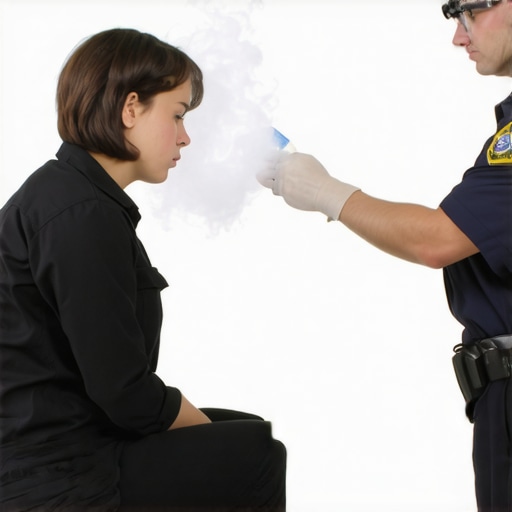
The 15-minute observation period is a mandatory procedural requirement where the officer must ensure the subject does not regurgitate, belch, or consume anything that could introduce mouth alcohol. A dui attorney uses this to prove that residual alcohol in the oral cavity created a false positive high reading. Procedural mapping reveals that officers frequently spend this time filling out paperwork or checking their phones instead of actually observing the suspect. If the officer looked away for thirty seconds, the test is invalid. We use body cam footage to track the officer’s eye movements. We look for the moment they stopped being a witness and started being an administrator. If they failed the observation, they failed the law.
“The defense of a DUI charge requires more than a simple denial; it requires a forensic dissection of the state’s technology.” – National College for DUI Defense
Tactical errors in the discovery phase
Legal discovery in a dui defense case involves demanding the source code, calibration logs, and maintenance history of the specific breathalyzer unit used during the arrest. A dui lawyer who fails to request the COBRA data or the software version history is leaving your freedom to chance. The 2026 devices are computers. Computers have bugs. Computers have memory leaks. If the machine used on you had a software version with a known bug in its slope detection, that result cannot stand. We do not just look at the day of the arrest. We look at the three months before it. We look for the failed calibrations that the department tried to hide. We look for the sensor replacements that suggest the unit was unreliable. This is where the case is won. It is won in the boring, dusty logs that the prosecution hopes you never ask for. Your dui legal team must be aggressive. The state will not volunteer this information. They will fight it. They will claim it is a trade secret. We will claim it is your right to face your accuser, even if that accuser is a piece of code. You need a dui attorney who can navigate these technical waters without sinking.