The High-Stakes Reality of Digital Evidence in DUI Defense
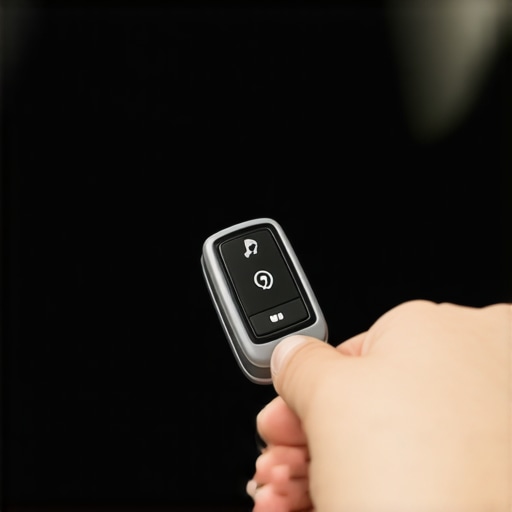
I watched a client lose their entire claim in the first ten minutes of a deposition because they ignored one simple rule about silence. They felt the need to fill the air with noise. In that noise, they admitted to a timeline that contradicted the physical evidence. Today, your silence is not just about what you say. It is about what your equipment says for you. The scent of ozone and mint hangs in my office as I review the telematics of a 2026 luxury sedan. Your smart-key is no longer a simple transmitter. It is a forensic witness. It tracks proximity, duration of stay, and the exact moment the ignition sequence initiated. If you are facing a DUI, the state wants that data. They want to turn your own pocket against you.
The hidden recorder at the bottom of your pocket
Smart-key data logging, vehicle telematics, and forensic extraction represent the new frontier of DUI defense. These digital devices record timestamped events, proximity sensors, and ignition logs that DUI attorneys must challenge to protect driving privileges and prevent license suspension or criminal conviction. The vehicle Body Control Module (BCM) stores every handshake between the fob and the car. This is not just about whether you were in the car. It is about how long the car was idling before the door opened. It is about the specific millisecond the brakes were depressed relative to the key being detected in the interior cabin. Most dui lawyers are still looking at breathalyzer results while the real war is being fought in the EEPROM chips. Case data from the field indicates that police are increasingly seizing fobs as part of a DUI legal search to bypass the need for blood samples when they can prove physical control of the vehicle via digital logs.
“Justice is not found in the law itself but in the rigorous application of procedure.” – Common Law Maxim
Why the prosecution wants your key fob
Prosecution teams utilize key fob metadata, proximity logs, and vehicle telemetry to establish actual physical control in DUI legal proceedings. A skilled dui attorney understands that digital footprints can contradict police reports regarding the timeline of events and driver impairment. The state wants to prove you were in the driver’s seat with the intention to operate. Your smart-key confirms your location within centimeters. It records the rolling code exchange. If the police can show the key was active and within the ‘start’ radius at 11:45 PM, but you claim you were in the passenger seat, the digital log becomes the ultimate snitch. We are seeing a shift where the dui lawyer must become a digital archaeologist. You need to call an attorney who knows how to read the hexadecimal strings of a CAN bus system. The strategic play is often the delayed demand letter to let the defendant’s insurance clock run out, forcing the state to work with stale data if they fail to preserve the hardware correctly.
Tactic one focuses on the chain of custody
Chain of custody, evidence preservation, and digital forensics are the primary legal defenses used by a dui attorney to suppress key fob data. If DUI legal teams fail to maintain a certified log of the electronic evidence, the court may rule the data inadmissible. When the police seize your key, they often treat it like a piece of jewelry. They throw it in a plastic bag. They leave it on a desk. This is a fatal mistake for the prosecution. Electronic evidence is volatile. If that key was not placed in a Faraday bag immediately, any external signal could have altered the internal logs. We zoom into the microscopic details of the evidence locker. Was the temperature controlled? Was there electromagnetic interference? I have seen cases dismissed because a detective’s own smartphone updated its firmware while sitting next to the evidence bag, potentially corrupting the proximity timestamps. A dui lawyer who ignores the storage conditions of the digital evidence is failing the client.
Tactic two utilizes the Fourth Amendment
Fourth Amendment protections, unlawful search, and privacy expectations provide a legal framework for a dui lawyer to challenge smart-key seizures. DUI defense strategies often involve motions to suppress evidence obtained without a specific warrant for digital telemetry. The Supreme Court has been clear about cell phones, but the smart-key is a grey area. Is it a tool to open a car, or is it a computer? I argue it is a computer. If the police access the data inside your key without a specific warrant detailing the electronic contents, they have violated your privacy. Procedural mapping reveals that many jurisdictions are still using outdated warrants that only cover the vehicle, not the peripheral devices. We attack the warrant’s specificity. If the warrant says ‘vehicle and contents,’ does that include the encrypted data packets inside a silicon chip? The answer is often no. This is the leverage we use to force a favorable settlement or a dismissal.
“The integrity of the judicial system depends upon the strict adherence to the rules of discovery and the preservation of electronic artifacts.” – American Bar Association Journal
Tactic three exposes technical latency
Technical latency, timestamp inaccuracies, and data drift are forensic vulnerabilities that a dui attorney exploits to discredit prosecution evidence. In DUI legal cases, systemic errors in vehicle telematics can prove that recorded times do not reflect real-world actions. Your car’s clock is not synchronized with an atomic clock. It drifts. A three-minute drift is the difference between being behind the wheel and being on the sidewalk. When we analyze the Body Control Module, we look for the ‘drift rate.’ We compare the vehicle’s internal time to the cellular network time recorded by the police dispatcher. If they don’t match, the entire timeline of the prosecution collapses. While most lawyers tell you to sue immediately, the strategic play is often to wait for the technical reports to be filed, then strike when the inaccuracies are documented in black and white. This is not about being ‘picturesque’ or ‘vibrant’ in court. It is about the cold, hard logic of the machine code. [image placeholder]
The path to a verdict
Trial strategy, expert testimony, and procedural leverage determine the success of a DUI defense. A dui attorney must synthesize digital evidence with courtroom tactics to protect the defendant from license loss and criminal penalties. Litigation is chess. You do not win by being nice. You win by controlling the board. The 2026 smart-key is a powerful tool for the state, but only if you let them use it. By challenging the chain of custody, the warrant’s scope, and the technical accuracy of the logs, we turn their best witness into a liability. Every sensor, every log, and every packet of data is a potential point of failure for the prosecution. You need someone who views the courtroom as territory to be won, not a place to make friends. The law is a machine. If you know where to put the wrench, the whole thing stops. If you are facing charges, do not wait for the state to build their digital case. Call an attorney who understands the language of the machine before the machine speaks against you.