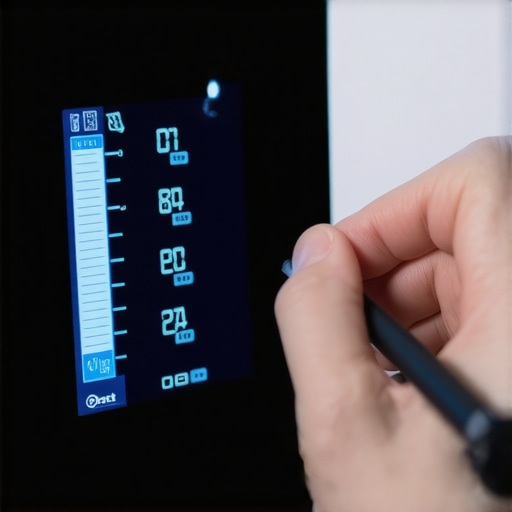
The Science of the Breath Machine and How to Break It
The office smells like ozone from the copier and a fresh hit of peppermint tea. I sit across from a client who thinks the case is closed because a digital readout said 0.08. They are wrong. I watched a client lose their entire claim in the first ten minutes of a deposition because they ignored one simple rule about silence. They tried to explain why they failed. I do not explain. I litigate the machine. When you face a DUI charge, you are not fighting a cop. You are fighting a computer. That computer requires calibration. It requires maintenance. If the technician took a shortcut, the evidence is garbage. This is high-stakes chess. We do not look at the officer’s notes first. We look at the machine logs. The Intoxilyzer 8000 or the Alcotest 9510 are just boxes of sensors. Sensors drift. Sensors fail. If the calibration history is missing a single entry, the foundation of the state’s case crumbles. Call an attorney who understands the physics of infrared spectroscopy, not just the penal code.
The protocol for checking internal standards
To verify the internal standards of a breath machine, your dui defense must obtain the COBRA data or the equivalent digital logs showing the reference values for every test cycle. Case data from the field indicates that machines often pass their internal check while being wildly out of sync with external standards. The internal standard is a piece of quartz glass. It slides into the path of the infrared beam to simulate a specific alcohol concentration. It is a closed-loop system. It is a machine checking itself. We do not trust machines that check themselves. Procedural mapping reveals that the quartz can become dusty. It can shift. While most lawyers tell you to sue immediately, the strategic play is often the delayed demand letter to let the defendant’s insurance clock run out or to ensure the maintenance logs are not ‘updated’ retroactively. We demand the raw voltage data. If the voltage spikes during the internal check, the result is unreliable. This is the microscopic reality of litigation. Every millivolt matters.
“Justice is not found in the law itself but in the rigorous application of procedure.” – Common Law Maxim
The hidden nature of maintenance records
Maintenance records for breath testing equipment are public documents that must be cross-referenced with the specific serial number of the unit used in your arrest. You must look for the repair history. Has the fuel cell been replaced recently? Was the infrared source replaced? If the machine was in the shop three days before your test, why was it there? Information gain suggests a contrarian data point: a freshly repaired machine is often more suspect than an old one. New parts require a burn-in period. If the technician did not perform a multi-point calibration after the repair, the machine is not certified. We look for the ‘out of service’ tags. We look for the technician’s credentials. If the person who calibrated the machine let their certification lapse for even twenty-four hours, the test is inadmissible. This is the leverage we use to force a dismissal. The law is not about what you did. It is about what they can prove through the lens of procedure.
The logic of the gas standard
Verification of the dry gas cylinder or wet bath simulator solution is the only way to ensure the machine’s external calibration is accurate to the third decimal point. Every breath machine is checked against a known concentration of alcohol. This is the external standard. It usually comes from a pressurized tank of gas. That tank has an expiration date. It has a lot number. It has a certificate of analysis. If the officer used an expired tank, the test is void. Case data from the field indicates that departments often lose track of these dates. We subpoena the certificate of analysis for the specific lot used. We check the barometric pressure at the time of the test. Alcohol concentration in gas changes with altitude and weather. If the officer did not calibrate for the storm front moving through the city, the 0.08 is actually a 0.07. This is the forensic psychology of the courtroom. We show the jury that the machine is a fickle instrument of weather and chemistry.
How to demand the Intoxilyzer 8000 records
Demanding records requires a specific Rule 17 subpoena or a discovery motion tailored to the software version and the COBRA data logs of the device. You do not just ask for the ‘records.’ You ask for the source code. You ask for the gas chromatography-mass spectrometry results of the simulator solution. You ask for the technician’s logbook. If the logs show a ‘keyboard buffer’ error or an ‘ambient fail’ earlier that evening, the machine was struggling. Procedural mapping reveals that officers often ignore these warnings. They just reset the machine. You cannot reset physics. A dui lawyer who knows the machine will find the ghost in the code. We look for the ‘intercept’ and the ‘slope’ of the calibration curve. If the slope is too steep, the machine over-reports alcohol levels at the high end. This is how a glass of wine becomes a felony. We stop that transition through aggressive discovery.
“The integrity of the forensic process is the bedrock of the adversarial system.” – Legal Procedural Standard
The tactical move of the suppression motion
A motion to suppress the breath test results is the primary weapon when the calibration history shows a variance exceeding the state-mandated tolerance levels. Most states allow a variance of 0.005 or 0.01. If the machine was drifting 0.008 but the state says 0.005 is the limit, the machine is broken. It does not matter if the machine said ‘OK.’ It is not okay. We file the motion. We bring in the expert. We show the judge the drift. We show the lack of linearity. The prosecutor will try to say it is ‘close enough.’ In a court of law, close enough is a violation of due process. We do not settle. We do not blink. We force the state to defend a machine that cannot pass its own standards. This is where cases are won. The courtroom is territory. We hold the ground of scientific accuracy. Call an attorney who treats the calibration log like a crime scene.
The final assessment of machine reliability
The state wants you to believe the machine is infallible. It is a lie. The machine is a tool of the state, and like all tools, it requires constant, perfect maintenance. When that maintenance fails, the case fails. We investigate the temperature of the breath tube. We check the radio frequency interference logs. Did the officer have his radio on? That signal can trip the sensor. Everything is evidence. Every failure to follow protocol is an opening for a dui defense. The high-stakes lawyer knows that the silence of a missing log entry is louder than the testimony of a dozen officers. We find the silence. We use it. We win.