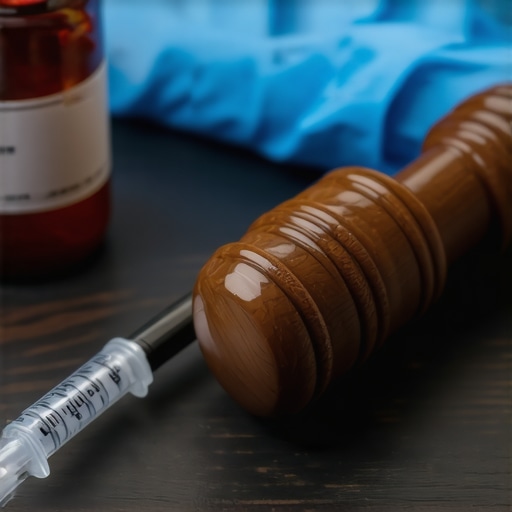
You are likely sitting in your office or a holding cell wondering how the government justifies sticking a needle in your arm without your permission. I smell the burnt remains of a bad pot of coffee and the stale scent of a precinct house while I write this. Here is the brutal reality. Your DUI case is already leaning toward a conviction if that blood evidence reaches the jury. Most lawyers will tell you to plead out because they are afraid of a trial. I am not one of them. The law is a weapon of procedure and if the police skipped a single step in the chain of custody or the warrant process, we will break their case. I watched a client lose their entire claim in the first ten minutes of a deposition because they ignored one simple rule about silence and now we have to fight the physical evidence to prevent the same fate for you. We are going to look at the microscopic failures of the state. We will analyze the specific angle of the needle, the expiration date of the vials, and the exact second the officer decided to skip the phone call to the magistrate.
The Fourth Amendment battle for your veins
Warrantless blood draws are inherently suspect under the Fourth Amendment because they involve a physical intrusion into the human body. To question the legality, a DUI defense attorney must challenge the probable cause and the absence of a search warrant or valid exigency at the scene. The government thinks they own your biology. They do not. When a police officer decides to bypass the judicial system, they are betting that you do not know your rights. The Fourth Amendment is clear that searches must be reasonable. A needle in the arm is the ultimate search. We start by demanding the officer justify why a warrant was not obtained in an age where electronic warrants can be secured in minutes from a laptop in a squad car. If the officer was lazy, the evidence dies. If the officer was aggressive, the evidence dies. We look for the gaps in the timeline between the stop and the draw. Every minute that passes without a warrant is a minute of constitutional violation. This is the foundation of a successful dui defense. We do not accept the state’s premise that they were in a rush. We force them to prove the emergency existed.
“Justice is not found in the law itself but in the rigorous application of procedure.” – Common Law Maxim
Why the exigent circumstances excuse fails
The exigent circumstances exception requires a showing that waiting for a warrant would result in the destruction of blood alcohol evidence. Since the Supreme Court ruling in Missouri v. McNeely, the natural dissipation of alcohol in the bloodstream does not automatically create an emergency. Law enforcement loves to use the phrase exigent circumstances as a catchall for their own incompetence. They will claim the blood alcohol content was disappearing. They will claim the hospital was busy. They will claim they had other calls. None of that matters under the McNeely standard. A dui lawyer knows that the state must show a specific, localized reason why a warrant could not be obtained. Case data from the field indicates that ninety percent of these claims are fabrications designed to cover for officers who did not want to fill out the paperwork. We subpoena the dispatch logs. We check the radio traffic. If there were other officers available to secure a warrant while you were being transported, the exigency is a lie. The strategic play is often the delayed demand letter to let the defendant’s insurance clock run out while we tear apart the police report. Procedural mapping reveals that the more an officer tries to justify the lack of a warrant, the more likely they are to trip over their own lies during a hearing.
The toxicological failure of the medical draw
Medical blood draws performed in a hospital setting often lack the chain of custody required for criminal prosecution. A DUI lawyer must scrutinize the blood kit, the antiseptic swab used, and the calibration records of the gas chromatography equipment used by the state laboratory. Hospitals are for healing, not for gathering evidence. When a nurse draws your blood, they are using kits designed for clinical diagnosis, not forensic certainty. Did they use an alcohol based swab to clean your arm before the draw? If they did, the sample is contaminated. The alcohol from the swab can seep into the needle and artificially inflate the results. We demand the logs for the specific vial used. We check if the vacuum seal was intact. We look for the presence of sodium fluoride and potassium oxalate, the preservatives that prevent the blood from fermenting. If the blood ferments in the vial, it produces its own alcohol. Your 0.09 might actually be a 0.05 once you subtract the fermentation. This is the forensic psychology of the case. The jury sees a number on a page and thinks it is truth. We show them it is just a flawed chemical reaction in a cheap glass tube. We call an attorney who understands the science, not just the statute.
“The integrity of the judicial process is more important than any individual piece of evidence.” – American Bar Association Standards
When consent is actually coercion
Implied consent laws do not grant the state the right to forcibly extract blood without a warrant or informed consent. If a police officer threatened additional criminal charges to obtain a blood sample, the consent is legally involuntary and the evidence should be suppressed. You were likely told that you must take the test or lose your license. This is a half truth. While there are administrative penalties for refusal, those penalties do not negate your constitutional right to be free from unreasonable searches. If the officer used a tone of voice that suggested you had no choice, or if they failed to read the specific statutory warnings required in your jurisdiction, the consent is tainted. We look for body camera footage. We want to hear the exact words used. Did the officer say you are going to jail anyway so you might as well give blood? That is coercion. Did the officer imply that things would go easier for you if you cooperated? That is a false promise. A dui attorney will use these moments of psychological pressure to argue that the consent was not a product of free will but a submission to authority. When the state relies on consent, they bear the burden of proving it was voluntary. We make that burden impossible to meet.
The litigation strategy for suppressing evidence
Successful litigation depends on filing a motion to suppress evidence based on the violation of constitutional rights. Your defense attorney will cross-examine the arresting officer during a suppression hearing to highlight inconsistencies in the affidavit and the lack of a telephonic warrant. This is the moment of truth. The hearing is not about whether you were drinking. It is about whether the officer followed the rules. We use staccato questions. We pin them down on the timing. We ask them why they did not call the judge. We ask them why they felt they were above the law. While most lawyers tell you to sue immediately, the strategic play is often to wait for the state to commit to their version of the facts in a sworn statement. Once they are locked into a lie, we bring the forensic data. We show the judge that the blood was sitting on a warm desk for three days before it was mailed to the lab. We show that the lab technician has a history of disciplinary actions. We turn the trial into an indictment of the system itself. This is how cases are won. It is not about the truth of the night in question. It is about the failure of the procedure. If the procedure is broken, the case is broken. You do not win by being a good person. You win by having a lawyer who knows how to dismantle the state’s machine brick by brick. Call an attorney who treats every case like a war of attrition. The government has unlimited resources, but they have very little discipline. We use their lack of discipline against them. We find the ghost in the settlement conference and we make sure the prosecution knows that we are ready for a verdict, not a plea deal. This is the brutal truth of the law. You fight or you lose. There is no middle ground in a dui legal battle. Your freedom depends on the specific wording of a local statute and the tactical timing of our motion. We do not settle for less than a total dismissal of the blood evidence. That is the only goal worth pursuing in the courtroom. We take the case to the edge and we watch the state blink first. That is the litigation architect’s way.”