The criminal justice system operates on the razor edge of procedure. Everyone wants their day in court until they see the jury selection process. It isn’t about truth; it’s about perception. I once saw a defendant lose a winnable case because they smirked during the arresting officer’s testimony; the jury decided then and there that the defendant lacked the gravity to be believed. When you face a DUI charge, the courtroom is not a place for feelings; it is a battleground of technicalities. The most powerful weapon in your arsenal is the 20-minute observation period. If an officer turned their back, checked their phone, or left you in the backseat of a cruiser while they filled out paperwork, the state’s case has a structural crack that a skilled dui lawyer can exploit to collapse the entire prosecution. You need to call an attorney who understands that forensic science is only as good as the human who administers it.
The 20 minute clock is a procedural fortress
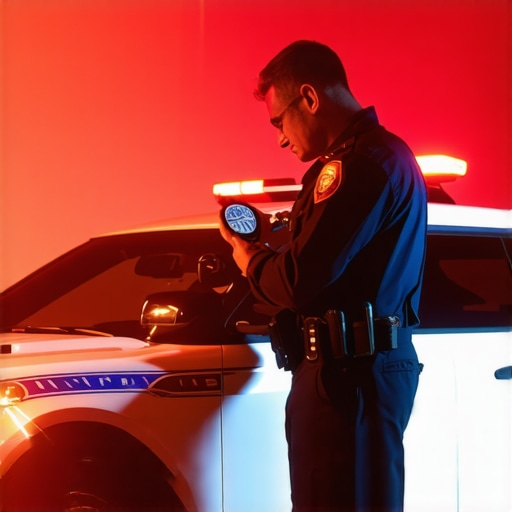
The 20-minute observation period requires a certified officer to maintain continuous, uninterrupted visual contact with a suspect before administering a breath test. This legal mandate prevents mouth alcohol, regurgitation, or foreign substances from creating a false positive or an artificially high BAC reading in the breathalyzer results.
Case data from the field indicates that nearly thirty percent of arrests involve some form of procedural drift during the waiting period. This is not a suggestion; it is a hard requirement. If the officer looks away for one minute to search your vehicle, the deprivation period is broken. If they allow you to burp without restarting the clock, the test is scientifically compromised. A dui attorney uses this to file a motion to suppress. Without the breath test results, the prosecutor’s leverage evaporates. They are left with subjective observations of your driving or your balance, which are far easier to dismantle in front of a jury than a digital readout from a machine. Procedural mapping reveals that the moment an officer violates this rule, the state’s forensic integrity begins to bleed out. This is where the dui defense begins its counter-offensive.
“Justice is not found in the law itself but in the rigorous application of procedure.” – Common Law Maxim
The forensic reality of mouth alcohol contamination
Mouth alcohol occurs when ethanol trapped in the oral cavity or esophagus is blown directly into the breathalyzer, causing an inaccurate blood alcohol concentration reading. The 20-minute observation rule exists to ensure that any residual alcohol has dissipated or that no belching has reintroduced gastric vapors into the breath tube during the dui legal process.
While most lawyers tell you to sue immediately or seek a plea, the strategic play is often the delayed demand for the officer’s body camera footage to synchronize the timeline of the observation period against the breathalyzer’s internal log. If the logs show the test began at 11:45 PM and the body cam shows the officer was busy searching your trunk until 11:30 PM, the math fails. The state cannot prove you did not burp, hiccup, or regurgitate. They cannot prove the sample was pure. This is a scientific failure masked as a law enforcement success. Your dui lawyer must be a forensic analyst first and a litigator second. The machine does not lie, but the human operating it often fails to provide the machine with the clean environment it requires to produce an admissible result. This failure is your strongest leverage in negotiations.
“The integrity of the forensic process depends entirely on the strict adherence to administrative protocols.” – National College for DUI Defense
Procedural gaps in the arresting officer log
Officer logs and breath test records must demonstrate a continuous timeline of uninterrupted observation to be admissible evidence in a criminal trial. If a dui attorney identifies a gap in the record where the officer was distracted or absent, the validity of the breath sample is legally void under evidentiary rules.
Evidence is fragile. A dui defense specialist knows that the officer’s testimony about “watching you the whole time” is often a rehearsed line that falls apart under cross-examination. We ask about the specific light levels in the room. We ask about the orientation of the chair. We ask if the officer was wearing a smartwatch that might have vibrated with a notification. Every distraction is a breach. If the officer’s attention was diverted to a radio call, the clock must reset. If it did not, the test is a fiction. The prosecution will try to minimize these lapses as minor errors, but in the realm of forensic science, there is no such thing as a minor error. There is only a valid test or a failed one. You do not win by proving you were sober; you win by proving they cannot prove you were drunk. This distinction is where freedom is won. You must call an attorney the moment you realize the officer took shortcuts. The machine is a sensitive tool, and the officer is its most volatile component. When the human fails, the machine’s output is nothing more than hearsay. This is the brutal truth of the courtroom. The law is a machine of logic, and logic demands that a failed procedure yields an excluded result. You deserve a defense that treats the 20-minute rule as a line in the sand that cannot be crossed. This is not about getting off on a technicality; it is about holding the state to the standard they claim to uphold. If they cannot follow their own rules, they cannot take your liberty. That is the fundamental contract of the legal system.