The myth of the objective police report
Officer observation of fumbling is a subjective interpretation of motor skills influenced by environmental stressors and confirmation bias. In a dui legal context, this descriptor lacks scientific validation and often serves as a pretextual justification for an arrest without objective evidence of impairment or blood alcohol content.
I watched a client lose their entire claim in the first ten minutes of a deposition because they ignored one simple rule about silence. They felt the need to fill the void, explaining away every nervous twitch they had during the original traffic stop. That is where the disaster starts. When a police officer writes the word fumbling in a report, they are not recording a fact. They are recording an impression. They are painting a picture of guilt before the first piece of evidence is even collected. I smell the strong black coffee on my desk and look at another stack of files where the narrative is identical. The officer claims the driver had watery eyes, slurred speech, and was fumbling with their wallet. It is a script. It is a boilerplate template designed to satisfy the probable cause requirement. If you find yourself in this position, you must call an attorney who understands that these observations are often nothing more than fiction dressed in a uniform.
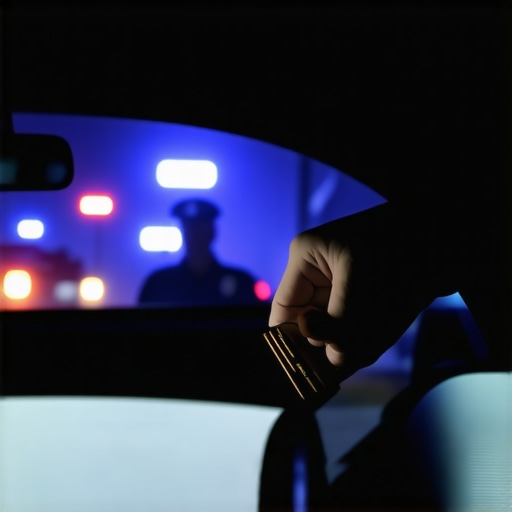
The physical reality of a traffic stop is designed to induce failure. It is late. It is dark. You are being blinded by high-intensity strobe lights and a flashlight beamed directly into your pupils. Your fine motor skills are under assault by a massive spike in cortisol and adrenaline. The officer asks for your license and registration. Your hands shake. You struggle to pull a thin piece of plastic out of a tight leather slot. The officer marks this down as fumbling. To a dui lawyer, this is not evidence of intoxication; it is a natural human response to a high-stress confrontation. The law demands more than a subjective hunch to deprive a citizen of their liberty. Yet, the system relies on the jury believing that the officer is a human lie detector. They are not. They are observers with a specific goal: to build a case for the prosecution.
“Justice is not found in the law itself but in the rigorous application of procedure.” – Common Law Maxim
How nerves mimic intoxication during a traffic stop
Nervousness creates physiological responses such as tremors and hesitation that police officers routinely misclassify as signs of impairment. A dui defense relies on proving that these physical indicators are the result of sympathetic nervous system activation rather than the presence of alcohol or controlled substances in the blood.
Consider the ergonomics of the modern car. You are strapped in by a three-point harness. The interior light is dim. You are reaching into a glove box filled with manuals, napkins, and old receipts. You are searching for a slip of paper while an armed stranger stands over you. Every movement you make is being scrutinized. If you move too fast, you are a threat. If you move too slow, you are impaired. This is the catch-22 of the roadside interaction. A dui attorney will look at the specific environmental factors that the officer conveniently omitted from the report. Did the wind interfere with your movement? Was the officer shouting commands that caused cognitive overload? The prosecution wants the jury to see a drunk driver. I see a person whose biology is reacting to a perceived predator. The sensory zooming required here involves looking at the exact temperature of the air and the lumens of the flashlight. A cold night causes shivering. Shivering looks like fumbling. It is a simple equation that the state ignores.
[image_placeholder]
The physiological failure of the finger to nose test
The finger to nose test is a non-standardized field sobriety test that lacks the statistical reliability of the horizontal gaze nystagmus examination. Courts often view these subjective exercises as unreliable indicators of blood alcohol concentration because they do not account for a person’s natural coordination or pre-existing medical conditions.
Standardization is the only thing standing between a fair trial and a kangaroo court. When an officer asks you to touch your nose with your eyes closed, they are looking for a miss. But what constitutes a miss? If you touch the tip instead of the bridge, is that a failure? The officer is the sole judge and jury in that moment. There is no calibrated instrument. There is no baseline of your sober performance. I have seen clients who are professional athletes fail these tests because of old injuries. I have seen surgeons with minor tremors be accused of being high on narcotics. The dui legal framework is built on these flimsy foundations. When you call an attorney, the first thing we do is deconstruct these tests. We look for the deviation from the manual. If the officer did not follow the exact protocol established by the National Highway Traffic Safety Administration, the results should be discarded. The truth is that most officers cannot perform these tests perfectly themselves under the same conditions.
Why the dashcam footage rarely matches the written narrative
Dashcam and bodycam footage often contradicts the written report by showing a coordinated individual who does not exhibit the fumbling behavior described by the officer. Video evidence provides an objective record that a dui lawyer can use to impeach the testimony of the arresting officer during a suppression hearing.
I have spent thousands of hours reviewing grainy, low-frame-rate video. The report says the driver stumbled. The video shows a slight trip over an uneven patch of asphalt. The report says the driver fumbled with their insurance card. The video shows the driver handing it over in three seconds. The discrepancy is where the case is won or lost. The officer’s memory is colored by the fact that they found a reason to make an arrest. They need the report to justify the handcuffs. This is why immediate dui defense action is required to preserve this footage. Police departments have a habit of losing or overwriting video that does not support their narrative. The tactical timing of a motion to compel this evidence is everything. You cannot wait for the prosecution to hand it over out of the goodness of their heart. They won’t. You have to take it from them through procedural leverage.
“The prosecutor’s office is the most powerful office in the world, and it is the duty of the defense to ensure that power is exercised within the bounds of the Constitution.” – American Bar Association Standards for Criminal Justice
Strategic advantages of challenging the initial contact
Challenging the initial contact focuses on the Fourth Amendment requirement for reasonable suspicion to conduct a traffic stop. If the initial detention is found to be unlawful, all subsequent evidence, including the officer’s observations of fumbling, must be suppressed under the exclusionary rule.
Every case has a bottleneck. The bottleneck in a DUI case is the stop. Why did the officer pull you over? Was it a genuine traffic violation, or was it because you were leaving a bar at 2 AM? The latter is not a crime. If the stop is bad, the fumbling doesn’t matter. The watery eyes don’t matter. The breathalyzer doesn’t matter. Everything is fruit of the poisonous tree. A dui attorney who tells you to settle before investigating the legality of the stop is a settlement mill. You need someone who is willing to put the officer on the stand and grill them on the exact phrasing of the local statute they claim you violated. While most lawyers tell you to sue immediately, the strategic play is often the delayed demand for discovery to let the defendant’s insurance clock run out or to find the gaps in the officer’s memory. We look for the technicalities. We look for the broken tail light that wasn’t actually broken. We look for the lane weave that never touched the line.
The procedural reality of the dui defense
A successful dui defense involves a systematic audit of the evidence chain, the calibration logs of the breath testing equipment, and the officer’s training records. Identifying procedural errors allows a dui attorney to create reasonable doubt regarding the accuracy of the state’s case and the subjective observations recorded at the scene.
This is where the microscopic reality of the law comes into play. I want to see the maintenance logs for the Intoxilyzer 8000. I want to see if the officer has a history of complaints for profiling. I want to see the exact wording of the implied consent warning you were read. If a single comma is out of place, we have an opening. Litigation is chess. You don’t win by hoping the jury likes you. You win by removing the opponent’s pieces one by one until they have nothing left to stand on. The officer’s claim of fumbling is just one piece. Once we show it is subjective, we move to the next. Once we show the field tests were flawed, we move to the next. Eventually, the prosecution is left with a case so thin that a judge has no choice but to dismiss. Call an attorney who treats your case like a forensic investigation, not a social visit. The courtroom is a place of cold logic and procedural combat. If you are not prepared for that, you have already lost. The smell of coffee in my office reminds me that the work is never done because the state never stops trying to turn subjective impressions into permanent convictions.