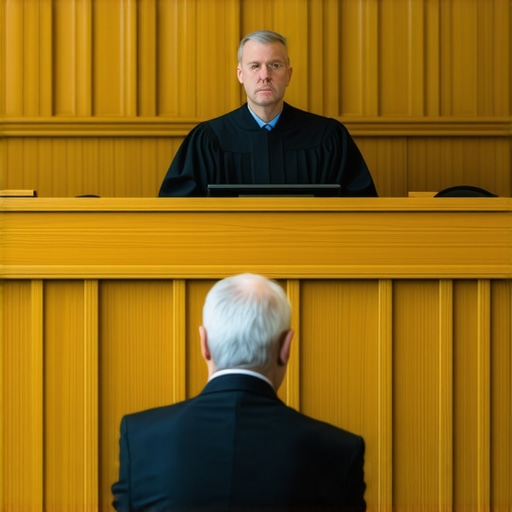
The air in a courtroom during an arraignment smells like burnt coffee and desperation. I have spent twenty five years watching people walk into this room thinking they can explain their way out of a handcuffs situation. They cannot. I once watched a client lose their entire claim in the first ten minutes of a legal proceeding because they ignored one simple rule about silence. At an arraignment, that silence is your only shield. You are not there to tell your side of the story. You are there to be processed by a machine that does not care about your character or your excuses. The judge is looking at a calendar, the prosecutor is looking at a file, and you are looking at the possibility of a cage. This is the first formal step in the criminal justice process, and if you treat it like a conversation, you have already lost.
The first step in the criminal justice machine
An arraignment is the formal reading of charges where the court determines your identity and informs you of your constitutional rights. It is not a trial. You enter a plea and the judge decides on your release status or bail amount during this brief hearing. The procedure is clinical and fast. You will stand before the bench. The court clerk or the judge will read the specific charges filed against you by the state or the government. This is the moment where the abstract nature of an arrest becomes a concrete legal reality. You are no longer just someone who was pulled over. You are a defendant in a case titled The People versus You. The court must ensure you understand the nature of the allegations. Do not nod your head just to be polite. If you do not understand the specific statutes cited, you must say so, but only through your counsel. The judge will also ask if you have a lawyer or if you need one appointed. This is a procedural checkpoint designed to satisfy the Sixth Amendment requirements. Many defendants fail to realize that this stage sets the pace for the entire litigation. If you appear without representation, the court may delay the proceedings, but the clock on your constitutional right to a speedy trial has already begun to tick.
“Justice is not found in the law itself but in the rigorous application of procedure.” – Common Law Maxim
Why you must call an attorney before the gavel drops
You call an attorney immediately because every word spoken on the record can be used to dismantle your future defense. A lawyer manages the entry of a plea and argues for your release. Without counsel, you are a blind participant in a system designed to process you. The prosecutor is not your friend. They are an advocate for the state. When you stand alone, you are giving the state a massive head start. An attorney knows the local rules of court and the specific tendencies of the judge on the bench. They can identify flaws in the charging document immediately. For example, if the prosecutor has overcharged a simple possession as an intent to distribute, your lawyer can flag this for future motions. While most lawyers tell you to sue immediately, the strategic play is often the delayed demand letter or a quiet negotiation behind the scenes before the arraignment even occurs. If you wait until you are standing in front of the judge to think about legal representation, you are already behind the curve. The prosecutor has had your file for hours or days. They have already decided what bail they want. You need someone who has already reviewed the police report and found the holes in the story.
The mechanics of the dui defense strategy
Effective dui defense starts at the arraignment by ensuring the plea entered preserves all rights to challenge evidence later. Your lawyer will look for procedural errors in the arrest and chemical testing process to leverage better outcomes. It involves a technical assault on the state’s evidence. In a drunk driving case, the arraignment is where the administrative and criminal paths of your life collide. The court may address your driving privileges right then and there. A skilled dui attorney understands that the arraignment is not just about the plea. It is about the discovery process. We want the body cam footage. We want the maintenance logs for the breathalyzer. We want the calibration records for the blood draw machine. By the time the arraignment ends, a dui lawyer has already started the clock on these requests. The state wants you to plead guilty and move on. The machine wants efficiency. A dui defense is built on friction. We create friction by demanding every shred of evidence the law allows. If you walk in there and plead guilty because you feel bad about what happened, you are throwing away your ability to challenge a potentially illegal stop or a malfunctioning piece of equipment. The law does not reward your guilt; it rewards the enforcement of your rights.
Reading the charges and the plea trap
The reading of charges is a formal notification where the defendant hears the specific allegations and enters a plea of guilty, not guilty, or no contest. This is a high stakes moment where a wrong move can eliminate your chance for a trial. Most defendants are pressured by the weight of the moment to say something to the judge. The judge will ask, how do you plead? There are three main options. A plea of guilty is a complete admission. It ends the case and moves straight to sentencing. A plea of no contest has the same immediate effect as a guilty plea but cannot be used against you in a civil lawsuit. A plea of not guilty is the only logical choice for someone who wants to fight. It is not a claim of innocence in a moral sense; it is a legal demand that the state prove its case beyond a reasonable doubt. Entering a not guilty plea buys your dui attorney time to investigate the facts. The trap is when a defendant tries to explain why they are not guilty during the plea. The judge will cut you off. Anything you say about the facts of the case is a statement against interest. It is recorded. It is permanent. Do not explain. Just plead.
“The right to be heard would be, in many cases, of little avail if it did not comprehend the right to be heard by counsel.” – Powell v. Alabama
Bail and the reality of pretrial release
Bail is a financial guarantee that you will return for future court dates, while pretrial release conditions dictate what you can and cannot do while your case is pending. The judge evaluates your flight risk and the danger you pose to the community. This is the most emotional part of the arraignment. Families are sitting in the gallery, waiting to see if their loved one is coming home. The prosecutor will argue for high bail based on the severity of the charges or a past record. Your dui legal representative will argue for own recognizance release or a lower bail amount. They will highlight your ties to the community, your job, and your lack of a flight risk. However, there is a catch. Sometimes the judge will release you but impose conditions that feel like jail. You might be ordered to wear an alcohol monitoring ankle bracelet. You might be forbidden from entering bars or driving any vehicle. These conditions start the moment you leave the courthouse. If you violate them, you go back to jail without a new trial. This is where the dui attorney earns their fee by negotiating for the least restrictive conditions possible so you can continue to work and support your family while the case moves forward.
How a dui attorney handles the prosecutor
A dui attorney manages the relationship with the prosecution to identify early opportunities for dismissal or reduction of charges. This interaction is a tactical dance involving the exchange of information and the assessment of the state’s witness strength. Behind the scenes, your lawyer is talking to the assistant district attorney. They are checking to see if the arresting officer has a history of disciplinary issues. They are looking for missing signatures on the warrant. At the arraignment, the prosecutor might offer a standard deal. Most people take it because they are scared. A real strategist knows that the first offer is rarely the best offer. We look for the “bleed” in the prosecution’s case. If the blood sample was stored at the wrong temperature, the state’s case is bleeding. If the officer failed to observe the twenty minute waiting period before a breath test, the state’s case is bleeding. We do not tell the prosecutor this at the arraignment. We wait until the motion to suppress. The arraignment is just about setting the stage for the kill later on.
Tactics for the dui legal battle ahead
The litigation strategy following an arraignment focuses on the suppression of evidence and the exploitation of procedural errors. This phase requires a deep dive into the forensic data and police conduct during the initial encounter. After you leave the court, the real work begins. We look at the stop. Did the officer have reasonable suspicion? Or did they just have a hunch? In dui legal circles, we know that many stops are predicated on thin air. We look at the field sobriety tests. Were they conducted on a level surface? Was the lighting adequate? These tests are designed for you to fail. They are not scientific; they are subjective. A dui lawyer will use the arraignment to secure the dates for the preliminary hearing and the motion deadlines. This is about logistics. We want to force the state to produce its witnesses. Often, officers do not show up, or they forget the details. Every delay works in favor of the defendant because memories fade and evidence gets lost. The strategic play is often to slow the machine down until it breaks.
What a dui lawyer sees that you do not
Experienced counsel sees the systemic weaknesses in the court’s schedule and the prosecutor’s workload that can be used to your advantage. They recognize the patterns of the judge and the specific legal precedents that will govern your outcome. You see a judge in a black robe; I see a person who has a hundred cases to get through before lunch. You see a police officer in uniform; I see a witness whose testimony can be impeached with their own previous statements. Information gain in this field comes from knowing that the law is often secondary to the procedure. If the state misses a discovery deadline, we move for sanctions. If the lab is backed up with tests, we push for a speedy trial. The goal is to make your case more trouble than it is worth for the prosecutor. They want easy wins. When a dui attorney shows up and starts filing motions, the case is no longer easy. That is when the real negotiations begin. You are paying for the leverage that comes from being prepared to go to verdict when everyone else is looking for a plea bargain.
Final advice for the first court appearance
When you walk into that room, wear a suit. Do not wear a t shirt with a slogan. Do not roll your eyes at the judge. The courtroom is a theater of respect, and you are a performer. Your dui defense depends on your ability to look like someone a jury would trust. Stand straight, speak only when spoken to, and let your lawyer do the talking. The arraignment is the beginning of a long war. It is not won in a day, but it can be lost in a second. If you have not yet made the move to call an attorney, you are walking into a minefield without a map. Get the map. Protect your future. The machine is moving, and it is hungry. Do not let it eat you.