I watched a client lose their entire claim in the first ten minutes of a deposition because they ignored one simple rule about silence. They thought they could explain away the sway. They thought the officer was their friend. They were wrong. In the world of DUI defense, your biggest enemy is not the law; it is the perception of accuracy created by a police officer in a uniform. Most people believe that if an officer says you failed a test, it is a scientific fact. It is not. It is an opinion based on a manual that the officer likely has not read since their initial certification. My job is to remind the court that procedure is the only thing standing between a citizen and a wrongful conviction. If the procedure is flawed, the evidence is garbage. If the evidence is garbage, the case must die.
The fragility of the NHTSA student manual
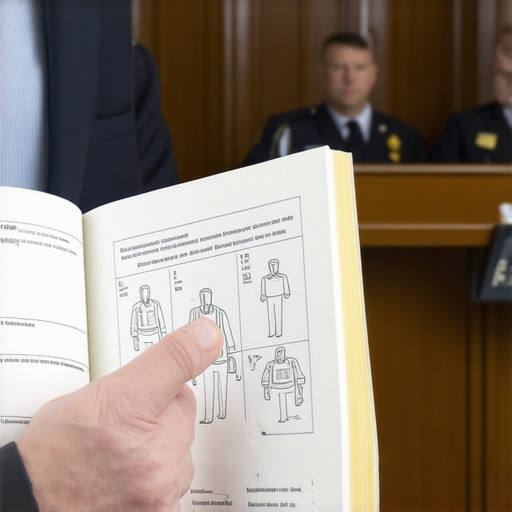
NHTSA standards and DWI detection protocols represent the only objective framework for evaluating field sobriety tests in a dui defense case. Any deviation from the Standardized Field Sobriety Testing Student Manual invalidates the statistical reliability of the results. Your dui attorney must know the manual better than the officer who performed the arrest. Case data from the field indicates that officers frequently conflate instructions or skip the administrative phases of the tests entirely. Procedural mapping reveals that when an officer fails to ask about physical injuries or footwear before starting the walk and turn, the entire test loses its legal standing as a tool for probable cause. While most lawyers tell you to sue immediately, the strategic play is often the delayed demand letter or the tactical delay in the DMV hearing to ensure all training records are subpoenaed first. You need to see the officer’s training file before you ever step foot in a courtroom for a preliminary hearing.
“Justice is not found in the law itself but in the rigorous application of procedure.” – Common Law Maxim
The three clues that police always get wrong
Horizontal Gaze Nystagmus or HGN tests require a specific eye stimulus movement that must be performed at a precise distance of twelve to fifteen inches. A dui lawyer knows that if the officer training was insufficient, the timing of the stimulus movement will be too fast or too slow. The three clues, lack of smooth pursuit, distinct and sustained nystagmus at maximum deviation, and onset of nystagmus prior to 45 degrees, are not just checkboxes. They are physiological markers that require a stable environment and a steady hand. If the officer used a flashlight with a flickering beam or if there was passing traffic in the background, the optokinetic nystagmus created by those external factors makes the test results scientifically void. I have seen body cam footage where the officer moves the pen across the suspect’s face in under one second. That is not a test; that is a gesture. It is an error that a skilled dui defense strategist will use to dismantle the prosecution’s entire narrative. If they cannot get the eye test right, why should we trust their memory of the rest of the night?
The failure of the walk and turn instruction phase
Walk and turn tests are divided into the instructional phase and the performance phase to evaluate divided attention impairment. If the dui attorney can prove the officer interrupted the instructional phase, the test is legally compromised. Officers often forget to tell the suspect to keep their arms at their sides or to look at their feet while walking. These are not minor details. These are the foundations of the test. When you call an attorney, the first thing they should ask for is the video of these instructions. If the officer is shouting over highway noise or if the suspect is standing on a slope, the physical balance required for the test is impossible to maintain for even a sober person. I once had a case where the officer claimed my client failed because they started too early. The video showed the officer never actually told them when to start. The officer was looking for a failure instead of observing a performance. That is the difference between a neutral investigation and a hunt for a conviction.
“The defense of a citizen’s liberty requires the relentless pursuit of factual inaccuracies in government testimony.” – ABA Defense Guidelines
The paper trail of a failed certification
Officer certification records and NHTSA refresher courses are the most overlooked tools in a dui lawyer arsenal. An arresting officer who has not completed a standardized training update in over three years is vulnerable to a cross-examination that focuses on skill decay. I look for the specific dates of the last wet lab the officer attended. If they have not been evaluated by a qualified instructor in years, their ability to spot subtle clues of impairment is legally questionable. Procedural mapping reveals that many departments allow their officers’ certifications to lapse while still allowing them to make DUI arrests. This is a systemic failure that provides a massive opening for the defense. A dui attorney who does not demand the training logs is failing their client. I want to see the test scores. I want to see the instructor’s notes. I want to know if that officer was the bottom of their class. The courtroom is a place for evidence, and if the officer’s training is the evidence, then it must be held to the highest standard of scrutiny.
The strategic benefit of waiting for discovery
Discovery motions for dashcam footage and breathalyzer calibration logs must be timed to maximize legal leverage for the defendant. A dui defense strategy often hinges on the gap in documentation between the arrest and the formal filing of charges. While the prosecution is busy managing their heavy caseload, a focused attorney is digging into the maintenance records of the Intoxilyzer 8000. These machines are not magic boxes. They are sensitive instruments that require regular cleaning and calibration. If the log shows a failure three weeks prior to your arrest, the reliability of your result is gone. The strategic play is to wait until the officer has committed to their story in a preliminary report before hitting them with the maintenance records that contradict their findings. This forces the prosecution into a corner. They either have to admit the machine was faulty or admit they did not check the logs. Either way, the defense wins. This is how you win a case that everyone else says is a loser. You find the one crack in the foundation and you drive a wedge into it until the whole thing falls apart.