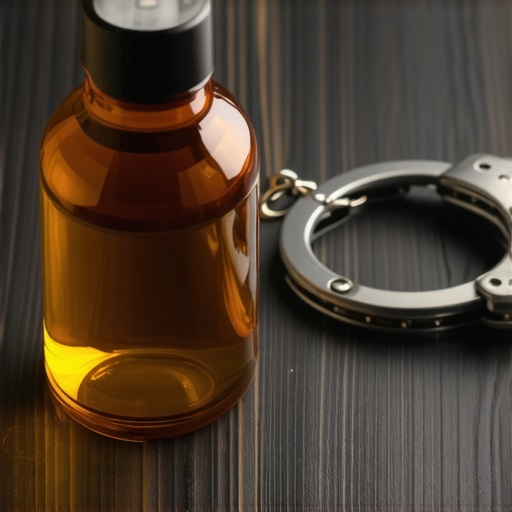
Why Your Prescription Meds Should Not Result in an Arrest
I smell like strong black coffee because I have spent the last six hours reviewing the calibration logs of a blood-testing machine that has likely ruined your reputation. You are sitting in my office because you believe that a valid prescription from a licensed physician is a shield against a DUI charge. It is not. In fact, for many of you, that piece of paper is exactly what the prosecutor will use to hang you. I watched a client lose their entire claim in the first ten minutes of a deposition because they ignored one simple rule about silence. They thought explaining their medical history would garner sympathy from the defense. Instead, they provided the exact timeline of ingestion that the state needed to prove impairment. Perception is the only currency in a courtroom, and right now, your perception is bankrupt.
The chemistry of a wrongful traffic stop
DUI lawyer intervention is required when police officers mistake medical side effects for criminal impairment during a traffic stop involving prescription medication. Law enforcement officers often lack the pharmacological training to distinguish between therapeutic drug levels and toxicological abuse, leading to wrongful arrests based on subjective observations.
Case data from the field indicates that patrol officers are increasingly aggressive with drug recognition expert evaluations. These officers are not scientists. They are individuals with a checklist. They look for the horizontal gaze nystagmus. They look for the lack of smooth pursuit in your eyes. If you are taking a common SSRI or even a high dose of allergy medication, your eyes might not track a stimulus correctly. The officer records this as a failure. You see a medical condition; they see a booking photo. The reality is that the roadside is a laboratory where you are the involuntary subject. If you are asked to step out of the vehicle, the investigative phase has already ended and the evidence collection phase has begun. Most people think they can talk their way out of a set of handcuffs. You cannot. Every word you utter regarding your dosage, the timing of your last pill, or the name of your doctor is a brick in the wall the state is building around you.
Why a legal prescription is not a license to drive
DUI defense strategies must account for the fact that state statutes often define driving under the influence as being impaired to any degree by any substance. This means a valid prescription does not provide legal immunity if the prosecution can prove your physical or mental faculties were significantly diminished.
“Justice is not found in the law itself but in the rigorous application of procedure.” – Common Law Maxim
Procedural mapping reveals a terrifying trend in modern litigation. Prosecutors are moving away from the need to prove a specific blood alcohol concentration. Instead, they rely on the broad language of the law. They will argue that because your medication bottle has a small yellow sticker warning against operating heavy machinery, you were on notice. They will argue that your decision to drive was a reckless act. While most lawyers tell you to sue immediately or file for a dismissal based on the prescription, the strategic play is often the delayed demand letter to let the defendant’s insurance clock run out or to wait for the laboratory’s maintenance records to show a pattern of failure. We do not fight the prescription; we fight the definition of impairment. The state wants to use a blanket definition. We must use a microscopic one. We look at the half-life of the drug. We look at the peak plasma concentration. If you took your medication at 8:00 AM and were pulled over at 6:00 PM, the drug is likely in its elimination phase. The active metabolites are no longer affecting your central nervous system. The officer’s observation of “slurred speech” was likely just exhaustion, but the court will call it a symptom of intoxication unless we provide the counter-narrative.
The tactical error of roadside cooperation
Call an attorney before you agree to any physical coordination tests or chemical testing because field sobriety tests are voluntary in many jurisdictions and are designed for failure. A dui attorney can explain that standardized tests do not account for pre-existing medical conditions or pharmaceutical side effects that mimic intoxication.
The Modified Romberg Balance test is a classic example of forensic theater. The officer asks you to tilt your head back, close your eyes, and estimate thirty seconds. This test is ostensibly measuring your internal clock and balance. However, if you have a back injury or an inner ear issue, or if your medication affects your equilibrium, you will fail. The officer does not record your medical history in the “fail” column. They record “tremors,” “swaying,” or “eyelid fluttering.” [image-placeholder] These are subjective markers. I have seen bodycam footage where the wind was blowing at twenty miles per hour and the officer still cited the driver for swaying. It is a rigged game. The only way to win is to refuse to play. You have the right to remain silent, yet few have the capacity. You think that by being “helpful,” you will go home. You won’t. You will go to jail, and you will do so having given the state all the evidence they need to convict you. Your cooperation is the rope they use to bind you.
The ghost in the toxicology lab
DUI legal challenges frequently center on the inaccuracy of blood tests and the contamination of samples within forensic laboratories. High-quality legal representation involves auditing the gas chromatography results to identify false positives caused by cross-reactivity with legal prescription drugs.
The lab is not a temple of truth. It is a high-volume factory staffed by underpaid technicians. Case data from the field indicates that blood samples are often left in unrefrigerated bins for hours, leading to fermentation or degradation. When the machine finally runs your sample, it is looking for specific molecular weights. Many prescription drugs share similar molecular structures with illicit substances or alcohol metabolites. This is called cross-reactivity. A common antidepressant can trigger a false positive for amphetamines. A common painkiller can look like an illegal opiate on a low-resolution screen. We demand the raw data. We do not accept the one-page summary the prosecutor hands over. We want the chromatograms. We want to see the integration peaks. If the baseline of the graph is noisy, the result is junk. Most lawyers don’t know how to read a mass spectrometry report. I do. If the lab technician skipped a cleaning cycle on the injector port, your results are tainted. That is where we win. We find the ghost in the machine.
“The right to counsel is the right to a fair trial.” – U.S. Supreme Court, Gideon v. Wainwright
The strategic advantage of procedural technicalities
DUI defense requires a forensic audit of the arresting officer’s certification and the chain of custody for all biological evidence. Procedural errors during the implied consent warning or the blood draw can lead to the suppression of evidence and the dismissal of charges.
Your case is failing because you are focusing on the truth. The truth is irrelevant. What matters is what can be proven in a court of law according to the rules of evidence. If the officer did not read the implied consent warning exactly as written, the blood test might be inadmissible. If the phlebotomist used an alcohol prep pad to clean your arm before drawing blood for an alcohol test, the sample is contaminated. These are the microscopic realities of litigation. We look for the fracture in the state’s foundation. We examine the calibration logs of the breathalyzer or the storage temperature of the blood vials. We look for the gap in the chain of custody. If the evidence sat on a desk for three days before being logged, it is compromised. You are paying for a strategist, not a storyteller. We do not ask for mercy. We demand the exclusion of evidence. When the evidence is gone, the case evaporates. That is how you survive a pharmaceutical DUI charge. Stop talking to the police. Stop explaining your prescriptions. Call me. We will deconstruct the state’s case piece by piece until there is nothing left but a pile of procedural errors. That is the only way out of the trap you have walked into.