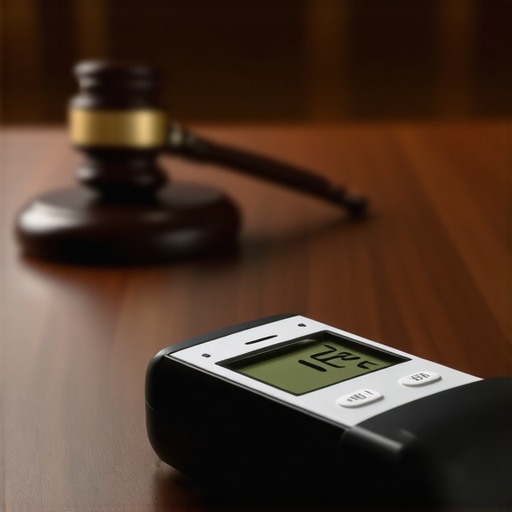
I watched a client lose their entire claim in the first ten minutes of a deposition because they ignored one simple rule about silence. They volunteered the PBT number. They thought it helped them. It didn’t. It gave the prosecutor a roadmap to verify a number that should have stayed in the officer’s pocket. The air in the room grew heavy. I smelled the stale coffee on the opposing counsel’s breath as he realized my client was doing his job for him. This is the reality of the legal system. It is not about what happened. It is about what can be proven through a very narrow, very technical straw. When you are standing on the side of a highway at 2 AM, the officer is not your friend. He is a data collector. And the data he collects with that plastic handheld box is often garbage. You need to understand why before you walk into a courtroom thinking a high number means your life is over.
The roadside trap that fails the courtroom test
Portable breath tests are generally inadmissible because they lack the scientific reliability required by evidentiary standards. Most courts view these handheld devices as preliminary tools for probable cause only. They are not precision instruments. They cannot be used as substantive proof of blood alcohol content in a criminal trial. The law recognizes a massive difference between a preliminary screening and a forensic analysis. Your DUI attorney knows that the PBT is the equivalent of a rough sketch. It is not a photograph. In many jurisdictions, the result of a PBT cannot even be mentioned to a jury. It is used solely to justify the arrest. If the officer cannot prove he had other reasons to arrest you, the whole case might collapse. This is why the specific wording of a local statute matters so much. A DUI defense requires a microscopic look at the arrest record. Did the officer follow the manual? Did he wait the required fifteen minutes before the blow? Most do not. They are in a hurry. They want to get back to the station. That haste is your leverage.
“Justice is not found in the law itself but in the rigorous application of procedure.” – Common Law Maxim
Scientific instability of fuel cell sensors
Fuel cell sensors in portable devices are prone to significant fluctuations based on temperature, altitude, and breath composition. Unlike the infrared spectroscopy used in stationary station machines, fuel cells react to a variety of chemical compounds. This lack of specificity makes the results legally unreliable for a verdict. The technology inside that plastic box is remarkably basic. It uses a chemical reaction to generate an electric current. More alcohol means more current. However, the machine cannot always tell the difference between ethanol and other substances like acetone or tobacco smoke. If you are on a ketogenic diet or have diabetes, your breath might contain high levels of acetone. The machine sees this and reports a high BAC. It is a false positive. A DUI lawyer will look for these medical nuances. We look at your medical history to see if the machine was lying. We look at the calibration logs of the device. If the device has not been checked by a technician within the last ten days, the data is useless. The prosecution will try to gloss over this. They want you to believe the machine is infallible. It is a lie. Every piece of equipment has a failure rate. In the world of DUI legal strategy, that failure rate is a doorway.
Procedural gaps that kill the prosecution case
Procedural gaps occur when law enforcement fails to maintain a strict observation period or ignores the calibration requirements for handheld breathalyzers. These failures create a vacuum of reliability. Without a perfect chain of custody and maintenance, the PBT result is nothing more than a guess. Most officers treat the PBT like a thermometer. They think they can just stick it in your mouth and get a reading. But the law requires a twenty minute observation period in many states. During this time, you cannot eat, drink, smoke, or burp. If you burp, the alcohol from your stomach enters your mouth. This is called mouth alcohol. It creates a massive spike in the reading. The officer is supposed to be watching you every second. Usually, they are busy searching your car or talking to their partner. They are not watching your mouth. When we call an attorney, the first thing we do is request the bodycam footage. We watch every second of that twenty minute window. If the officer looks away for even one minute, the test is compromised. This is the granular detail that wins cases.
“The integrity of the criminal justice system depends upon the reliability of the evidence presented against the accused.” – American Bar Association Standards
Why a DUI attorney ignores the initial number
A DUI attorney ignores the initial PBT number because it is often a ghost in the machine that cannot be verified. We focus on the lack of forensic proof and the violation of constitutional rights during the stop. The number is a distraction from the structural failures of the arrest. When a client tells me they blew a 0.12, I do not panic. I ask about the wind. I ask about the temperature of the air. If it was a cold night, your breath is warmer than the ambient air. This temperature differential affects the partition ratio. The machine assumes a 2100 to 1 ratio between breath alcohol and blood alcohol. This ratio is an average. It is not a fact. Many people have a lower ratio. For them, the machine will always show a higher BAC than what is actually in their blood. This is scientific discrimination. My job is to bring an expert witness to explain this to the judge. We use the science against the state. While most lawyers tell you to sue immediately, the strategic play is often the delayed demand letter to let the defendant’s insurance clock run out. We wait for the prosecution to realize their evidence is thin. We let them sweat over their own procedural errors.
Administrative versus evidentiary weight
Administrative weight refers to the use of a breath test to suspend a driver’s license during a DMV hearing. Evidentiary weight refers to the test being used as proof of a crime. PBT results often carry administrative weight but almost zero evidentiary weight in a trial. This distinction is where most people get confused. They think because the DMV took their license, they are guilty of a crime. That is not how it works. The DMV is a civil agency. The court is a criminal one. The standards are different. A DUI lawyer fights both battles. We use the DMV hearing as a discovery tool. We subpoena the officer. We make him testify under oath before the actual trial. Often, the officer will contradict his own written report during the DMV hearing. We record every word. Then, when we get to the criminal trial, we use his own words to impeach him. This is legal chess. You do not win by being right. You win by being more prepared than the state. You win by knowing the equipment better than the man who used it on you.
What the defense doesn’t want you to ask
The defense does not want you to ask about the software versions or the internal sensor logs of the breathalyzer device. These logs often show a history of error messages or failed calibrations that the officer ignored. Accessing these records is a central part of a DUI defense. Every time that machine is turned on, it runs a self-test. It records every error code. The police departments do not want to give these logs up. They will claim they do not exist or that they are proprietary. We know better. We file motions to compel. We want to see if the machine was malfunctioning the week before your arrest. If it was, the state has a major problem. They are using a broken tool to take away your freedom. This is why you should call an attorney the moment you are released. The longer you wait, the more likely it is that the evidence will be purged. Memory fades. Logs are overwritten. The clock is the enemy of the innocent. We need the data while it is fresh. We need the sensor logs, the room temperature records, and the officer’s training file. Most officers have not been recertified on the device in years. That is a gift for the defense.
The logic of the delayed demand
The logic of the delayed demand involves waiting until the prosecution has committed to a specific narrative before revealing the flaws in their evidence. This prevents the state from fixing their mistakes or coaching the officer on how to explain away procedural errors. If we show our hand too early, the prosecutor will just find a way to work around it. We wait. We let them build their house on sand. Then, right before the trial, we file the motion to suppress the breath test. By then, the officer has already given his deposition. He is locked into his story. If his story does not match the calibration logs, his credibility is shot. This is how you win a DUI legal battle. It is about timing and pressure. The state has limited resources. They want easy wins. When we show them that their star witness is a malfunctioning plastic box, they often look for a way out. They offer a reduced charge or a dismissal. That is the goal. We do not want a fair fight. We want an unfair advantage based on the state’s own incompetence. This is the brutal truth of the courtroom. It is a theater of procedure, and we are the directors.