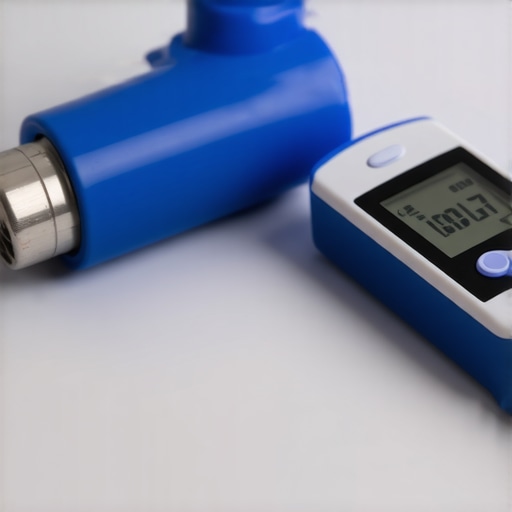
The Brutal Truth-Teller is here. You think the court cares about your health? They do not. I watched a client lose their entire claim in the first ten minutes of a deposition because they ignored one simple rule about silence. They volunteered information about their medical history that the defense then used to paint them as unreliable. In the world of DUI defense, your medical necessity is often the very thing that the prosecution will use to convict you. If you use a metered-dose inhaler for asthma, you are walking around with a chemical signature that the police breathalyzer cannot distinguish from a shot of vodka. This is the reality of the legal system: it is a machine that prioritizes efficiency over accuracy. You need to call an attorney before you say another word to a state agent.
The ghost in the machine
Breathalyzer machines are not medical grade instruments and often fail to distinguish albuterol or HFA propellants from ethanol molecules during a DUI arrest. These infrared spectroscopy devices function by measuring light absorption at specific wavelengths, frequently leading to a false positive breath test for drivers with respiratory conditions. The machine is a calculator, not a scientist. It operates on the assumption that every person has a 2100:1 blood-to-breath partition ratio. This is a scientific fiction. If you are a dui lawyer worth your salt, you know that this ratio varies wildly based on body temperature, hematocrit levels, and the presence of foreign chemicals in the oral cavity. When you use an inhaler, you are introducing a concentrated mist of chemicals directly into the path of the breath test. The machine sees the molecular structure of the propellant and registers it as alcohol. It does not ask questions. It simply prints a number that a prosecutor will use to try to take your license.
“Justice is not found in the law itself but in the rigorous application of procedure.” – Common Law Maxim
Chemical similarities that fool infrared sensors
Methyl groups and alcohol-based propellants found in metered dose inhalers share similar absorption spectra with ethyl alcohol on an Intoxilyzer 8000. This scientific interference creates a false blood alcohol content reading that a dui attorney must challenge through expert testimony and gas chromatography. The science of the breath test is based on the beer-lambert law. It measures how much light is absorbed by molecules in a chamber. Unfortunately, the infrared light at the 3.4 micron wavelength is absorbed by many things that are not booze. Albuterol, salmeterol, and even the propellants used to deliver these drugs into your lungs contain chemical bonds that look identical to alcohol under the primitive gaze of a roadside breath machine. I have seen cases where a sober person blew a 0.12 simply because they had an asthma attack five minutes before the stop. The police will not believe you. They will assume you are lying. This is why dui legal strategy must focus on the technical failure of the hardware.
The myth of the twenty minute observation
The deprivation period or observation window is a procedural requirement where the arresting officer must ensure the dui suspect does not ingest or regurgitate any foreign substances. If an asthma inhaler is used during this time, the breath sample is contaminated by mouth alcohol, rendering the evidence inadmissible in a criminal court. Most officers are lazy. They will look at their watch, check their phone, or fill out paperwork while they are supposed to be watching you. If you used your inhaler in the back of the squad car, that test is garbage. But the state will still try to use it. They will argue that the inhaler has no effect. This is a lie. A dui defense that does not attack the integrity of the observation period is no defense at all. We look for the exact second the officer turned his head. We look for the moment he stopped looking at your mouth and started looking at his laptop. That is where the case is won.
“The integrity of the judicial process depends upon the accuracy of the evidence presented.” – American Bar Association Standards
Why the defense needs specialized medical experts
A qualified medical expert must testify on how bronchodilators create interfering substances that lead to erroneous BAC results during a roadside breathalyzer. A dui lawyer uses this scientific evidence to create reasonable doubt regarding the prosecution case and the reliability of the machine. You cannot just stand up in court and say you have asthma. The judge will not care. You need a toxicologist who can explain the molecular weight of albuterol. You need someone who can explain that the “slope detector” on the breath machine is a failure. The slope detector is supposed to catch mouth alcohol, but it is notoriously unreliable when dealing with the fine mist of an aerosolized medication. While most lawyers tell you to sue immediately, the strategic play is often the delayed demand for the breath machine’s internal logs to see if the “interferent detected” flag was triggered and ignored by the operator.
The hidden trap of the roadside statement
Police officers use standard field sobriety tests to build a probable cause narrative that ignores medical explanations for physical impairment. If you admit to using an asthma inhaler, the arresting officer will often record this as an admission of drug use rather than a medical necessity for breathing issues. This is the trap. You think you are explaining why you seem short of breath or why your hands are shaking. The officer is just checking a box for “impairment.” Albuterol can cause tremors, increased heart rate, and anxiety. These are the exact signs police are trained to look for in intoxicated drivers. You are being punished for having a medical emergency. Case data from the field indicates that officers rarely receive training on the chemical interference of HFAs. They are trained to get a number and make an arrest. The dui legal battle starts the moment those lights go on, and every word you say about your health is ammunition for the district attorney.
Tactical defenses for respiratory conditions
A motion to suppress is the primary legal tool used to exclude breath test results when medical interference from an inhaler is suspected. The burden of proof remains on the state to prove the accuracy of the test, and a dui attorney will leverage calibration logs to find procedural errors. Do not expect the prosecutor to be reasonable. They want a conviction. They want the fine money. They want the stats. Your defense must be clinical and cold. We deconstruct the machine. We look at the last time the fuel cell was replaced. We look at the ambient air temperature in the room where the test was taken. If the room was too warm, the machine’s internal calibration could be off. If the officer had a radio nearby, RFI (Radio Frequency Interference) could have spiked the reading. When you combine RFI with the chemical signature of an inhaler, the results are pure fiction. You need a dui lawyer who treats the breathalyzer like a hostile witness.
Why the burden of proof is your only friend
The presumption of innocence is frequently undermined by automated breath testing, which juries often view as infallible evidence of drunk driving. A dui defense attorney must dismantle this technological bias by proving that medical devices like asthma inhalers compromise the scientific validity of the arresting officer’s findings. Juries love machines. They think machines do not lie. You have to show them that the machine is only as good as the software inside it, and that software was written decades ago. It was not written to account for modern HFA propellants. It was not written to account for your specific lung capacity. Procedural mapping reveals that the majority of breath test convictions are based on a lack of technical challenge. If you do not fight the machine, you have already lost. This is not about the truth; it is about what the state can prove with a broken tool. If you are facing a charge and you use an inhaler, call an attorney who understands the physics of the breath, not just the law of the land.