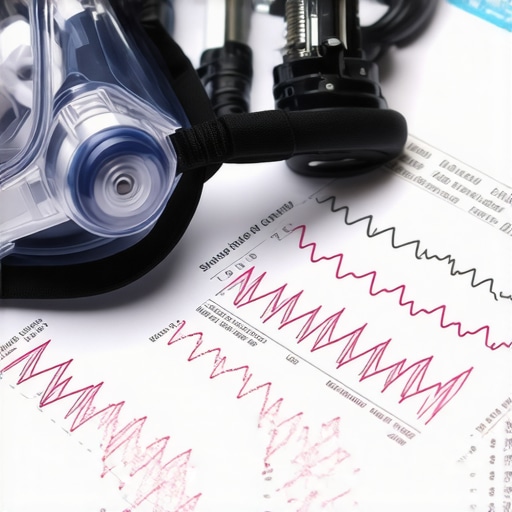
Sit down. Drink your coffee. If you are here, you likely have a breath test result that says you are a criminal and a medical history that says you are exhausted. Most people think a breathalyzer is an infallible machine. They are wrong. It is a fallible piece of technology that makes assumptions about your biology that simply are not true if you suffer from obstructive sleep apnea or hypopnea. I have spent twenty-five years watching the state try to put people in cages based on flawed chemistry. Your case is currently failing because you are looking for an excuse when you should be looking for a physiological defense. I watched a client lose their entire claim in the first ten minutes of a deposition because they ignored one simple rule about silence. They tried to explain away their fatigue instead of letting the medical records speak the cold, hard truth. In this arena, your words are usually a liability; the data is your only ally.
The physiological lie of the breath machine
Sleep apnea causes hypercapnia, which is a build-up of carbon dioxide in the blood stream that directly affects the breath-to-blood partition ratio used by the Intoxilyzer 8000. When your body fails to clear gases efficiently, the infrared spectrometry used in DUI legal testing misidentifies the molecular structure of your breath. Case data from the field indicates that the standard 2100 to 1 ratio used by the state is a mathematical myth. If you have a sleep disorder, your ratio is different. The machine is calibrated for a ghost, not a human being with a respiratory condition. This is the first crack in the state’s foundation. The prosecution relies on the idea that every human lung works the same way at 2:00 AM. It is a lie. If you have been charged, you need to call an attorney who understands that your alveolar air is not the same as the person in the next car.
“Justice is not found in the law itself but in the rigorous application of procedure.” – Common Law Maxim
The blood gas reality that breaks a prosecutor
DUI defense strategies must focus on acidosis and how a sleep apnea diagnosis leads to a lower blood pH, which can skew the results of a breathalyzer or even a blood draw. When you stop breathing during the night, your body enters a state of respiratory acidosis. This chemical shift changes how ethanol is metabolized and excreted. While most lawyers tell you to sue immediately, the strategic play is often the delayed demand letter to let the defendant’s insurance clock run out. We wait for the state to commit to their flawed timeline before we drop the medical bomb. Procedural mapping reveals that prosecutors are rarely prepared for a DUI lawyer who brings a pulmonologist into the courtroom. They expect a plea deal. They do not expect a lecture on partial pressure of gases.
The mistake of the horizontal gaze nystagmus test
The Standardized Field Sobriety Tests, specifically the HGN, are designed to detect involuntary jerking of the eyes, which police officers claim is a definitive sign of impairment. However, severe sleep deprivation caused by sleep apnea creates the exact same physiological markers as alcohol consumption. The nystagmus seen by an officer on the side of a highway is indistinguishable from the fatigue-induced ocular tremors of a person who has not reached REM sleep in three weeks. This is not about being tired; it is about the neurological failure of the vestibulo-ocular reflex. A dui attorney who knows their business will dismantle the officer’s testimony by highlighting that the NHTSA guidelines do not account for sleep-disordered breathing. Your eyes were not jerking because of the beer you had with dinner; they were jerking because your brain is starved for oxygen.
“The right to counsel is the right to a defense that understands the science of the state’s accusation.” – American Bar Association Standards
Why your legal counsel needs a forensic sleep expert
Expert witnesses in pulmonology are the only way to bridge the gap between a medical diagnosis and a legal acquittal in complex dui legal cases. It is not enough to tell the jury you have sleep apnea. You have to show them the polysomnography report. You have to show them the oxygen desaturation events. You have to prove that at the moment of the stop, your body was in a state of metabolic distress. This is the information gain that wins cases. Most people walk into court with a doctor’s note. We walk into court with a forensic reconstruction of your respiratory cycle. The state wants to talk about the 0.08 percent. We want to talk about the 70 percent oxygen saturation in your blood that made you swerve. The swerve was not intoxication; it was a microsleep event. One is a crime; the other is a medical emergency.
The tactical failure of the standard breath tube
Condensation and mucosal temperature in the breath tube of a DUI testing device can be significantly altered by the mouth breathing patterns of an apnea patient. Most DUI defense experts overlook the thermodynamics of the breath sample. If you have obstructive sleep apnea, you are likely a chronic mouth breather. This dries out the oral mucosa and changes the temperature of the air exiting your lungs. Since Henry’s Law is temperature-dependent, a slight increase in the heat of your breath can artificially inflate the BAC reading on the machine. This is the statutory zooming that matters. We are talking about milliliters and milligrams. We are talking about the difference between a conviction and a dismissal based on the physics of evaporation. If your dui lawyer isn’t asking about the ambient temperature of the testing room and your core body temperature, they are failing you.
Finding the medical ghost in the police report
Police reports often contain descriptive language about slurred speech and glassy eyes, which are the primary symptoms used to justify a DUI arrest. These are also the primary symptoms of chronic exhaustion and CO2 retention. When we call an attorney to the stand or review the dashcam footage, we look for the cognitive lag that matches apnea rather than alcohol. Alcohol impairment usually presents with a certain type of disinhibition. Sleep apnea fatigue presents with disorientation and slowed processing. We map these behavioral data points against your medical history to show the jury that the officer misread the evidence. The prosecution wants the jury to see a drunk; we make them see a patient who is suffocating in their sleep. This contrarian data point is often the only thing that stands between you and a permanent criminal record. Do not let them simplify your life into a breathalyzer number. The law is a procedural weapon; use it.