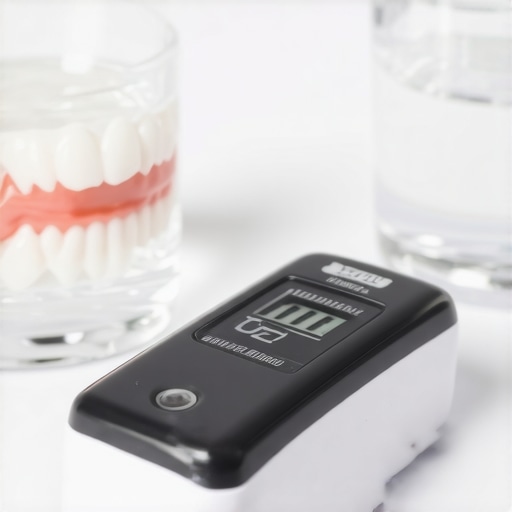
Why Dentures Can Turn a False Positive into a Mandatory Sentence
I watched a client lose their entire claim in the first ten minutes of a deposition because they ignored one simple rule about silence. They thought they could explain away the dentures. They thought the truth would set them free. It did not. The truth is a tool, not a shield, and if you do not know how to wield it, the prosecution will use it to bury you. This specific case involved a high BAC reading that was physically impossible given the timeline of consumption. The culprit was not the wine but the partial plate sitting in the defendant’s mouth. When you are facing a courtroom, your dui attorney must understand the forensic mechanics of dental prosthetics or you are walking into a trap.
The hidden reservoir of ethanol
Mouth alcohol remains the primary enemy of an accurate breath test when dentures are present. Prothetic devices create physical gaps where alcohol is trapped through surface tension and adhesive bonding. This prevents the machine from measuring deep lung air. Instead, it measures raw spirit residue. Any seasoned dui defense specialist knows this is a fatal flaw in the prosecution case that relies on Henry’s Law. Most machines assume a 2100 to 1 partition ratio, but that ratio is shattered when the sample is contaminated by ethanol trapped under a denture plate. The result is an inflated number that has nothing to do with your actual level of impairment.
“Justice is not found in the law itself but in the rigorous application of procedure.” – Common Law Maxim
Why breathalyzers fail the prosthetic test
Standard breath testing equipment cannot distinguish between alveolar air and mouth alcohol trapped in dental adhesives. The slope detector inside an Intoxilyzer is designed to flag rapid drops in alcohol concentration, yet it often fails to detect the slow bleed of ethanol from behind a denture. Case data from the field indicates that even a tiny amount of liquid trapped in the porous material of a prosthetic can produce a reading well above the legal limit. When you call an attorney, the first question should be whether they understand the specific infrared spectroscopy limitations regarding dental work. If they do not, they are not prepared to defend your rights.
The failure of the fifteen minute observation rule
Police officers rarely follow the mandatory observation period with the level of scrutiny required by law. Procedural mapping reveals that the fifteen to twenty minute waiting period is the only defense against mouth alcohol contamination. If an officer does not check for dentures or if they allow the suspect to burp or swallow during this window, the test is scientifically invalid. In the heat of a dui legal battle, the timing of that observation period is often the first thing we attack. We look for the gaps in the officer’s log. We look for the moment they turned their back to type on their computer. That is where the case is won.
How a DUI lawyer breaks the machine
Challenging the machine requires a brutal deconstruction of the maintenance logs and the officer’s certification. Litigation is a game of leverage, and the leverage here is the inherent unreliability of the technology when faced with biological variables. While most lawyers tell you to sue immediately, the strategic play is often the delayed demand letter to let the defendant’s insurance clock run out or to wait for the machine’s next calibration failure. This is not about being nice. This is about winning. You need a dui lawyer who treats the breathalyzer like a hostile witness. Every sensor, every fuel cell, and every software version must be cross examined through the discovery process.
“The integrity of the criminal justice system depends on the reliability of the evidence presented against the accused.” – American Bar Association Standards
The physics of trapped ethanol
Surface tension and capillary action allow alcohol to hide in the mucosal lining and prosthetic gaps for hours. This is the contrarian data point that the prosecution hates. While the body metabolizes blood alcohol at a predictable rate, mouth alcohol does not follow those rules. It lingers. It concentrates. It waits for the moment you blow into that tube to ruin your life. If you have dental work, your breath is a lie. The machine is not measuring your blood. It is measuring a ghost. You must understand that the courtroom is not about truth; it is about perception and the technical ability to disprove a false narrative.
Why your choice of adhesive matters in court
Zinc based adhesives and porous resins can absorb alcohol molecules and release them during the breath exhaling process. This creates a localized environment of high concentration that the machine interprets as systemic intoxication. It is a forensic nightmare. When we go to trial, we bring in experts to testify on the absorption rates of these materials. We show the jury that the machine was never designed to account for a human being with dental repairs. We turn the prosecution’s star witness, the machine, into a laughing stock. This is the level of detail required for a successful dui defense in the modern era.