Sit down and listen. You think the system is built to find the truth but the system is built to process files. Most people walk into my office smelling like panic and cheap cologne, clutching a police report as if it were the gospel. It is not. It is a narrative constructed by an officer who has already decided you are guilty. I have seen cases fall apart because a lawyer actually looked at the footage instead of just reading the summary. I watched a prosecutor lose their entire case in the first ten minutes of a hearing because they ignored one simple rule about silence. The officer wrote that the suspect was belligerent and slurring. The video showed a man who was terrified, silent, and standing perfectly still. The discrepancy was not a mistake. It was a calculated attempt to secure a conviction. If you want to survive a DUI charge, you have to stop believing the paper and start analyzing the pixels.
The deposition disaster that saved a career
A DUI attorney understands that police reports are subjective documents often written hours after the arrest has occurred. When you call an attorney, the first step is a forensic review of the dashcam video to identify inconsistencies that can lead to a motion to suppress. This process requires a DUI lawyer who knows how to spot procedural errors in real time. I remember a case involving a commercial driver. The report stated he failed the walk and turn test because he could not keep his balance. We pulled the footage. The ground was covered in black ice. The officer himself slipped twice while demonstrating the test. The report mentioned the failure but conveniently forgot the ice. That is how the state plays the game. You are not fighting a crime. You are fighting a perspective. You need a dui defense that treats the police report as an opening offer in a negotiation, not a statement of fact.
Evidence that refuses to lie
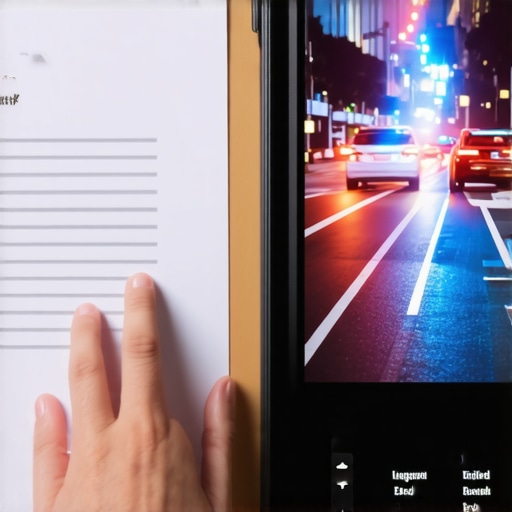
Dashcam footage provides an objective chronological record of the traffic stop and field sobriety tests. This digital evidence is the most powerful tool for a dui attorney because it captures officer bias and procedural violations that are never mentioned in the written report. While the police report might claim you had bloodshot eyes and slurred speech, the video often reveals a different physical reality. The lens does not have a quota. It does not have a promotion on the line. It records the lack of a proper horizontal gaze nystagmus test. It records the officer failing to provide the mandatory fifteen minute observation period before a breathalyzer test. Every second of that video is a potential legal exit for a client who thinks they are trapped. We look for the miranda rights violation that happens in the gap between the handcuffs and the squad car door. We look for the illegal search of the trunk that the report describes as a voluntary inventory.
“Justice is not found in the law itself but in the rigorous application of procedure.” – Common Law Maxim
The fiction of the swaying suspect
Field sobriety tests are designed for failure and the police report is the script for that failure. A dui lawyer examines the dashcam video to see if the arresting officer gave standardized instructions as required by the NHTSA manual. If the instructions were unclear or legally deficient, the dui defense can argue that the test results are inadmissible in court. The report will say you swayed. The video shows you were compensating for a heavy wind or the lights of passing semi trucks. The report will say you missed a step. The video shows the officer did not give you a straight line to walk on. This is where the brutal truth comes out. The law says the officer must have probable cause to arrest you. If the video shows you performed reasonably well, the probable cause evaporates. Without probable cause, the dui case collapses like a house of cards. You do not win by proving you were sober. You win by proving the officer was wrong.
Time stamps that break a prosecution
Temporal inconsistencies between the police log and the dashcam metadata are the most common ways to win a dui legal battle. A dui attorney cross references the dispatch times with the video timestamps to find gaps in custody or unexplained delays that suggest evidence tampering or procedural fraud. If the officer claims he observed you for twenty minutes but the video shows he was searching your car for ten of those minutes, the breath test is compromised. The law is a machine made of gears. If one gear is out of alignment, the whole machine stops. We look at the frame rate. We look at the audio synchronization. Often, an officer will turn off his body mic during a conversation with his partner. That silence is where the defense lives. Why did the audio go dark? What was said that the jury wasn’t supposed to hear? These are the questions that make prosecutors offer reckless driving pleas instead of seeking jail time.
Why your dui lawyer must be a forensic editor
Video analysis in a dui defense requires more than just watching a clip; it requires a frame by frame breakdown of body mechanics and environmental factors. When you call an attorney, you should ask if they have the technical capability to enhance dashcam footage and identify hidden inconsistencies. The report might say you were unsteady on your feet. We zoom in and show that you were wearing work boots on a gravel shoulder. We show that the blue and red lights were strobing at a frequency known to cause disorientation in perfectly sober people. The dui legal system relies on your compliance and your ignorance. They want you to see the police report and give up. My job is to see the police report and find the lie. Every dui case has a weak point. Usually, that weak point is the ego of the officer who thought no one would actually check his work against the camera.
“The defense of liberty is the defense of the procedures that protect the individual from the state.” – ABA Journal Commentary
[image_placeholder_1]
The phantom smell of alcohol in written reports
Subjective observations like the odor of intoxicants are the most frequent fabrications found in a police report when compared to dashcam audio. A dui lawyer uses the audio track to hear if the officer actually mentioned the smell during the initial contact or if it appeared magically in the written summary later. If the officer is on camera saying your eyes look clear but his report says they were bloodshot and watery, the credibility of the entire arrest is destroyed. This is not about being nice. This is about litigation leverage. We take the inconsistencies to the pre-trial conference and we shred the officer’s testimony before he ever gets to the witness stand. If the judge sees that the written record is a fantasy, the search warrant or the blood draw results might be thrown out. In the legal world, reality is what you can prove. The dashcam is the only witness that never gets nervous and never forgets the details. If you are facing a dui, stop reading the police report and start fighting the footage.