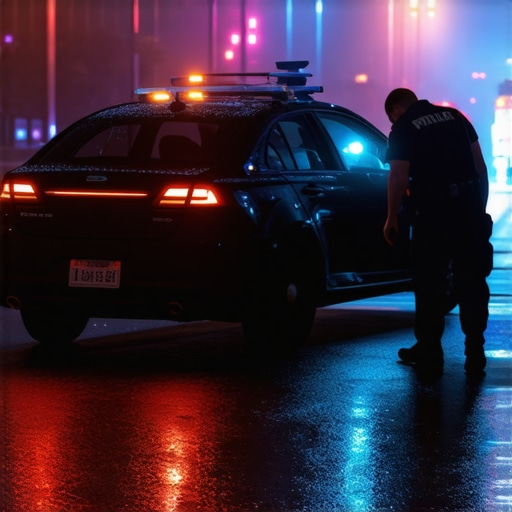
The air in my office always smells like strong black coffee and the bitter reality of avoidable mistakes. I have sat across from hundreds of individuals who believed they could talk their way out of a pair of handcuffs. They were wrong. I watched a client lose their entire claim in the first ten minutes of a deposition because they ignored one simple rule about silence. It started with a traffic stop where they thought being nice meant letting the officer look in the trunk. That niceness turned a minor speeding ticket into a felony possession charge that haunted them for years. If you are reading this because you think your cooperation will earn you leniency, you are already losing the game. The legal system does not reward kindness; it rewards the rigid assertion of procedural rights. When a law enforcement officer asks to search your car, they are not looking for reasons to let you go. They are looking for the final piece of evidence to justify your arrest. This is the brutal truth that most people ignore until the steel of the cuffs hits their wrists. You need a dui lawyer who understands that the courtroom is a battlefield where the only armor is the law.
The trap of the voluntary consent request
Voluntary consent is a legal mechanism where a motorist permits police officers to inspect their private property without a search warrant. By saying yes, the individual waives their Fourth Amendment protections against unreasonable searches, making any seized evidence difficult for a defense attorney to suppress in a criminal trial. Case data from the field indicates that officers use psychological pressure to make this request seem like a requirement. They use phrases like, You do not have anything to hide, right? or, It will be faster if we just check and get you on your way. These are tactical maneuvers. They are designed to exploit your natural desire to avoid conflict. From a litigation standpoint, once you say the word yes, you have effectively handed the prosecution a blank check. Procedural mapping reveals that a significant percentage of drug and weapon charges stem from these so called voluntary encounters. Without your consent, the officer would have to articulate probable cause, which is a much higher bar than a simple nod of your head. If you value your freedom, the only answer is a polite but firm refusal. I do not consent to any searches.
“Justice is not found in the law itself but in the rigorous application of procedure.” – Common Law Maxim
Fourth Amendment protections in the modern era
The Fourth Amendment protects citizens from unreasonable searches and seizures by the government. In the context of a vehicle stop, the Supreme Court has established that a search is generally unconstitutional without probable cause or a valid warrant. Understanding these legal boundaries is vital for any dui defense strategy. While most lawyers tell you to sue immediately, the strategic play is often the delayed demand letter to let the defendant’s insurance clock run out or to let the body camera footage be preserved through a formal preservation letter. The Fourth Amendment is not a suggestion. It is a barrier. However, that barrier is fragile. It can be shattered by a single sentence of agreement. The law assumes that a reasonable person knows they have the right to say no. In reality, the flashing lights and the presence of an armed officer create a coercive environment. The court often ignores this psychological reality, focusing instead on the literal words spoken. This is why the dui attorney focuses on the specific timing of the request. Was the stop already over? Had the officer returned your license? If the purpose of the traffic stop was completed, any further detention to request a search may be an illegal seizure under Rodriguez v. United States. This is the microscopic reality of the law.
The myth of having nothing to hide
The nothing to hide argument is a prosecutorial tactic used to shame drivers into waiving their legal rights during a roadside interrogation. Even innocent individuals face legal risk because illegal items left by passengers or misidentified legal substances can lead to an arrest and criminal charges. You might think your car is clean. You might be wrong. A friend left a prescription bottle in the glove box. A piece of old drug paraphernalia from a previous owner is wedged under the seat. A suspicious looking powder that is actually just spilled salt results in a field test kit showing a false positive. These are not hypothetical scenarios. They happen in the field every single day. I have seen lives ruined because a driver wanted to prove they were a good citizen. The police are trained to look for anomalies. They will tear out your upholstery, dump your bags on the wet pavement, and leave you to clean up the mess. They have no obligation to put your car back together. By refusing consent, you are not acting guilty. You are acting like an informed citizen who understands the value of their privacy. A dui legal specialist will tell you that the best evidence is the evidence the police never found because they were never allowed to look.
“The right of the people to be secure in their persons, houses, papers, and effects, against unreasonable searches and seizures, shall not be violated.” – U.S. Const. amend. IV
Procedural failures in roadside interrogations
Roadside interrogations often involve procedural failures where officers exceed the legal scope of a traffic stop to search for contraband. When law enforcement lacks reasonable suspicion for a crime, they often rely on consent to bypass constitutional requirements, which a defense lawyer can later challenge. The clock is the enemy of the police officer. They have a limited window to conduct their business. Once the ticket is written, the stop should be over. Every second they keep you there after that point is a potential violation of your rights. They will try to fill that time with casual conversation. Where are you coming from? Where are you going? These are not friendly questions. They are probes for inconsistency. If your story doesn’t match the passenger’s story, they use that as reasonable suspicion to bring in a K-9 unit. The dui defense often hinges on these small intervals of time. If the dog arrives ten minutes after the stop should have ended, the entire search could be suppressed. But if you consented, none of that timing matters. You gave them permission to take as long as they want. You neutralized your own defense before it even started. This is why you must call an attorney the moment things move beyond a simple citation.
The strategic necessity of calling an attorney
An attorney provides the legal expertise necessary to navigate the complexities of criminal procedure and search and seizure law. Engaging a dui lawyer early in the legal process ensures that constitutional violations are identified and used as leverage for dismissals or reduced charges. Do not wait until you are standing in front of a judge to realize you made a mistake. The litigation architect views the case as a series of interlocking components. The search is the foundation. If the foundation is built on coerced consent or a lack of probable cause, the entire prosecution can be toppled. I have spent hours deconstructing the specific phrasing used by officers on dashcam audio. Did they ask or did they command? Was the driver’s license still in the officer’s pocket when the question was asked? These details are the difference between a prison sentence and a walk to freedom. The dui attorney is the only person in the room whose job is to protect your interests. The prosecutor wants a conviction. The officer wants an arrest. The judge wants a clear docket. Only your lawyer wants the truth to be filtered through the lens of your rights. Be silent. Be firm. Be represented. The cost of a dui legal defense is nothing compared to the cost of a permanent record. Stop trying to be the nice guy in a system designed to crush you. The chess board is set. Make the only move that matters. Refuse the search and call your counsel.