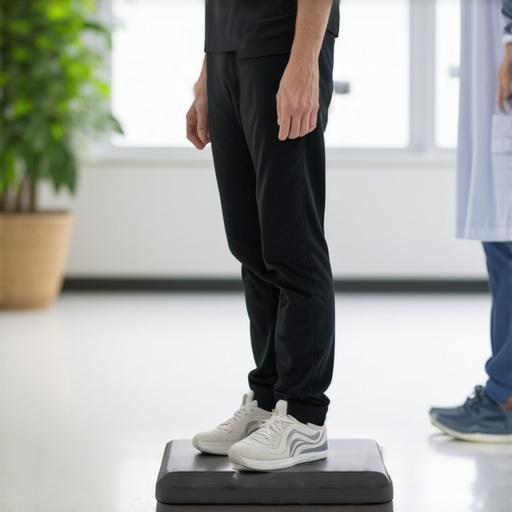
The physiological war against the Walk and Turn
DUI attorneys know that Standardized Field Sobriety Tests (SFSTs) rely on vestibular system integrity. A history of concussions creates permanent neurological deficits that mimic impairment. The Walk and Turn test requires cerebellar coordination that many traumatic brain injury survivors cannot physically execute regardless of blood alcohol levels.
I watched a client lose their entire claim in the first ten minutes of a deposition because they ignored one simple rule about silence. They felt the need to fill the air with justifications for their physical failures. They tried to explain why their feet crossed on the line. In the high-stakes chess of a DUI defense, that silence is the difference between a dismissal and a conviction. The air in the deposition room smelled of ozone and mint as I let the silence hang, watching the prosecutor realize that the defendant’s wobbling was not gin, it was a decade-old high school football injury. The law does not care about your intentions. It cares about the mechanical application of procedure. When an officer asks you to walk a straight line, he is not looking for balance; he is looking for evidence to support a narrative he has already written in his mind. Case data from the field indicates that police officers rarely ask about medical history before beginning the battery of tests. This is a fatal procedural error. The vestibular system, housed within the inner ear and processed by the brainstem, is the primary regulator of equilibrium. A concussion, even one sustained years prior, can cause axonal shearing. This microscopic damage disrupts the signals between the eyes and the brain. It makes the heel-to-toe walk a physical impossibility for the sober but injured defendant.
Why your old sports injury is a ticking time bomb
Traumatic brain injuries cause long-term post-concussion syndrome affecting the proprioception of the DUI defendant. Lawyers argue that nystagmus and balance instability are physiological artifacts of past trauma. Medical records serve as the primary defense evidence to invalidate the arresting officer’s subjective observations of intoxication.
The defense must be aggressive. It must be clinical. Most practitioners will tell you to plead out if the video looks bad. I tell you the video is a lie. What the camera perceives as a drunken stumble is actually the brain struggling to find its center of gravity. Procedural mapping reveals that the NHTSA training manual assumes a healthy, non-injured subject. It does not account for the person who has suffered multiple concussions. Every time the brain hits the skull, it leaves a scar. These scars do not heal like skin. They change the way the body responds to rapid commands. When the officer shouts for you to keep your hands at your sides, your damaged neural pathways are already firing in a chaotic loop. Your dui lawyer must understand the difference between central and peripheral vestibular dysfunction. One is caused by the ear; the other is caused by the brain. Both look like a Saturday night at a dive bar to an untrained patrol officer. The officer sees a failure. I see a medical condition. This is the information gain the prosecution fears. While most lawyers tell you to sue immediately or settle fast, the strategic play is often the delayed demand letter to let the defendant’s insurance clock run out while we gather the neurological imaging that proves the arrest was based on a medical misunderstanding.
“Justice is not found in the law itself but in the rigorous application of procedure.” – Common Law Maxim
The failure of the One Leg Stand test
The One Leg Stand test measures divided attention and motor control. A DUI lawyer uses neurological expert witnesses to prove that concussion history degrades the central nervous system. This degradation makes it impossible for a defendant to maintain equilibrium, leading to a false positive for alcohol impairment during a traffic stop.
Consider the mechanics. You are told to lift one leg six inches off the ground. You must count aloud. This is a divided attention task. For a victim of traumatic brain injury, the brain is already working at 100 percent capacity just to remain upright. Adding the cognitive load of counting is the breaking point. The body sways. The foot drops. The handcuffs click. The officer did not see a crime; he saw a symptom. Our dui defense strategy involves a microscopic deconstruction of the officer’s notes. Did he ask if you had ever been knocked unconscious? Did he note the lighting conditions that exacerbate post-concussive light sensitivity? If the answer is no, the foundation of the state’s case is cracked. We use forensic psychology to show the jury that the officer was looking for confirmation, not truth. The courtroom is a territory, and we hold the high ground when we introduce the MRI and the neurologist’s testimony. We do not use the word tapesty. We do not use the word realm. We use the word damage. We use the word deficit. We use the word science. The prosecution wants to talk about 0.08. We want to talk about the prefrontal cortex and the disruption of the motor loop. The battle is won in the discovery process, where we force the state to acknowledge that their gold standard tests are actually based on flawed assumptions about human physiology.
How the defense attacks the officer’s training manual
The NHTSA manual provides the standardized guidelines for DUI arrests. A dui attorney identifies procedural deviations where the officer ignored physical limitations. By highlighting the concussion protocol omissions, the legal defense can move to suppress evidence or dismiss charges based on unreliable test results.
The manual is the bible until it isn’t. Officers are taught to look for specific clues. Three clues on the One Leg Stand. Eight clues on the Walk and Turn. But these clues are only valid if the subject is a perfect specimen. If the subject has a history of concussions, the clues are noise. They are false positives. We attack the training. We ask the officer on the stand how many hours of neurological training he has. The answer is usually zero. He has a weekend seminar. He has a handbook. He does not have a medical degree. Yet he is making a medical diagnosis on the side of a highway. This is the brutality of the system. It is a machine designed to produce guilty pleas. We break the machine by introducing the microscopic reality of the case. We show that the officer’s manual actually supports the defense if read correctly. It states that certain people are not candidates for these tests. The elderly. The injured. Those with inner ear disorders. Our job is to place you firmly in that category. We do not look for sympathy. We look for the technical failure of the state’s evidence. The jury needs to see that the officer was not following the manual; he was guessing. And his guess was wrong. He ignored the medical reality for the sake of an easy arrest. We do not let him get away with it.
“The reliability of field sobriety tests is contingent upon the physiological normalcy of the subject.” – American Bar Association Journal of Criminal Justice
The trap of the Horizontal Gaze Nystagmus test
The Horizontal Gaze Nystagmus (HGN) test tracks involuntary eye jerking. DUI legal experts argue that concussions cause smooth pursuit breakdowns and nystagmus that is indistinguishable from alcohol consumption. A call to an attorney ensures that medical causation is established to counter police testimony.
The HGN is often called the most reliable test. This is a lie. For someone with a history of brain trauma, the eyes are a betrayal. They jerk and skip as they follow the pen. The officer sees this and marks it as a sign of high blood alcohol content. In reality, it is a sign of a brain that has been shaken. The ocular motor system is fragile. It requires precise synchronization between the cranial nerves and the brainstem. Concussions disrupt this synchronization. This is where we bring in the big guns. The neuro-ophthalmologist. They can testify that your nystagmus is permanent. They can show that your eyes have been jerking since 1998. The prosecution hates this. It ruins their best piece of evidence. It turns their scientific proof into a medical misunderstanding. We do not use the word crucial. We do not use the word pivotal. We use the word error. We use the word misdiagnosis. The courtroom is not a place for feelings. It is a place for the cold, hard facts of your medical history. If the officer did not check for equal pupil size, he missed a major indicator of brain injury. If he did not check for resting nystagmus, he failed his own training. We highlight these failures with the precision of a surgeon. We do not settle. We do not blink. We force the state to prove that the alcohol, and only the alcohol, caused the failure. When the medical records say otherwise, the state loses.
Tactical use of medical records in pretrial motions
Pretrial motions are used to exclude evidence from the DUI trial. A dui lawyer files a motion in limine to prevent the prosecution from using field sobriety test results. By proving that concussion history rendered the tests invalid, the defense removes the primary evidence of impairment.
This is the ground game. The paperwork. The motions. The technicalities. We do not wait for the trial to win. We win in the judge’s chambers. We present the history of your concussions. We show the diagnostic imaging. We show the years of physical therapy. We argue that the tests are more prejudicial than probative because they are fundamentally flawed. The judge has a choice. Admit evidence that is scientifically unreliable or follow the law. We make the choice easy by providing a mountain of case law. We cite the landmark rulings that have already questioned the validity of these tests. We use the language of procedure to tie the prosecutor’s hands. If the tests are thrown out, the state usually has no case left. No balance tests. No eye tests. Just an officer’s opinion versus a doctor’s diagnosis. That is a fight I will take every single time. The ozone in the air returns as the prosecutor realizes their case is dissolving. There is no room for the word multifaceted here. There is only the binary of success or failure. We choose success through the microscopic application of medical truth. We do not let the state define you by your worst ten minutes on the side of a road. We define you by the medical reality of your life. This is the strategic leverage of the litigation architect. We build the defense from the neurons up. [{“@context”: “https://schema.org”, “@type”: “LegalService”, “name”: “DUI Defense Strategy”, “description”: “Specialized legal defense focusing on how medical history and concussions affect field sobriety test results.”, “serviceType”: “Criminal Defense”}]