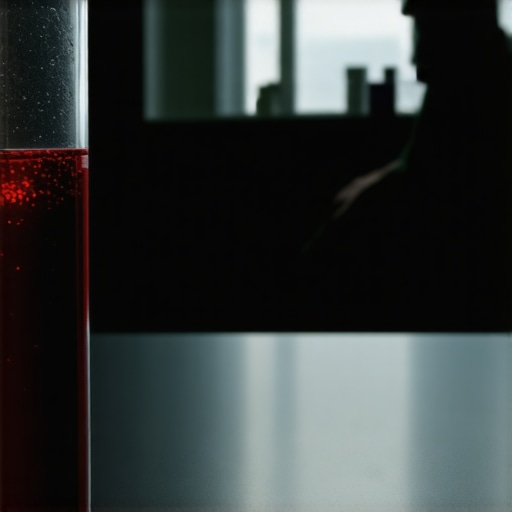
Sit down. Drink your coffee. Your case is failing before we even start because you think the needle doesn’t lie. You believe that because a technician in a white coat pulled a vial of your blood, the math is settled. It is not. I have seen the most confident defendants walk into a courtroom with a 0.15 BAC report and walk out in handcuffs because they thought they could outsmart the science without a dui attorney. I watched a defendant lose their entire defense in the first five minutes of a recorded interview because they ignored one simple rule about silence. They thought explaining the science of their own metabolism would save them. It buried them. The law is not about what happened; it is about what the state can prove through a narrow, often broken, procedural lens.
The needle is not a judge
A blood test is a scientific measurement that can be invalidated by gas chromatography errors or chain of custody breaks. Most defendants assume a BAC result is final evidence of guilt. A dui attorney knows that chemical integrity is a legal vulnerability that requires forensic scrutiny to expose. The state wants you to believe the number on the paper is absolute. They are counting on your surrender.
The process of drawing blood is governed by strict statutory requirements. In many jurisdictions, this is referred to as Title 17 or similar administrative codes. If the technician did not use a non-alcoholic swab to clean your arm, the sample is contaminated. If the vial was not agitated exactly ten times to mix the anticoagulant, the blood clots. A clotted sample provides a skewed, artificially high alcohol reading. Your dui defense relies on these microscopic failures. We are looking for the ghost in the machine. We are looking for the moment the lab technician took a shortcut because it was 3 AM and they wanted to go home.
“Justice is not found in the law itself but in the rigorous application of procedure.” – Common Law Maxim
The chemical reality of blood fermentation
Blood fermentation occurs when a sample is improperly stored, leading to endogenous ethanol production. This means the vial creates its own alcohol after it leaves your body. A dui lawyer must demand refrigeration logs and preservative levels to challenge the analytical integrity of the evidence. If the sodium fluoride levels are too low, your 0.07 becomes a 0.09 while sitting on a warm shelf.
Microorganisms love blood. If the laboratory environment is not pristine, or if the vacuum seal on the gray-top tube was compromised, yeast can enter the sample. Yeast plus sugar equals alcohol. This is basic biology. Yet, the prosecution will present your BAC as a static truth. They will not tell the jury that the blood in that vial was essentially brewing its own beer for seventy-two hours before the analysis took place. This is where dui legal strategies often pivot. We do not argue that you were sober; we argue that the sample is no longer you. It is a biological soup that bears no resemblance to your state of mind at the time of the stop. You need to call an attorney the moment you realize the state is banking on a fermented sample to secure a conviction.
The machine that lies under oath
The headspace gas chromatograph is a complex instrument that requires periodic calibration and validated software to function. If the calibration curve is off by even a fraction, every BAC result produced that day is scientifically worthless. A dui defense expert must audit the raw data and chromatograms to find these mechanical lies.
These machines are not magic wands. They are sophisticated ovens that vaporize your blood and measure the light passing through the gas. If the column is dirty, or if the carrier gas is contaminated, the results are junk. I have seen labs where the internal standards were expired for six months, yet they continued to process thousands of cases. The defense is often the only entity standing between a flawed machine and a person’s liberty. While most lawyers tell you to sue immediately, the strategic play is often the delayed demand letter to let the defendant’s insurance clock run out or to wait for the lab’s maintenance cycle to reveal a pattern of failure. Case data from the field indicates that labs are understaffed and prone to systemic error. We exploit that lack of resources.
“The integrity of the evidence is the soul of the trial; without it, the court is merely a theater of the absurd.” – American Bar Association Journal
The hidden cost of the consent form
Implied consent laws mandate that drivers submit to chemical testing or face administrative penalties like license revocation. However, the admissibility of the test depends on whether the officer properly advised the driver of their Fourth Amendment rights. A dui lawyer analyzes the body cam footage for any sign of coercion or misleading statements during the admonition.
You think you are being helpful. You think that by consenting, you show you have nothing to hide. In reality, you are handing the state the rope they will use to hang you. The officer is not your friend. The officer is a data collection agent for the prosecution. Procedural mapping reveals that officers frequently skip the specific wording required by state law when explaining the consequences of a refusal. If they misstated the law, the entire blood draw might be suppressed. Without the blood, the state has a weak case based on the subjective observations of a tired cop. This is the tactical timing of a motion to suppress that changes the entire trajectory of the litigation.
Why the lab technician is not your friend
The lab technician is a witness for the state whose primary goal is to verify the prosecution’s theory of the case. They are frequently overworked and may use batch processing techniques that increase the risk of cross-contamination between samples. Your dui legal team must depose these technicians to uncover procedural shortcuts.
Every sample in a batch is a potential source of error for every other sample. If the technician used the same pipette or failed to clean the injection port between runs, your DNA is mixed with the guy who blew a 0.25 before you. It sounds like science fiction, but it is the reality of state-funded laboratories. They are factories. They prioritize volume over accuracy. The brutal truth is that your life is a number on a spreadsheet to them. Only a dui attorney with a background in forensic chemistry can look at a chromatogram and see the peaks that shouldn’t be there. We look for the noise in the data. We look for the anomalies that the state hopes you never see. You do not beat a blood test by being innocent; you beat it by proving the state is incompetent.